

Wondering how much pressure you should use to wash your car? Using too much pressure can damage your paint, while too little might leave dirt behind.
Finding the right balance is key to keeping your car clean and safe. You’ll discover the perfect pressure settings that protect your car’s finish and make washing easier than ever. Keep reading to learn exactly what you need to know before you grab that pressure washer.
Ideal Pressure Range
Choosing the right pressure for washing a car is very important. Too much pressure can damage the paint or trim. Too little pressure might not clean the dirt well. Finding the ideal pressure range helps keep the car safe and clean.
The best pressure depends on the car’s surface and the type of dirt. It also depends on the pressure washer you use. Knowing the right pressure range helps to avoid scratches or paint peeling.
Recommended Psi For Cars
Most cars are safe to wash with pressure between 1200 and 1900 PSI. This range cleans dirt and grime without harming the paint. Pressure below 1200 PSI may not remove tough dirt. Above 1900 PSI risks damaging the car’s surface.
Using a nozzle with a wider spray angle, like 25 or 40 degrees, can reduce pressure impact. Always test the pressure on a small hidden spot first. Adjust pressure to prevent any harm.
Differences Between Car Surfaces
Different parts of a car need different pressure levels. Paint and clear coat can handle moderate pressure. Windows and mirrors are more delicate and need lower pressure. Tires and wheels may need higher pressure to remove brake dust and grime.
Plastic trims and decals require gentle washing. High pressure can cause cracks or peeling. Metal parts like bumpers can take medium pressure but avoid direct spray on sensitive areas. Adjust pressure based on each surface’s strength.
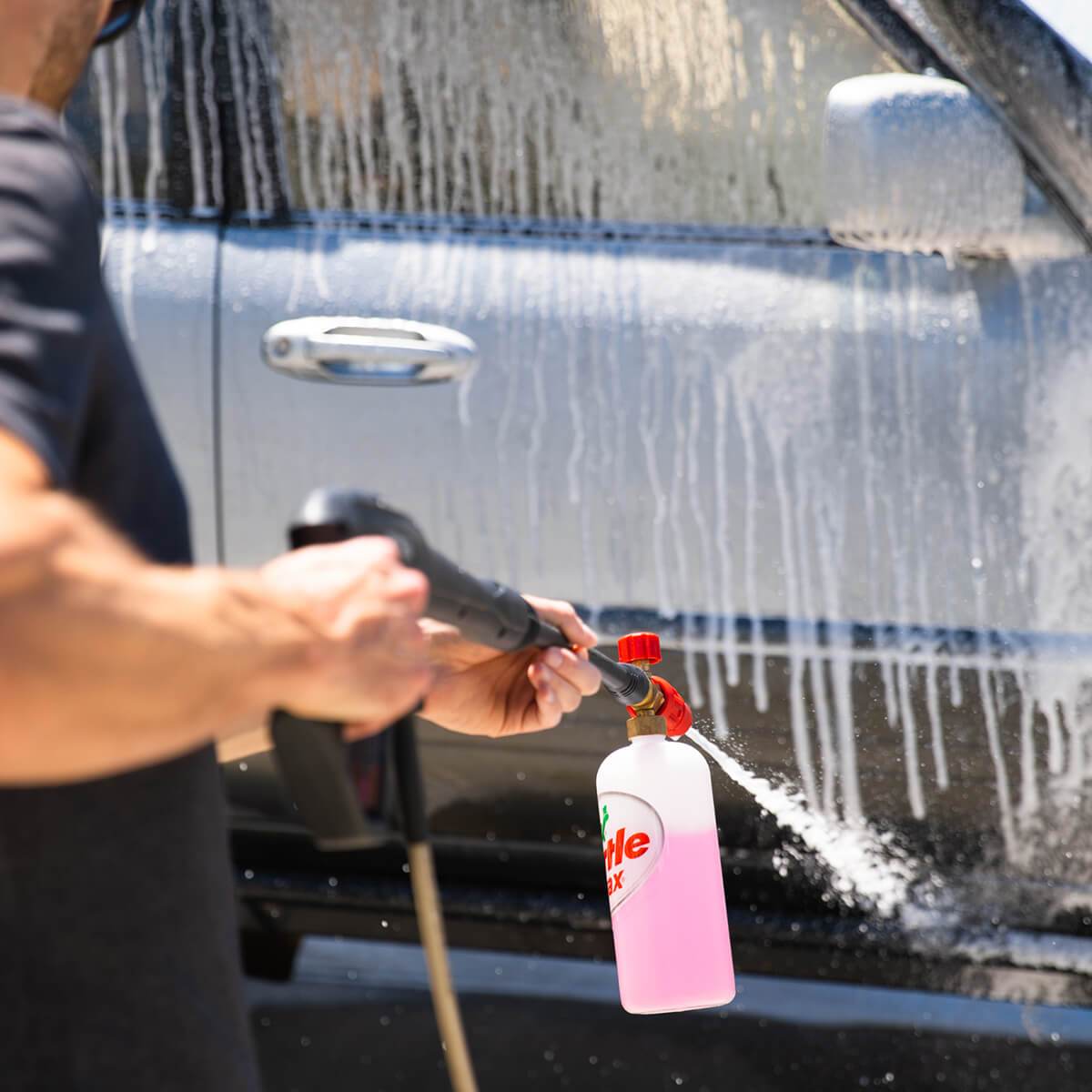
Credit: www.turtlewax.com
Choosing The Right Nozzle
Choosing the right nozzle is key to washing a car safely and well. The nozzle controls the water flow and pressure. Picking the wrong one can harm your car’s paint or leave dirt behind. Knowing the types of nozzles and their spray angles helps you clean smartly. It also keeps your car safe from damage.
Nozzle Types And Spray Angles
Nozzles come in many types. Common ones include 0°, 15°, 25°, 40°, and soap nozzles. The number shows the spray angle. A 0° nozzle shoots a strong, narrow stream. It removes tough dirt but can scratch paint. A 15° nozzle sprays a wider, powerful jet for heavy grime. The 25° nozzle is good for general washing. It balances power and coverage. The 40° nozzle sprays a gentle, wide flow. It suits delicate parts and rinsing. Soap nozzles mix water and detergent. They clean gently but well.
Impact On Cleaning And Safety
Spray angle affects how well the car cleans. Narrow angles hit hard and clean deep dirt. Wide angles cover more area and avoid damage. Using a 0° or 15° nozzle too close can peel paint. A 25° or 40° nozzle keeps the paint safe. Soap nozzles add cleaning power without harsh pressure. Choose a nozzle that fits the job. Strong nozzles for wheels and engine bays. Softer nozzles for paint and windows. Proper choice saves your car’s shine and avoids costly repairs.
Common Mistakes To Avoid
Using a pressure washer to clean your car can save time and effort. Yet, many make mistakes that damage the paint or cause other problems. Avoiding common errors helps keep your car looking great without harm. Below are key mistakes to watch out for.
Using Excessive Pressure
Too much pressure can strip paint and damage delicate parts. Car surfaces need gentle cleaning to stay safe. Use a pressure setting below 2000 PSI for most vehicles. High pressure is not better. It risks scratches and chips.
Holding The Wand Too Close
Holding the pressure washer wand too close can cause paint damage. Keep the nozzle at least 12 inches from the car’s surface. This distance spreads the water and reduces force. It cleans well without harming your car’s finish.
Preparing Your Car
Preparing your car before using a pressure washer helps protect its paint and surface. It also makes the cleaning process easier and more effective. Taking a few simple steps can save you from damage and give better results.
Start by checking the car for loose dirt or debris. Clear these off gently to avoid scratching. Next, plan how to use the pressure washer to avoid sensitive areas like mirrors and windows.
Pre-rinse Tips
Begin with a gentle rinse using low pressure. This helps remove loose dust and dirt without harming the paint. Hold the nozzle at least 12 inches from the car surface. Use a wide spray pattern to avoid focusing pressure on one spot.
Rinsing first also softens dried mud and grime. It prepares the car for deeper cleaning with higher pressure. Avoid using hot water as it can affect the paint and seals.
Removing Stubborn Dirt
For tough spots like bird droppings or tree sap, use a soft brush or microfiber cloth. Apply a car-safe cleaner or soap before pressure washing. Let it sit for a few minutes to loosen dirt.
Use the pressure washer carefully on these areas. Keep the nozzle further away and use lower pressure settings. Repeated gentle rinses work better than strong blasts that may damage the paint.
Safe Washing Techniques
Safe washing techniques protect your car’s paint and surface. Using the right methods helps avoid damage and keeps the finish smooth. Gentle care during washing extends the life of your car’s look. Follow these simple tips for a safe and effective clean.
Maintaining Distance
Keep the pressure washer nozzle at least 12 inches from the car surface. Too close can chip paint or cause scratches. Adjust distance based on pressure strength and car condition. Holding the nozzle steady prevents uneven cleaning and damage.
Using Circular Motions
Move the nozzle in smooth circular motions across the car. This spreads pressure evenly and removes dirt gently. Avoid focusing on one spot for too long. Circular movements help prevent streaks and maintain a polished finish.

Credit: www.youtube.com
Pressure Washer Settings
Pressure washer settings are key to safe and effective car washing. The right settings help clean the car without damaging paint or parts. Adjusting pressure and using detergents properly makes a big difference in results.
Understanding your pressure washer’s controls helps you find the best balance. Careful use protects your car and gives a bright, clean finish every time.
Adjusting Pressure Levels
Most pressure washers have adjustable pressure settings. Lower pressure works best for delicate car surfaces. High pressure can remove dirt but may harm paint or trim.
Start with a low setting around 1200 to 1900 PSI for washing cars. Increase pressure only if dirt does not come off easily. Keep the nozzle at least 12 inches from the car.
Test pressure on a small spot before washing the whole car. Watch for paint damage or water spots. Adjust as needed to protect the finish.
Using Detergents Safely
Use detergents made for pressure washers and car surfaces. Avoid harsh chemicals that can strip paint or wax. Follow the detergent instructions carefully.
Apply detergent on a cool surface to prevent streaks or spots. Let it sit for a few minutes but do not let it dry. Rinse thoroughly with low-pressure water.
Always clean the detergent tank and nozzles after use. This keeps your pressure washer working well and prevents clogs.
When To Avoid Pressure Washing
Pressure washing a car can be quick and effective. But it is not always the best choice. Sometimes, it can harm your vehicle’s surface. Knowing when to avoid pressure washing helps protect your car’s look and value.
Delicate Paint Jobs
Cars with delicate paint need extra care. Pressure washing can chip or peel soft paint. Thin or custom paint layers are easy to damage. Avoid high pressure near detailed or fresh paint. Use gentle cleaning methods instead.
Older Or Damaged Areas
Old cars or ones with damage require caution. Cracks, rust, or worn spots worsen with strong water jets. Pressure washing might lift rust or loosen paint flakes. Treat these areas gently to avoid more harm. Focus on low pressure and soft brushes.
Credit: www.torquedetail.com
Alternative Cleaning Methods
Not everyone uses a pressure washer to clean their car. Many prefer gentler methods that protect the paint and finish. These alternative cleaning methods can be just as effective. They reduce the risk of damage from too much water pressure. Let’s explore some popular options that work well for car cleaning.
Foam Cannons
Foam cannons spray thick foam over the car surface. This foam loosens dirt and grime safely. It covers the car evenly, making cleaning easier. The foam breaks down tough stains without scrubbing hard. It uses low pressure water to rinse off dirt. Foam cannons help reduce swirl marks on the paint. They are ideal for regular washing and maintenance.
Hand Washing Techniques
Hand washing is a gentle and controlled way to clean a car. Use soft sponges or microfiber mitts to avoid scratches. Wash the car in sections to prevent soap from drying. Use two buckets: one with soapy water, one with clean water. Rinse the sponge in clean water before dipping it back. Hand washing allows careful attention to detail. It is safe for all paint types and finishes.
Frequently Asked Questions
What Pressure Is Safe For Washing A Car?
A pressure between 1200 and 1900 PSI is safe for washing cars. This range removes dirt without damaging paint or decals. Using higher pressure risks stripping paint or causing dents. Always start with lower pressure and adjust carefully to avoid harm.
Can High Pressure Damage My Car’s Paint?
Yes, high pressure can chip or peel car paint. Pressures above 2000 PSI may cause damage, especially on older or delicate finishes. Use moderate pressure and keep the nozzle at least 12 inches away from the surface to protect your paint job.
Is A Pressure Washer Necessary For Car Washing?
No, a pressure washer is not necessary but helpful. It cleans faster and removes tough grime better than a hose. However, use the correct pressure to avoid paint damage. For light cleaning, a garden hose and sponge may suffice.
How Far Should The Nozzle Be From The Car?
Keep the nozzle at least 12 to 18 inches away. This distance prevents paint damage while maintaining cleaning power. Closer distances increase risk of scratches or dents. Adjust distance based on pressure and surface sensitivity.
Conclusion
Choosing the right pressure keeps your car safe and clean. Too much pressure can harm the paint or windows. Too little pressure may not remove dirt well. Aim for a gentle but strong spray. Always test on a small spot first.
Use the right nozzle and distance. Regular washing helps your car look its best. Clean cars last longer and keep their value. Remember, careful washing saves money and time. Your car deserves gentle care and attention.


