

Have you ever noticed your car’s fuel gauge dropping faster than usual? The culprit might be something as simple as a dirty air filter.
You might not realize it, but a clogged air filter can sneakily drain your fuel mileage without you even knowing. If you want to save money at the pump and keep your car running smoothly, understanding how a dirty air filter affects your fuel efficiency is key.
Keep reading to discover why this small part matters big time for your wallet and your ride.
Credit: www.westsidecarcareyakima.com
Role Of Air Filters In Vehicles
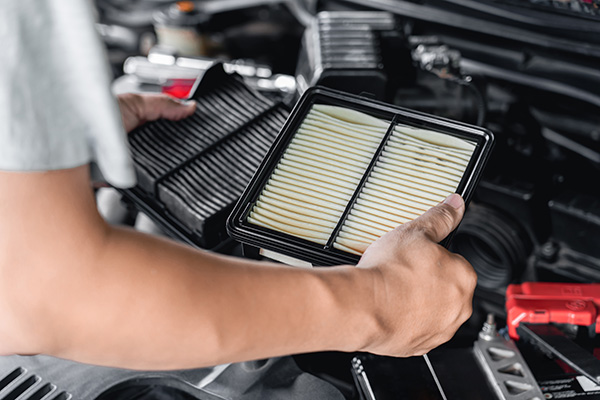
The air filter plays a key role in a vehicle’s engine system. It cleans the air that enters the engine. Clean air helps the engine run smoothly and burn fuel efficiently. Without a good air filter, dirt and dust can enter the engine. This dirt can cause damage and reduce fuel efficiency.
A clean air filter ensures the engine gets enough air. This air mixes with fuel for proper combustion. Poor air flow means the engine uses more fuel. That leads to lower fuel mileage and higher costs. Understanding air filters helps you keep your vehicle running well.
Air Filter Functions
The main job of the air filter is to trap dust, dirt, and debris. It stops these particles from entering the engine’s cylinders. Clean air helps the engine burn fuel better and produce more power. The filter also protects engine parts from wear and tear.
Another function is to maintain proper air flow. The engine needs a certain amount of air to mix with fuel. A clogged filter blocks air flow. This makes the engine work harder and use more fuel. Regular filter checks keep air flowing well.
Types Of Air Filters
Vehicles use different types of air filters. Paper filters are the most common. They are cheap and easy to replace. Foam filters trap dirt well and are reusable. Cotton filters allow good air flow and can be cleaned.
Choosing the right filter affects engine performance. Some filters offer better protection but cost more. Each type balances air flow and filtration differently. Knowing these types helps you pick the best option for your vehicle.
Effects Of A Dirty Air Filter
A dirty air filter can cause several problems in your vehicle. It affects how your engine breathes and works. These problems can make your car less efficient and cost more fuel. Understanding these effects helps keep your car running well.
Here are the main effects a dirty air filter has on your vehicle’s fuel mileage and performance.
Restricted Airflow
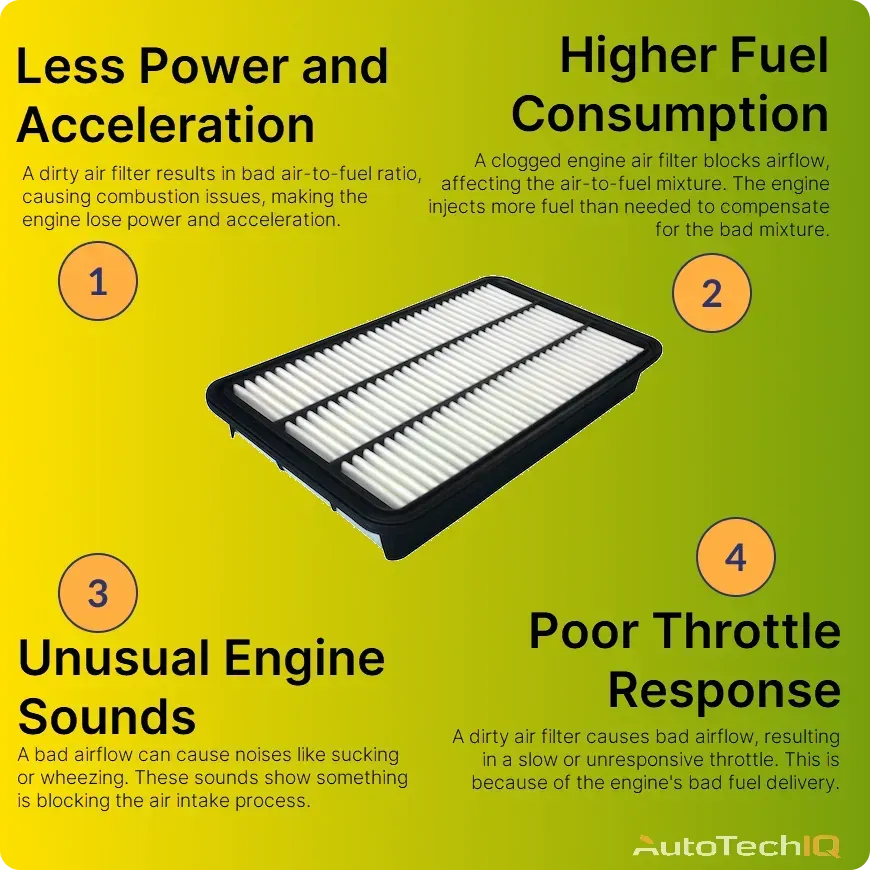
A clogged air filter blocks air from entering the engine. Engines need a steady flow of air to burn fuel properly. Less air means the engine cannot work at its best. This restriction lowers the engine’s efficiency and power.
Engine Performance Issues
With less air, the engine struggles to perform well. It may run rough or stall sometimes. You might notice slower acceleration or odd engine sounds. These issues make driving less smooth and more frustrating.
Increased Fuel Consumption
The engine tries to adjust for less air by using more fuel. This extra fuel use lowers your miles per gallon. Over time, a dirty air filter causes your car to use more gas than needed. This leads to higher fuel costs for you.
Fuel Mileage And Air Quality
Fuel mileage depends heavily on the quality of air entering the engine. Clean air helps the engine burn fuel more efficiently. A dirty air filter blocks airflow, reducing air quality. This change affects how the engine mixes air and fuel. The result? Lower fuel mileage and more pollution.
Air-fuel Mixture Balance
The engine needs a perfect balance of air and fuel. Too little air makes the mixture rich, with too much fuel. Too much air makes it lean, with too little fuel. A dirty air filter reduces airflow, causing a rich mixture. This means the engine uses more fuel than needed. Poor air-fuel balance leads to wasted fuel and less power.
Impact On Combustion Efficiency
Clean air helps fuel burn fully inside the engine. A dirty filter lowers air quality, causing incomplete combustion. This wastes fuel and creates more emissions. Poor combustion also leaves carbon deposits inside the engine. These deposits reduce engine performance over time. Better combustion means better fuel mileage and a cleaner engine.
Credit: www.autotechiq.com
Signs Of A Clogged Air Filter
A clogged air filter blocks air from reaching your engine. This can cause several issues that affect your car’s performance and fuel mileage. Recognizing these signs early helps avoid costly repairs and keeps your vehicle running smoothly.
Reduced Acceleration
Your car may feel slow when you press the gas pedal. This happens because the engine gets less air than it needs. Less air means less power, so acceleration drops. You might notice the car struggles going uphill or merging into traffic.
Unusual Engine Sounds
A dirty air filter can cause strange noises from the engine. You might hear coughing, popping, or sputtering sounds. These noises happen when the engine tries to work harder with less air. The sounds often increase during acceleration or heavy engine use.
Check Engine Light
The check engine light may turn on due to a clogged air filter. Sensors detect poor airflow and signal a problem. This warning means the engine is not running efficiently. Ignoring the light can lead to bigger engine troubles over time.
Maintenance Tips For Better Mileage
Maintaining your vehicle’s air filter is key to better fuel mileage. A clean air filter helps the engine breathe well. This improves fuel efficiency and reduces emissions. Follow these simple maintenance tips to keep your mileage high and your car running smoothly.
Regular Filter Replacement
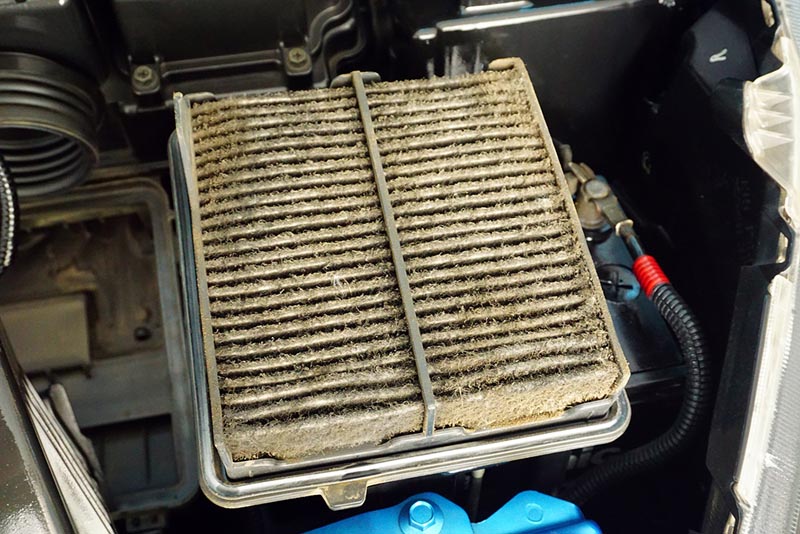
Change the air filter regularly. Check your car’s manual for the right schedule. A dirty air filter clogs airflow. This makes the engine work harder. Replacing the filter on time saves fuel and boosts performance.
Choosing The Right Air Filter
Pick the correct air filter for your car model. Using the right filter ensures proper fit and function. Avoid cheap or wrong filters. They can reduce airflow and lower mileage. Invest in quality filters for long-term savings.
Diy Vs Professional Service
You can change the air filter yourself with basic tools. It is simple and saves money. But, a professional service checks other parts too. They catch hidden problems early. Choose what fits your skills and budget for best results.
Credit: www.pgfilters.com
Real-world Fuel Savings
Real-world fuel savings from a clean air filter show clear benefits. A dirty air filter reduces air flow to the engine. This forces the engine to work harder and use more fuel. Replacing or cleaning the air filter can help improve mileage. Drivers notice a difference in fuel costs over time.
Case Studies
Several studies tested cars with dirty and clean air filters. One study found a 10% drop in fuel efficiency with dirty filters. Another showed a 5% improvement after replacing the filter. These results varied by car type and driving conditions. Still, the trend was clear. Clean air filters help save fuel in real driving.
Long-term Benefits
Keeping the air filter clean helps the engine last longer. A healthy engine burns fuel more efficiently. Over time, this means fewer visits to the gas station. Small fuel savings add up to big savings across months. Regular filter checks are a simple way to protect your wallet.
Frequently Asked Questions
How Does A Dirty Air Filter Reduce Fuel Mileage?
A dirty air filter restricts airflow to the engine. This causes inefficient fuel combustion, leading to higher fuel consumption. Clean air filters improve oxygen supply, enhancing fuel efficiency and engine performance.
Can A Clogged Air Filter Cause Poor Engine Performance?
Yes, a clogged air filter limits air intake. This results in reduced engine power and sluggish acceleration. Regular filter replacement ensures optimal engine function and maintains fuel economy.
How Often Should I Replace My Air Filter?
Replace your air filter every 12,000 to 15,000 miles. Check it more frequently in dusty environments. Regular replacement helps maintain fuel efficiency and engine health.
Does A Dirty Air Filter Increase Emissions?
A dirty air filter causes incomplete fuel combustion, raising harmful emissions. Clean filters promote better air-fuel mix, reducing pollutants and supporting environmental standards.
Conclusion
A dirty air filter makes your engine work harder. This lowers your car’s fuel mileage and wastes gas. Clean air filters let air flow easily, helping your engine run better. Changing the filter regularly saves money on fuel and repairs.
Don’t ignore this simple step for car care. Keep your air filter clean for better fuel efficiency. Your wallet and the environment will thank you. Small fixes can lead to big savings. Easy to do, and worth the effort.


