
Have you recently been in a car accident and suffered whiplash? You’re probably wondering, “How much is whiplash worth?” It’s a common question because whiplash can cause real pain, medical bills, and lost time from work.
Knowing the value of your injury can help you make smart decisions about insurance claims or legal action. You’ll discover what affects whiplash compensation and how to make sure you get what you deserve. Keep reading to protect your rights and get the answers you need.
Factors Affecting Whiplash Claims
Whiplash claims vary widely in value. Many factors influence the amount a person can receive after a car accident. Understanding these factors helps set realistic expectations. Each claim is unique and depends on specific details.
Severity Of Injury
The seriousness of the whiplash affects the claim value. Mild cases with little pain usually get lower settlements. Severe injuries causing long-term pain and disability increase compensation. Medical exams and doctor reports prove injury severity.
Medical Treatment And Costs
Treatment type and expenses impact claim amounts. More doctor visits, therapy sessions, and medications raise costs. These costs add to the compensation request. Bills from hospitals and clinics serve as proof.
Impact On Daily Life
Whiplash that limits daily activities affects claim worth. If pain stops work or hobbies, compensation is higher. Emotional distress and loss of enjoyment also count. Detailed descriptions help show these impacts clearly.
Insurance Policy Limits
Insurance coverage caps how much a claim pays. Even with severe injuries, payouts cannot exceed policy limits. Knowing these limits helps estimate possible compensation. Sometimes, multiple policies may apply.
Fault And Liability
Who caused the accident changes claim outcomes. Full fault by the other driver supports a stronger claim. Shared fault reduces the payout proportionally. Proof of liability, like police reports, is crucial.
Calculating Whiplash Compensation
Calculating whiplash compensation involves understanding several types of damages. Each type helps determine how much money a victim may receive. The amount depends on the injury’s impact on life and finances.
Economic Damages
Economic damages cover the financial costs from the accident. This includes medical bills for treatment and therapy. Lost wages from missing work also count here. Future earnings may be included if the injury limits work ability. Keep all receipts and bills for proof.
Non-economic Damages
Non-economic damages address pain and suffering caused by whiplash. These are harder to measure but very important. They reflect emotional distress, loss of enjoyment, and reduced quality of life. These damages vary widely depending on the injury’s severity and duration.
Punitive Damages Possibility
Punitive damages punish the party at fault for reckless behavior. These damages are rare in whiplash cases. They apply only if the other driver acted with gross negligence or intent. Courts use punitive damages to discourage dangerous driving.
Common Whiplash Symptoms
Whiplash is a common injury in car accidents. It affects the neck and surrounding muscles. Symptoms can appear right after the accident or days later. Knowing the signs helps you seek treatment early.
Neck Pain And Stiffness
Neck pain is the most common symptom of whiplash. It may feel sharp or dull. Stiffness limits neck movement. Turning or bending the neck can cause discomfort. This pain can last weeks or months.
Headaches And Dizziness
Many people with whiplash get headaches. These often start at the base of the skull. Dizziness or feeling lightheaded is also common. These symptoms can affect daily activities and focus.
Fatigue And Sleep Disturbances
Whiplash can cause fatigue, making you feel tired all day. Sleep problems like trouble falling or staying asleep occur. Poor sleep slows recovery and increases pain sensitivity.
Emotional And Cognitive Effects
Whiplash may cause emotional changes like irritability or anxiety. Some people have trouble concentrating or remembering things. These effects can last long after physical pain fades.
Medical Documentation Importance
Medical documentation plays a key role in whiplash injury claims. It proves the injury’s existence and shows how serious it is. Clear records help insurance companies or courts understand the pain and costs involved. They also support the amount of money you may receive.
Good medical records build a strong case. They link the car accident to your injury. They show the treatment you need and the effects on your life.
Diagnostic Tests
Diagnostic tests provide proof of injury. X-rays, MRIs, and CT scans reveal damage to your neck and spine. They help doctors see the injury clearly. This evidence is important for your claim. It confirms your whiplash and guides your treatment.
Doctor’s Reports
Doctors’ reports explain your injury in detail. They describe symptoms and how the accident caused them. These reports outline your pain level and physical limits. Clear reports make your claim stronger. They show the seriousness of your whiplash and the need for care.
Treatment Records
Treatment records track your recovery journey. They include therapy visits, medications, and follow-ups. These documents prove ongoing care and costs. They show how your injury affects daily life. Well-kept treatment records help ensure fair compensation.
Negotiating With Insurance Companies
Negotiating with insurance companies can feel tough after a car accident. They often try to pay less than your claim is worth. Understanding their tactics helps you protect your rights and get fair compensation. Stay calm and know your options before accepting any offer.
Initial Settlement Offers
Insurance companies usually start with a low offer. This offer may not cover all your medical bills or lost wages. They want to settle quickly and cheaply. Review the offer carefully. Compare it with your actual expenses and pain caused by whiplash. Do not rush to agree.
Dealing With Lowball Offers
Lowball offers are common in whiplash cases. They try to minimize payouts for soft tissue injuries. You can negotiate by providing medical records and bills. Show proof of how the injury affects your life. Stay firm and ask for a fair amount. Keep communication clear and polite.
When To Consult A Lawyer
Consult a lawyer if the insurance company won’t offer enough money. A lawyer knows how to handle tough negotiations. They can advise you on your rights and next steps. Legal help increases your chance of a better settlement. Don’t wait too long to get advice.
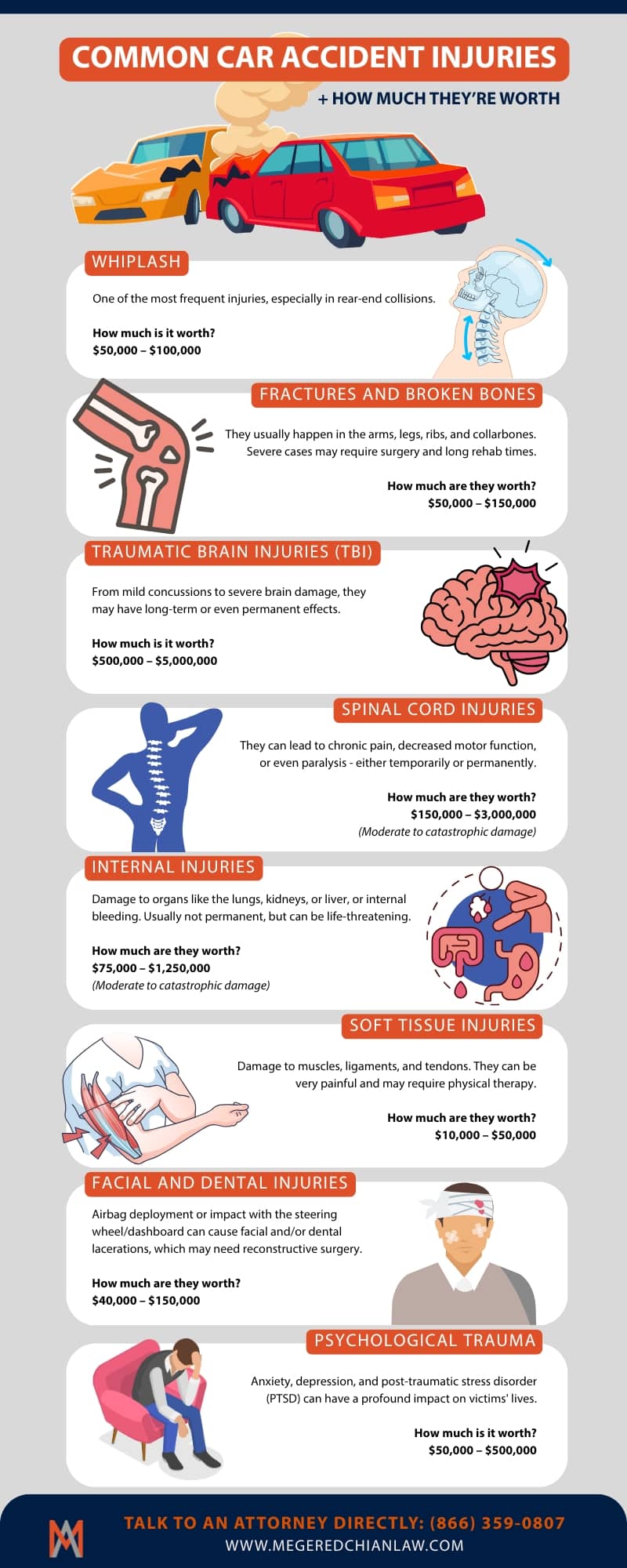
Credit: megeredchianlaw.com
Legal Timeframes And Deadlines
Legal timeframes and deadlines play a big role in whiplash injury claims. Missing these dates can stop you from getting compensation. Knowing these limits helps protect your rights.
These deadlines vary by state and type of claim. Acting quickly ensures your case moves forward. Understanding key timeframes like the statute of limitations is essential.
Statute Of Limitations
The statute of limitations is the deadline to start a lawsuit. It sets the max time after a car accident to file a claim. This period usually ranges from one to three years.
Once this time passes, courts may not hear your case. This means you lose the chance to get money for whiplash injuries. Each state has different rules about this limit.
Knowing your state’s specific deadline is critical. It avoids losing your right to sue. Acting before the statute of limitations expires keeps your case alive.
Filing Claims On Time
Filing claims on time means submitting all papers by deadlines. Insurance companies require prompt claims to investigate and pay damages. Late filings can lead to denial or reduced offers.
Start the claim process as soon as possible. Gather medical records, accident reports, and witness statements early. Early filing helps build a strong case.
Meeting all deadlines improves chances for fair compensation. It shows you take the claim seriously. Missing these dates can hurt your case significantly.
Maximizing Whiplash Settlement
Maximizing a whiplash settlement takes careful steps. You must prove the injury’s impact clearly. Insurance companies look for strong evidence. Showing the full extent of pain and costs helps increase your claim.
Keeping Detailed Records
Write down every symptom and pain you feel. Note the time and date of each. Keep all medical bills and receipts safe. Document any missed work days or lost wages. These records build a strong case for your injury.
Following Medical Advice
Visit your doctor regularly. Follow all treatment plans exactly. Skipping appointments can hurt your claim. Show that you take your recovery seriously. Medical records prove how the injury affects your life.
Avoiding Common Mistakes
Don’t admit fault or blame yourself. Avoid quick settlements before medical checks. Stay away from social media posts about the accident. Be honest but careful with insurance companies. Small errors can reduce your settlement amount.

Credit: injurylawyer.com

Credit: www.tokh.com
Frequently Asked Questions
How Is Whiplash Compensation Calculated In Car Accidents?
Whiplash compensation depends on injury severity, medical expenses, lost wages, and pain endured. Insurance companies assess these factors to determine a fair settlement.
What Factors Affect Whiplash Settlement Amounts?
Settlement amounts vary based on injury seriousness, treatment costs, impact on daily life, and fault degree in the accident. Documentation and legal representation also influence compensation.
Can I Claim Whiplash Damages Without Visible Injuries?
Yes, whiplash often lacks visible signs but causes pain. Medical diagnosis and treatment records support valid claims for compensation.
How Long Does It Take To Settle A Whiplash Claim?
Settlement duration varies from weeks to months, depending on case complexity, insurance cooperation, and evidence availability. Prompt medical care and documentation speed up the process.
Conclusion
Whiplash compensation depends on injury severity and medical costs. Each case is unique, so amounts vary widely. You should keep all medical records and expenses. Talking to a legal expert can help you understand your rights. Quick action often leads to better results.
Don’t ignore symptoms, even if they seem minor. Your health and fair compensation matter most. Stay informed and take the right steps after an accident. This helps protect your future and peace of mind.

