

Have you ever wondered if your car’s fuel filter might be causing trouble? A bad fuel filter can quietly affect your vehicle’s performance, leaving you frustrated and stuck at the worst times.
But how can you tell if it’s really the fuel filter that’s the problem? You’ll discover clear, easy signs to watch for so you can catch issues early. Keep reading to protect your engine and avoid costly repairs down the road.
Your car—and your peace of mind—will thank you.

Credit: oilchangers.com
Fuel Filter Basics
Understanding the basics of a fuel filter helps spot problems early. It plays a key role in keeping your engine healthy. Knowing how it works makes it easier to tell if it is bad. This section explains the main facts about fuel filters.
Role Of The Fuel Filter
The fuel filter cleans dirt and rust from the fuel. It stops these particles from reaching the engine. Clean fuel means better engine performance and fewer repairs. The filter protects fuel injectors and the engine parts.
Common Fuel Filter Types
There are two main types of fuel filters. One is the inline filter, placed in the fuel line. The other is the canister filter, often found near the fuel tank. Both types do the same job but look different. Some cars use a cartridge-style filter inside a housing.
Fuel Filter Lifespan
Fuel filters do not last forever. They usually last between 20,000 to 40,000 miles. Dirt and debris build up inside the filter over time. A clogged filter makes the engine run poorly. Replacing it on time keeps the car running smooth and saves money.
Signs Of A Bad Fuel Filter
A fuel filter keeps dirt and debris from reaching your engine. Over time, it can get clogged and stop working well. This causes several signs that tell you the fuel filter might be bad. Paying attention to these signs helps protect your engine and keep your car running smoothly.
Engine Performance Issues
A bad fuel filter can slow down your engine. You may notice your car feels weak or does not accelerate well. The engine might hesitate or sputter during driving. These problems happen because fuel flow is limited by the clogged filter.
Difficulty Starting The Engine
Starting your car takes longer than usual. The engine may crank but not start right away. This happens when fuel cannot reach the engine quickly. A dirty fuel filter often causes this delay in starting.
Unusual Engine Noises
You might hear strange sounds from the engine. Popping or sputtering noises are common. These sounds occur when fuel supply is inconsistent. A bad fuel filter restricts fuel flow, causing these noises.
Decreased Fuel Efficiency
Your car uses more fuel than before. You notice you fill the tank more often. A clogged fuel filter makes the engine work harder. This reduces fuel economy and wastes gas.
Check Engine Light Alerts
The check engine light may turn on suddenly. This warning signals a problem with fuel delivery. A bad fuel filter can trigger this alert. It is important to get your car checked when the light appears.
Diagnosing Fuel Filter Problems
Diagnosing fuel filter problems helps keep your vehicle running smoothly. A clogged or bad fuel filter can cause engine trouble, poor performance, and even stalling. Early diagnosis saves time and money on repairs. Use these simple methods to check your fuel filter’s condition.
Visual Inspection Tips
Start with a close look at the fuel filter. Check for rust, cracks, or leaks on its surface. Look for dark or dirty fuel inside the filter. Any signs of damage or dirt may mean the filter needs replacement. Ensure the filter is properly mounted and all connections are tight. A clean filter housing means better fuel flow.
Fuel Pressure Testing
Fuel pressure testing measures how well fuel flows through the filter. Low pressure often shows a clogged filter. Use a fuel pressure gauge to test at the fuel rail or fuel line. Compare the reading to the vehicle’s specifications. A low reading can cause engine hesitation or poor acceleration. This test gives a clear sign of filter issues.
Using Diagnostic Tools
Modern cars have onboard diagnostics to detect fuel system problems. Use an OBD-II scanner to check for trouble codes related to fuel pressure or fuel delivery. Codes like P0171 or P0174 may point to fuel filter problems. Some advanced scanners show live data for fuel trim and pressure. These tools help pinpoint fuel filter issues quickly and accurately.
Fixing A Clogged Fuel Filter
Fixing a clogged fuel filter is crucial to keep your vehicle running smoothly. A blocked filter stops fuel from reaching the engine properly. This can cause poor performance, stalling, or trouble starting. Knowing how to fix the filter saves time and money.
When To Replace The Filter
Replace the fuel filter if you notice engine misfires or hesitation. Rough idling and weak acceleration are signs too. If your car stalls often or has trouble starting, check the filter. Follow your vehicle’s manual for replacement intervals. Old filters trap dirt and reduce fuel flow.
Diy Replacement Steps
First, relieve fuel system pressure by removing the fuel pump fuse. Next, locate the fuel filter under the car or near the engine. Use a wrench to disconnect the fuel lines carefully. Remove the old filter and install the new one in the same position. Tighten the connections and replace the fuse. Start the engine and check for leaks.
When To Seek Professional Help
Seek help if you cannot find the filter or lack tools. If fuel lines are hard to access, a mechanic should assist. Problems with the fuel pump or complex fuel systems need experts. Avoid risks of fuel spills or damage. Professionals ensure safe and correct replacement.
Preventing Future Fuel Filter Issues
Preventing future fuel filter issues saves time and money. It keeps your vehicle running smoothly. Taking small steps helps avoid bigger problems down the road.
Regular Maintenance Schedule
Change the fuel filter as the car manual says. This stops dirt from clogging the filter. Regular checks catch problems early. A clean fuel filter improves engine performance and fuel efficiency.
Using Quality Fuel
Use fuel from trusted gas stations only. Poor-quality fuel can clog the filter faster. Clean fuel keeps the fuel system healthier. It reduces the chance of damage to the filter and engine.
Additional Fuel System Care Tips
Keep the fuel tank at least a quarter full. This prevents dirt from entering the system. Avoid running the car until empty. Use fuel additives that clean the system. They help remove deposits and protect the filter.

Credit: www.youtube.com
Credit: www.jiffylube.com
Frequently Asked Questions
How Can I Tell If My Fuel Filter Is Clogged?
A clogged fuel filter causes engine hesitation, poor acceleration, and difficulty starting. Check for these symptoms and reduced fuel efficiency as signs.
What Are Common Signs Of A Bad Fuel Filter?
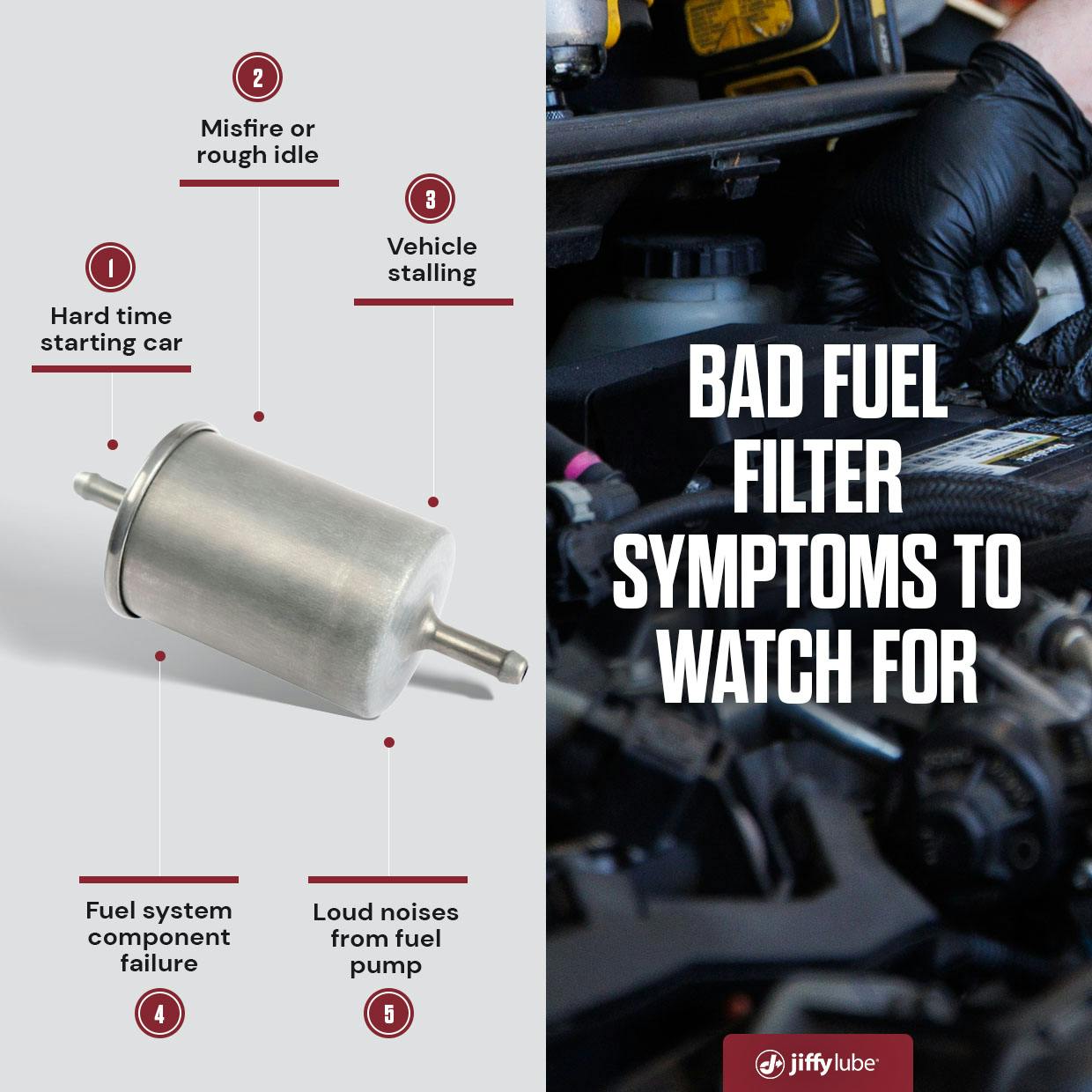
Common signs include engine misfires, stalling, rough idling, and decreased power. These indicate restricted fuel flow from a failing filter.
How Often Should I Replace The Fuel Filter?
Typically, replace the fuel filter every 20,000 to 40,000 miles. Check your vehicle’s manual for specific recommendations to maintain performance.
Can A Bad Fuel Filter Damage My Engine?
Yes, a bad fuel filter can cause fuel starvation and damage engine components. Timely replacement prevents costly repairs and maintains engine health.
Conclusion
A bad fuel filter can cause many car problems. Watch for slow engine starts, poor acceleration, or strange noises. Regular checks help keep your car running smooth. Replacing a dirty filter saves time and money later. Trust your senses and car’s performance signs.
Stay alert to avoid bigger issues on the road. Taking care of the fuel filter means a healthier engine. Keep your vehicle safe and reliable every day. Simple steps prevent costly repairs and stress. Your car will thank you with better power and fuel use.


