
Are you wondering what PSI is the best for pressure washing your car? Using the right pressure can make all the difference between a sparkling clean finish and unwanted damage.
Too much force might harm your paint, while too little may leave dirt behind. You’ll discover exactly how to choose the perfect PSI for your car, ensuring a safe and effective clean every time. Keep reading to protect your vehicle and get that showroom shine with ease!
Choosing The Right Psi
Choosing the right PSI for pressure washing your car is important. The PSI level affects how clean your car gets and protects its paint. Using too much pressure can damage surfaces. Too little pressure may not clean well. Understanding PSI levels helps you pick the best one for your car’s needs.
Low Psi For Delicate Surfaces
Low PSI is best for delicate car parts. Use it on windows, mirrors, and thin paint areas. Low pressure cleans gently without causing scratches or dents. It removes dust and light dirt safely. This setting keeps your car’s finish looking smooth and new.
Medium Psi For General Cleaning
Medium PSI works well for most car surfaces. It cleans dirt, mud, and grime effectively. Use this pressure on doors, hoods, and roofs. Medium PSI removes common stains without harming paint. It balances power and safety for everyday washing.
High Psi For Tough Stains
High PSI is needed for tough stains and grime. Use it on wheels, undercarriage, and heavily soiled areas. High pressure removes grease, tar, and brake dust quickly. Avoid using high PSI on sensitive surfaces to prevent damage. It delivers strong cleaning power where needed.

Credit: www.ryobitools.com
Car Surface Sensitivity
Car surfaces react differently to pressure washing. Knowing the right PSI protects your vehicle. Too much pressure can damage delicate parts. Using the correct PSI keeps your car safe and clean.
Paint And Clear Coat Considerations
The paint and clear coat are the car’s protective layers. High PSI can chip or strip paint easily. Use a gentle spray to avoid scratches. A pressure between 1200 and 1900 PSI is usually safe. Avoid staying too long on one spot. This prevents damage and keeps the finish shiny.
Glass And Plastic Components
Glass and plastic parts need careful cleaning. High pressure may crack or scratch these surfaces. Keep PSI below 1200 for these materials. Use a wide spray to reduce force. Clean gently to avoid damage and streaks.
Rubber And Trim Areas
Rubber seals and trims are sensitive to strong water jets. High PSI can tear or loosen these parts. A lower pressure of around 1000 PSI works best. Be gentle to keep seals tight and trims intact. Proper care extends the life of these areas.
Recommended Psi Levels
Choosing the right PSI for pressure washing a car is very important. The pressure affects how well the car gets clean and if the paint stays safe. Using too much pressure can harm the car’s surface. Too little pressure might not clean well. Knowing the recommended PSI levels helps protect the car and clean it well.
Ideal Psi Range For Cars
The best PSI range for washing cars is usually between 1,200 and 1,900 PSI. This range cleans dirt and grime without damaging the paint or parts. Staying in this range keeps the car safe. Most home pressure washers work well within these limits.
Adjusting Psi For Different Car Types
Different cars need different PSI settings. Older cars with weaker paint need lower PSI, around 1,200 to 1,500. Newer cars with strong paint can handle up to 1,900 PSI. For delicate parts like mirrors or decals, lower PSI is safer. Adjust the pressure based on the car’s age and condition.
Avoiding Damage With Proper Psi
High PSI can cause scratches, chips, or peeling paint. Keep the nozzle at least 12 inches away from the car’s surface. Test the pressure on a small, hidden area first. Use a wider spray pattern to reduce force. Proper PSI protects the car and keeps it looking good longer.
Pressure Washer Nozzle Tips
Pressure washer nozzle tips control water flow and spray shape. They impact cleaning power and surface safety. Choosing the right nozzle tip protects your car’s paint. It also makes washing easier and more effective.
Nozzle Types And Spray Angles
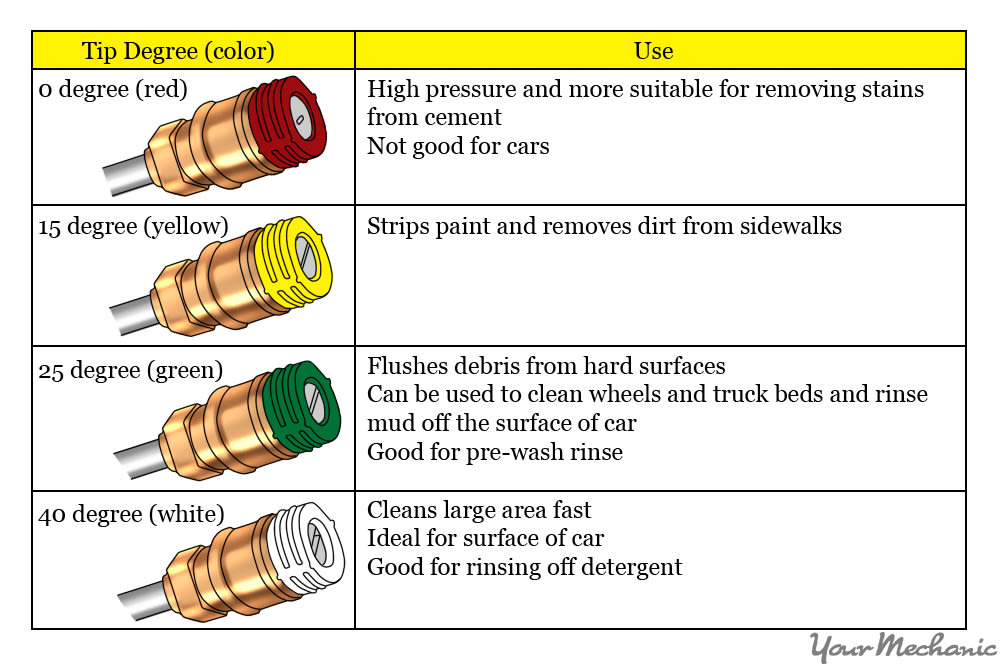
Nozzles come in different spray angles: 0°, 15°, 25°, 40°, and soap nozzles. A 0° nozzle creates a narrow, strong stream. It can damage car paint easily. A 15° nozzle has a powerful, narrow fan. It suits tough dirt but needs care. The 25° nozzle offers a wider spray, safer for car surfaces. The 40° nozzle provides a gentle, wide spray for light cleaning. Soap nozzles apply detergent at low pressure for better cleaning.
Matching Nozzle To Psi
PSI means pounds per square inch, or water pressure. Nozzle angle and PSI must match for safe cleaning. High PSI with a narrow nozzle can harm your car. Use wider spray tips for higher PSI. Lower PSI works well with narrow nozzles. This balance prevents damage and cleans efficiently.
Best Nozzle For Car Washing
The 25° nozzle is the best choice for most cars. It cleans well without harming paint. Use a 40° nozzle for very gentle washing. Avoid 0° and 15° nozzles on cars. They are too strong and risk damage. Soap nozzles help apply car shampoo evenly. Always test on a small area before full washing.
Effective Pressure Washing Techniques
Effective pressure washing techniques help clean cars safely and thoroughly. Using the right pressure and method keeps the car paint and parts safe. Understanding how to apply pressure washing correctly improves results and avoids damage.
Maintaining Safe Distance
Keep the nozzle at least 12 inches from the car surface. Holding it too close can damage paint or trim. Move the nozzle steadily to avoid focused pressure in one spot. Adjust distance based on the pressure setting and dirt level.
Using Soaps And Detergents
Choose car-friendly soaps designed for pressure washers. Avoid harsh chemicals that harm paint or finish. Apply soap evenly before rinsing. Let the detergent sit for a few minutes to loosen dirt. Use low pressure to spread soap without damage.
Rinsing And Drying Tips
Rinse the car thoroughly with clean water after soaping. Use high pressure on a wide spray to remove all soap residue. Dry the car with a soft microfiber cloth to prevent water spots. Work quickly to stop water from drying on the surface.
Credit: www.yourmechanic.com
Common Mistakes To Avoid
Pressure washing your car needs care and the right PSI. Many people make simple mistakes that harm their car’s paint or waste water. Avoid these common errors to keep your car clean and safe.
Using Excessive Psi
High PSI can damage your car’s paint and trim. Using too much pressure can cause scratches or peel the paint. Stick to a PSI level between 1200 and 1900. This range cleans well without harming the surface.
Ignoring Car Surface Types
Different car surfaces need different care. Soft paint, decals, and plastic parts require lower pressure. Metal parts may tolerate more pressure. Know your car’s materials before washing. Adjust PSI to match each surface.
Skipping Protective Measures
Never skip protective steps like rinsing or using foam. Pre-rinse removes loose dirt that can scratch paint. Foam softens grime for easier cleaning. Always use a nozzle with a wide spray angle. Wear gloves and eye protection for safety.
Additional Tools And Accessories
Choosing the right PSI for pressure washing a car is important. Along with pressure, using the correct tools helps protect your car’s surface. Extra accessories make cleaning easier and safer. They improve results without causing damage. Below are some useful tools to consider.
Foam Cannons And Brushes
Foam cannons spray thick soap foam onto the car. The foam loosens dirt before washing. This reduces the need for hard scrubbing. Brushes help remove stubborn dirt gently. Soft-bristle brushes protect the paint. Using foam and brushes together cleans well.
Water Filters And Softeners
Water filters remove dirt and minerals from water. Clean water prevents spots on the car. Softeners reduce hard minerals that can harm paint. They make water gentler for washing. Using filtered or softened water improves shine.
Protective Gear For Users
Wearing protective gear keeps users safe. Gloves protect hands from chemicals and pressure. Safety glasses shield eyes from spray and debris. Waterproof boots prevent slipping on wet surfaces. Proper gear makes washing safer and more comfortable.

Credit: www.youtube.com
Frequently Asked Questions
What Psi Is Safe For Washing A Car?
A PSI between 1200 and 1900 is safe for car washing. It effectively removes dirt without damaging paint or surfaces.
Can High Psi Damage My Car’s Paint?
Yes, PSI above 2000 can strip paint or cause scratches. Always use moderate pressure to protect your car’s finish.
What Psi Works Best For Cleaning Car Tires?
Using 2000 to 3000 PSI is ideal for tires. This pressure removes grime and brake dust without harming rubber.
Should I Adjust Psi For Different Car Parts?
Yes, lower PSI for delicate areas like windows. Higher PSI is suitable for wheels and undercarriage cleaning.
Conclusion
Choosing the right PSI keeps your car safe and clean. Too much pressure can damage paint or windows. Too little pressure might not remove dirt well. Aim for a medium PSI range for best results. Always test on a small area first.
Use the right nozzle with your pressure washer. Clean your car gently to avoid scratches. Regular washing helps keep your car looking new. Remember, balance matters in pressure washing. Take care, and your car will shine nicely.


