
Have you noticed your car acting up lately? Maybe it’s struggling to start or feels like it’s losing power.
These could be signs that your fuel filter is clogged. But how can you be sure? Knowing the warning signs of a clogged fuel filter can save you time, money, and hassle. You’ll discover the simple ways to tell if your fuel filter needs attention—so you can keep your vehicle running smoothly and avoid unexpected breakdowns.
Keep reading to find out what to look for and what steps to take next.
Fuel Filter Basics
A fuel filter plays a key role in keeping your vehicle’s engine healthy. It cleans the fuel before it reaches the engine. This stops dirt and debris from causing damage. A clean fuel filter helps your car run smoothly. Understanding its basics can help you spot problems early.
Role In Vehicle Performance
The fuel filter stops tiny particles from entering the engine. Dirty fuel can clog the engine parts and reduce power. A blocked filter limits fuel flow. This causes poor engine performance, rough idling, and stalling. It also lowers fuel efficiency. Regular filter checks keep your vehicle running strong.
Common Fuel Filter Types
Fuel filters come in different designs for various vehicles. The most common types are cartridge and spin-on filters. Cartridge filters need housing to hold them in place. Spin-on filters look like oil filters and are easy to replace. Some cars use in-line filters placed on the fuel line. Knowing your filter type helps with proper maintenance.
Reduced Engine Power
Reduced engine power is a common sign of a clogged fuel filter. The fuel filter stops dirt and debris from reaching the engine. When it is blocked, fuel flow slows down. The engine does not get enough fuel to work well. This can make driving hard and unsafe.
Acceleration Issues
Your car may struggle to speed up quickly. Press the gas pedal, but the car lags. The engine tries to respond but lacks fuel. This delay shows the fuel filter is likely clogged. Acceleration problems can affect daily driving and highway merging.
Difficulty Maintaining Speed
Keeping a steady speed becomes a challenge. The car may slow down on flat roads or hills. It feels like the engine is tired or weak. A clogged fuel filter reduces fuel flow, causing this issue. The vehicle works harder but cannot maintain power.
Engine Misfires And Stalling
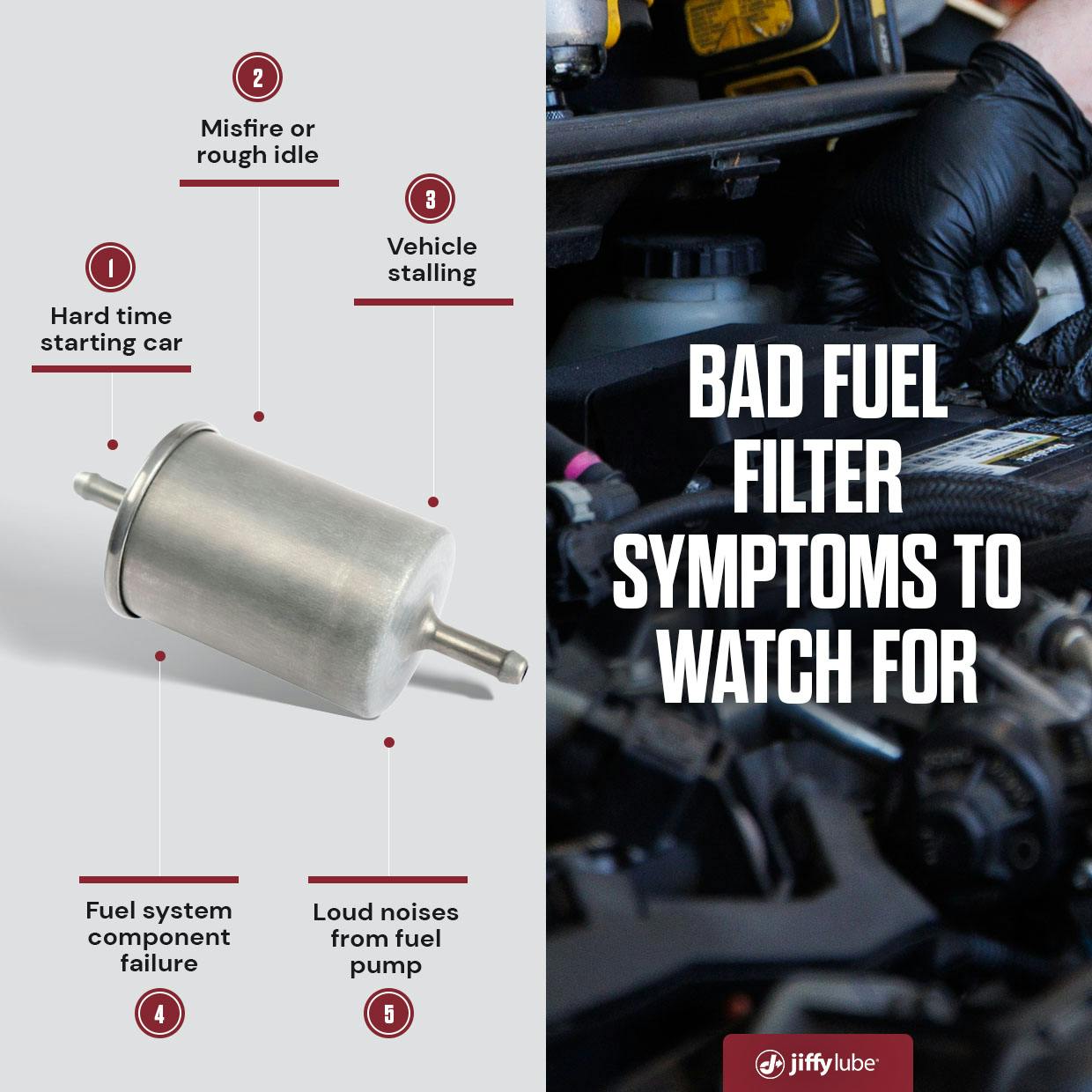
Engine misfires and stalling are common signs of a clogged fuel filter. These problems happen because the engine does not get enough fuel. This lack of fuel causes the engine to run unevenly or stop suddenly. Understanding these signs helps you identify fuel filter issues early. It also prevents more serious engine damage.
Causes Of Misfires
Misfires occur when the engine cylinders do not fire properly. A clogged fuel filter restricts fuel flow to the engine. Less fuel means the spark plugs cannot ignite the mixture well. This causes the engine to shake or run rough. Misfires can also happen under heavy acceleration or at idle.
When Stalling Occurs
Stalling happens when the engine suddenly stops running. A clogged fuel filter can starve the engine of fuel. This lack of fuel causes the engine to lose power and shut off. Stalling often occurs when the car is idling or moving slowly. It can be dangerous if it happens while driving.
Credit: www.jiffylube.com
Unusual Engine Noises
Unusual engine noises often signal a clogged fuel filter. These sounds show your engine struggles to get enough fuel. Listen carefully to your car’s engine. It can tell you a lot about the fuel filter’s condition.
Knocking Sounds
Knocking sounds come from uneven fuel flow. The clogged filter stops fuel from reaching the engine smoothly. This causes small explosions inside the engine. The knocking noise grows louder when accelerating. It feels like the engine is fighting itself.
Rough Idling
Rough idling means the engine shakes or vibrates when stopped. A clogged fuel filter limits fuel supply at low speeds. The engine misses some power strokes. This makes the idle uneven and bumpy. You may notice the engine stalling sometimes.
Poor Fuel Economy
Poor fuel economy can signal problems in your vehicle’s fuel system. It means your car uses more fuel than usual to travel the same distance. This issue can raise your fuel costs and reduce driving efficiency.
Several factors cause poor fuel economy, but a clogged fuel filter is often a key reason. The filter blocks dirt and debris from entering the engine. Over time, it can get dirty and restrict fuel flow. This restriction forces the engine to work harder and consume extra fuel.
Signs Of Increased Fuel Consumption
Notice your car uses more fuel than before. You fill the tank more often but drive the same distance. The engine may feel sluggish or hesitate during acceleration. These signs show your vehicle burns fuel inefficiently.
Watch for rough idling or stalling at low speeds. Such symptoms often link to fuel delivery problems. Poor fuel economy usually appears alongside these issues.
Link To Fuel Filter Condition
A clogged fuel filter reduces fuel flow to the engine. This causes incomplete combustion and wasted fuel. Dirt and debris build-up inside the filter causes the blockage.
When the filter clogs, the fuel pump works harder. This strains the fuel system and lowers performance. Cleaning or replacing the fuel filter restores proper fuel flow. It improves mileage and engine response.
Starting Problems
Starting problems are a common sign of a clogged fuel filter. The filter stops fuel from flowing properly to the engine. This causes difficulty in starting the vehicle. You may notice the engine takes longer to turn on or struggles to start at all. These issues indicate the fuel filter may be dirty or blocked.
Delayed Engine Start
The engine may crank but not start right away. It can take several seconds before the engine fires up. This delay happens because the clogged fuel filter limits fuel flow. The engine does not get enough fuel quickly. This slows down the starting process and can be frustrating.
Repeated Attempts Needed
Sometimes, you must try starting the car more than once. The engine may fail to start on the first try. After a few attempts, it finally turns on. This happens when the clogged filter restricts fuel supply. Multiple start attempts show the fuel filter is struggling to do its job.
Check Engine Light Activation
The check engine light turns on when the car’s computer detects a problem. A clogged fuel filter can cause this warning light to activate. This happens because the engine is not getting enough fuel, which affects its performance.
Noticing the check engine light is the first sign to check the fuel system. It signals that the engine struggles to run smoothly. Ignoring this light can lead to bigger engine issues over time.
Common Error Codes
Error codes help identify the problem behind the check engine light. Codes like P0171 and P0174 show that the engine runs lean. This means there is not enough fuel in the engine’s mix.
Other codes like P0087 point to low fuel pressure. A clogged fuel filter often causes this low pressure. These codes guide mechanics to the fuel filter or fuel pump as the source of trouble.
Diagnostic Steps
Start by using an OBD-II scanner to read the error codes. This device connects to the car’s computer and shows any fault codes. Look for codes related to fuel delivery and pressure.
Next, check the fuel pressure with a gauge. Low fuel pressure can confirm a clogged filter. Also, inspect the fuel filter for dirt or blockage.
Replace the filter if it looks dirty or the pressure is low. Clear the error codes and drive the car again. If the check engine light stays off, the problem is fixed.

Credit: www.youtube.com
Fuel Odor Inside Vehicle
Noticing a fuel odor inside your vehicle can be alarming. It often signals a problem with the fuel system. A clogged fuel filter is one possible cause. This smell can affect your driving comfort and safety.
Causes Of Fuel Smell
A clogged fuel filter can cause fuel to leak or vapor to escape. This leads to a strong smell inside the car. Other causes include a damaged fuel line or a loose fuel cap. Fuel vapors can also come from the engine area if there is a leak. Identifying the exact cause helps to fix the issue quickly.
Health And Safety Concerns
Fuel vapors are harmful to breathe. They can cause headaches, dizziness, and nausea. Prolonged exposure may lead to serious health problems. A strong fuel odor also increases the risk of fire. Always take fuel smells seriously and check your vehicle soon. Keeping the fuel system clean protects your health and safety.
Preventive Maintenance Tips
Preventive maintenance helps keep your vehicle running smoothly. It stops fuel filter clogging before it starts. Following simple tips saves money and avoids breakdowns. Regular checks and timely replacements keep the fuel system clean. This section shares key steps to protect your fuel filter.
Regular Filter Replacement Schedule
Change your fuel filter as the vehicle manual suggests. This keeps dirt and debris from blocking fuel flow. Sticking to the schedule prevents engine problems and poor fuel economy. Use the right filter for your car model. Mark the replacement dates on your calendar. Do not wait for symptoms to appear. A clean fuel filter ensures smooth engine performance.
Signs To Watch For Early
Notice any drop in engine power or rough idling. These can mean the fuel filter is clogged. Hard starts and unusual engine noises also warn of problems. Pay attention to fuel smell or stalling. Early detection helps fix issues before they get worse. Check the filter if you see these signs. Acting fast protects your engine from damage.

Credit: www.autonationmobileservice.com
Frequently Asked Questions
What Are Common Signs Of A Clogged Fuel Filter?
A clogged fuel filter often causes engine misfires, stalling, and slow acceleration. You may also notice rough idling or difficulty starting the vehicle. These symptoms indicate restricted fuel flow, requiring inspection or replacement of the fuel filter to restore proper engine performance.
How Does A Clogged Fuel Filter Affect Engine Performance?
A clogged fuel filter limits fuel flow, causing poor engine performance. This leads to reduced power, hesitation during acceleration, and increased fuel consumption. If untreated, it can cause engine damage due to inadequate fuel supply. Timely filter replacement ensures smooth engine operation and fuel efficiency.
Can I Check Fuel Filter Condition Myself?
Yes, you can inspect the fuel filter for dirt or damage if accessible. However, some filters are inside fuel tanks or lines, requiring professional tools. Regular maintenance and timely replacement based on mileage help prevent clogging and related engine issues.
How Often Should A Fuel Filter Be Replaced?
Fuel filters typically need replacement every 20,000 to 40,000 miles. Check your vehicle’s manual for specific intervals. Replacing the filter on time prevents clogging, ensures clean fuel flow, and maintains engine health. Delaying replacement risks poor performance and costly repairs.
Conclusion
A clogged fuel filter affects your vehicle’s performance and fuel efficiency. Watch for signs like engine hesitation, rough idling, or trouble starting. Regular checks help spot problems early and avoid costly repairs. Clean or replace the fuel filter as needed to keep your engine running smoothly.
Staying alert to these signs ensures your car stays reliable and safe on the road. Don’t ignore small issues—they often signal bigger problems ahead.


