

When it comes to your vehicle’s braking system, you might assume that front and rear brake rotors are pretty much the same. But what if understanding the key differences could improve your car’s safety and performance?
Knowing how front and rear brake rotors work differently can help you make smarter choices about maintenance and upgrades. You’ll discover why these rotors aren’t interchangeable and how that affects your driving experience. Keep reading to learn what sets them apart and why it matters for your vehicle’s safety.
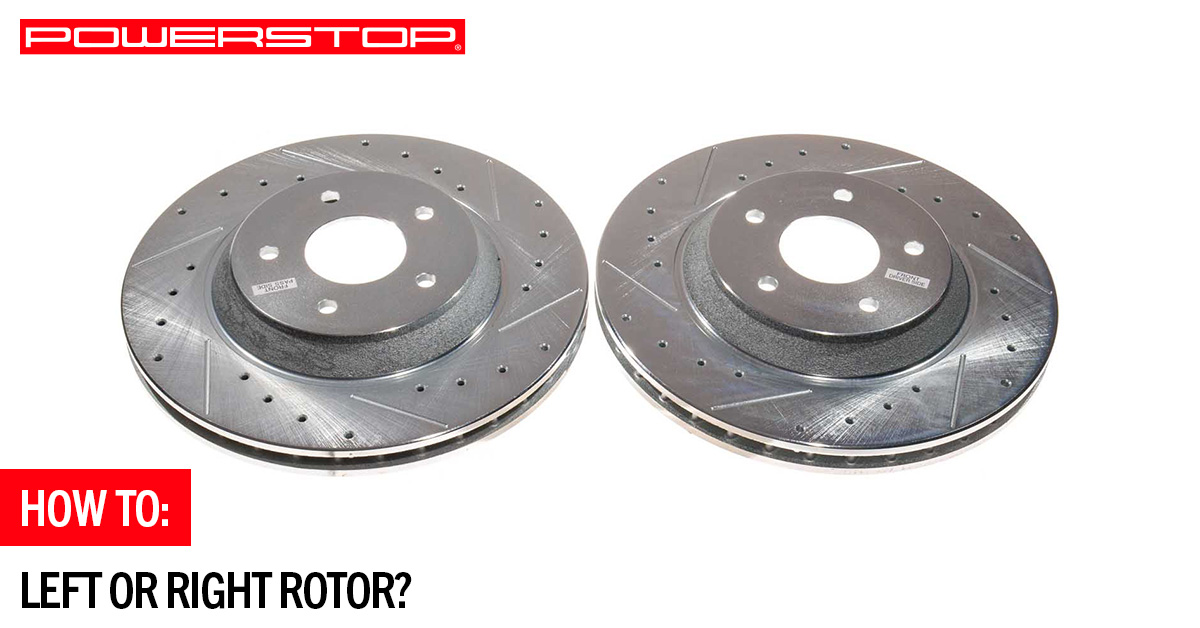
Credit: www.powerstop.com
Brake Rotor Basics
Brake rotors are key parts of a vehicle’s braking system. They work with brake pads to stop the car. Understanding their basics helps to see why front and rear rotors differ.
Rotors face strong forces and heat. Their design and material affect braking power and safety. Let’s explore their role and what they are made of.
Role Of Rotors In Braking
Rotors spin with the wheels. When brakes apply, pads press on the rotors. This creates friction that slows the wheels down.
The rotors must handle heat without warping. They convert motion energy into heat energy safely. This process stops the car smoothly.
Material Composition
Most rotors are made from cast iron. It handles heat well and is cost-effective. Some use steel or carbon composites for better performance.
Material affects rotor weight, heat resistance, and durability. Front rotors often use stronger materials due to higher stress. Rear rotors may be lighter or simpler.
Front Brake Rotors
Front brake rotors play a key role in vehicle safety and performance. They handle most of the braking force. This makes their design very important for stopping power and control. Understanding their features helps in choosing the right parts for your car.
Design Characteristics
Front brake rotors are usually larger than rear ones. They often have vented designs to improve airflow. This design helps prevent brake fade. The rotors must be strong to withstand high pressure. Materials used are often cast iron or composites for durability. Their surface is smooth to allow good contact with brake pads.
Heat Dissipation Features
Front rotors generate a lot of heat during braking. Vented rotors have channels inside to let air flow through. This cools the rotor and keeps it working well. Some rotors have drilled holes or slots to release heat faster. Good heat management prevents warping and extends rotor life. It also keeps braking consistent and safe.
Common Sizes And Thickness
Front brake rotors vary by vehicle type and size. Passenger cars usually have rotors between 10 and 14 inches. Trucks and SUVs often use larger rotors for better stopping power. Thickness depends on the rotor’s design and vehicle weight. Thicker rotors last longer and handle more heat. Always check the manufacturer’s specifications for correct size and thickness.
Rear Brake Rotors
Rear brake rotors play an important role in vehicle braking systems. They help slow down and stop the car by creating friction with brake pads. These rotors work differently than front rotors. They are designed to handle less braking force because the rear brakes support less weight during stopping. Understanding their features helps in knowing how your car brakes effectively.
Rear brake rotors must balance performance and durability. They face less heat and stress but need to last long and provide smooth braking. Let’s explore their design, heat management, and typical sizes.
Design And Structure
Rear brake rotors are often simpler in design than front rotors. They usually have a solid or vented structure. Solid rotors are flat metal discs. Vented rotors have small channels for air to pass through. This helps keep the rotor cooler. Rear rotors may be smaller and thinner. This reduces weight and saves space in the wheel area. Their design supports steady braking without overheating.
Heat Management
Rear rotors handle less heat compared to front rotors. The rear brakes provide about 30% to 40% of the stopping power. This lower load means less heat buildup. Still, rear rotors use vents or slots to cool down. Proper cooling prevents warping and extends rotor life. Heat management keeps braking consistent and safe, even on long drives.
Typical Dimensions
Rear brake rotors are usually smaller in diameter than front rotors. They tend to be thinner as well. Typical rear rotors measure between 240 mm and 280 mm in diameter. Thickness ranges from 10 mm to 20 mm. These sizes fit the rear wheels and match the braking needs. Smaller rotors reduce unsprung weight, helping with vehicle handling.
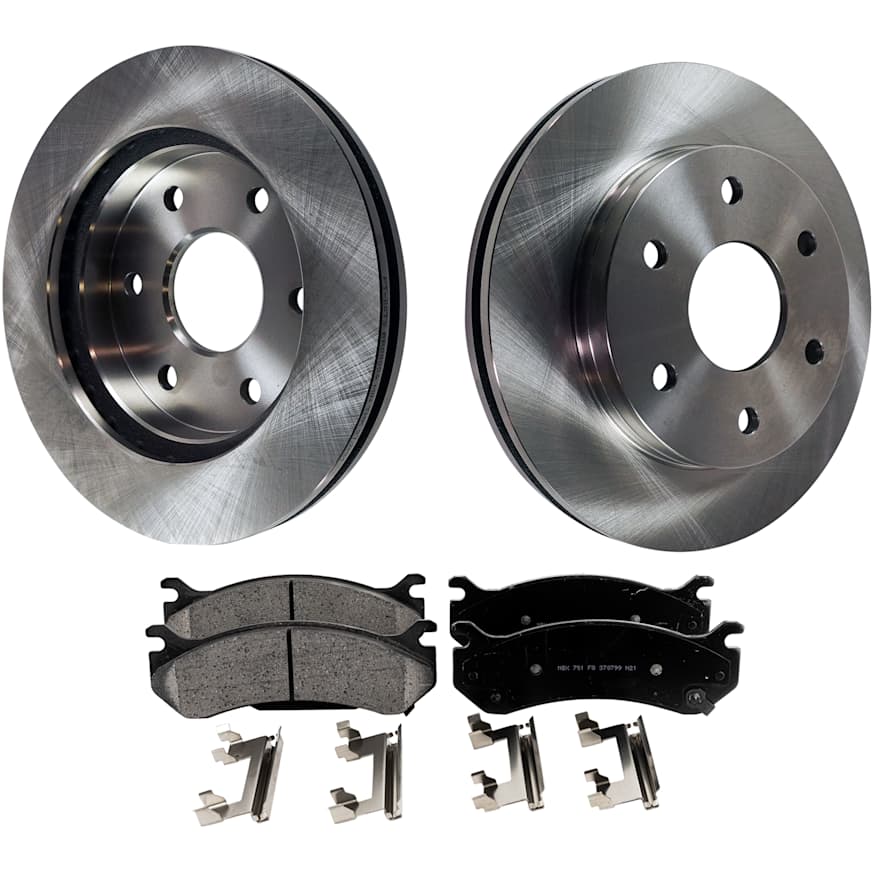
Credit: www.carparts.com
Performance Differences
Front and rear brake rotors serve different roles in your vehicle’s braking system. This difference affects how they perform under various driving conditions. Understanding their performance differences helps in maintaining safety and vehicle efficiency.
Stopping Power
Front brake rotors handle most of the stopping force. This is because the vehicle’s weight shifts forward during braking. Front rotors are usually larger and thicker to manage this load. Rear brake rotors provide less stopping power but help stabilize the vehicle. They work together with front rotors for balanced braking.
Wear And Tear Patterns
Front rotors wear out faster due to higher stress and heat. They often need replacement sooner than rear rotors. Rear rotors experience less heat and pressure, so they last longer. Uneven wear can happen if one set is weaker or damaged. Regular checks keep both front and rear rotors in good condition.
Impact On Vehicle Handling
The impact of front and rear brake rotors on vehicle handling is significant. Brake rotors help slow down or stop the car by creating friction. Front and rear rotors differ in size and design because they manage different forces. These differences change how the vehicle feels and behaves on the road.
Weight Distribution Effects
Most cars have more weight on the front wheels. This makes front brake rotors larger and stronger. They handle more braking force. Rear rotors are smaller because they deal with less weight. Proper weight balance helps the car stop smoothly. It also prevents the car from pulling to one side during braking.
Braking Stability
Front rotors provide strong stopping power. Rear rotors help keep the car stable. They stop the rear wheels from locking up. Locked wheels can cause the car to skid or spin. Good brake rotor design helps maintain control. This is important for safe driving, especially on wet or slippery roads.
Maintenance And Replacement
Brake rotors need regular care to keep your vehicle safe. Both front and rear rotors wear down over time. Knowing how to maintain and replace them helps avoid costly repairs and accidents. Proper maintenance ensures smooth braking and extends rotor life.
Signs Of Rotor Wear
Rotors show wear through noise, vibration, or poor braking. Squealing or grinding sounds mean rotors might be damaged. If the brake pedal shakes, the rotors could be warped. Visible grooves or cracks on the rotor surface also signal wear. Check rotors regularly to catch problems early.
Replacement Intervals
Front rotors usually wear out faster than rear ones. This happens because front brakes handle more stopping power. Most rotors last between 30,000 and 70,000 miles. Driving style and road conditions affect rotor life. Follow the vehicle’s manual for replacement schedules.
Cost Considerations
Front rotors often cost more to replace than rear rotors. This is due to size and material differences. Labor costs vary depending on the vehicle model. Choosing high-quality rotors can save money over time. Regular maintenance reduces the chance of expensive repairs.
Choosing The Right Rotor
Choosing the right rotor is key for safe and smooth braking. Rotors affect how your vehicle stops. Different rotors work best for front and rear brakes.
Front rotors face more heat and pressure. Rear rotors handle less force but still need to be strong. Picking the right rotor helps balance braking power and extends rotor life.
Matching Front And Rear Rotors
Front and rear rotors must fit your vehicle’s design. Use rotors made for your car model and year. Front and rear rotors often differ in size and thickness. Matching these ensures even brake wear. Uneven rotors cause pulling or shaking during braking. Always check your owner’s manual for recommended rotor specs. Proper matching keeps braking smooth and safe.
Upgrading Options
Upgrades improve brake performance and durability. Drilled rotors help cool brakes faster. Slotted rotors clear dust and water better. Some drivers prefer high-performance rotors for sportier drives. Consider your driving style and conditions before upgrading. Upgrades must still match your vehicle’s needs. Use quality parts to avoid brake problems. Upgrading rotors can boost safety and driving confidence.

Credit: www.youtube.com
Frequently Asked Questions
What Are The Main Differences Between Front And Rear Brake Rotors?
Front brake rotors are usually larger and thicker than rear ones. This design helps front brakes handle more heat and stopping power since they do most of the braking.
Why Do Front Brake Rotors Wear Faster Than Rear Rotors?
Front rotors wear faster because they bear more braking force. They handle about 70% of stopping power, causing more heat and friction, which increases wear.
Can Front And Rear Brake Rotors Be Swapped?
No, front and rear rotors cannot be swapped. They differ in size, thickness, and design to match their specific braking roles and vehicle balance.
How Do Front And Rear Brake Rotors Affect Vehicle Safety?
Front rotors provide most stopping power, while rear rotors stabilize the vehicle. Proper balance between them ensures safe, effective braking and prevents skidding or loss of control.
Conclusion
Front and rear brake rotors serve different roles in a vehicle’s braking system. Front rotors handle more heat and force during stops. Rear rotors provide balance and support to the braking process. Knowing these differences helps in choosing the right parts for your car.
Proper maintenance keeps both rotors working well and ensures safety. Understanding how they work together improves your driving experience. Brake rotors are key to stopping power and control. Choose quality rotors for better performance and longer life.

