
Have you noticed your car acting up lately? Maybe it’s running rough, stalling, or losing power unexpectedly.
These problems could be signs that your fuel filter is bad. But how do you really know when it’s time to replace it? Understanding the warning signs can save you from costly repairs and keep your engine running smoothly. You’ll discover clear, simple ways to tell if your fuel filter needs attention—so you can take action before small issues turn into big headaches.
Keep reading to protect your ride and drive with confidence.
Fuel Filter Basics
The fuel filter is a small but important part of your car. It cleans the fuel before it reaches the engine. This keeps dirt and particles out. Clean fuel helps the engine run smoothly. A bad fuel filter can cause many problems.
Understanding the basics of fuel filters helps you spot trouble early. It also helps you know when to replace the filter. Let’s explore the role of fuel filters and the common types found in vehicles.
Role In Engine Performance
The fuel filter stops dirt and rust from reaching the engine. Dirt in the fuel can block fuel injectors. This makes the engine run rough or lose power. A clean filter keeps fuel flow steady. It helps the engine start easily and run well. A bad filter can cause poor gas mileage. It may also cause the engine to stall or hesitate.
Common Types Of Fuel Filters
Fuel filters come in different styles. The most common is the inline filter. It sits along the fuel line. Another type is the cartridge filter, inside a housing. Some cars use fuel filters built into the fuel pump. Each type does the same job: cleaning the fuel. Knowing your filter type helps in maintenance and replacement.
Symptoms Of A Bad Fuel Filter
Knowing the symptoms of a bad fuel filter helps protect your engine. A clogged fuel filter stops fuel flow. This causes many engine problems. Spotting these signs early saves time and money. Here are common symptoms to watch for.
Engine Misfires And Hesitation
The engine may misfire or hesitate during acceleration. Fuel flow slows down. The engine does not get enough fuel to run smoothly. This causes jerking or rough running. These signs often mean the fuel filter is clogged.
Difficulty Starting The Engine
Starting the engine takes longer than usual. You may need to turn the key several times. The fuel filter blocks fuel from reaching the engine. This makes ignition hard. A bad fuel filter is a common cause.
Reduced Fuel Efficiency
The car uses more fuel than before. A clogged filter makes the engine work harder. It burns fuel less efficiently. This means you fill the tank more often. Watch for a sudden drop in miles per gallon.
Engine Stalling
The engine might stall while driving. This happens because the fuel supply is interrupted. The fuel filter stops enough fuel from reaching the engine. Stalling is dangerous and needs quick attention.
Unusual Engine Noises
The engine may make strange noises like sputtering or coughing. These sounds come from fuel starvation. The fuel filter blocks the fuel flow. This causes the engine to struggle and make noises.
Visual And Physical Signs
Visual and physical signs help you detect a bad fuel filter early. This can prevent engine problems and save repair costs. Checking these signs is simple and effective. You do not need special tools or skills to notice them.
Fuel Filter Appearance
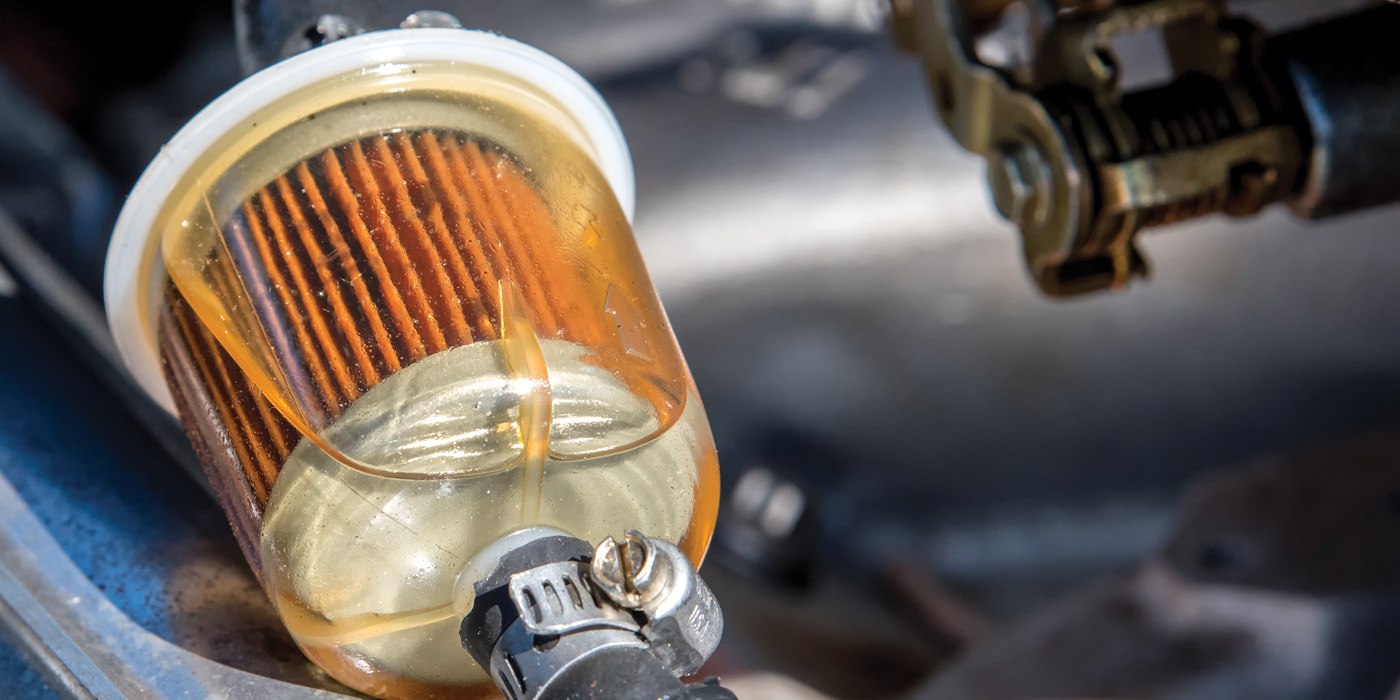
A fuel filter looks dirty when it is bad. It may have dark spots or rust. The filter housing might have cracks or damage. Dirt buildup on the filter shows it is clogged. A clean filter usually looks clear or light-colored. Check the filter regularly to spot changes.
Fuel Smell And Leaks
A strong fuel smell near the filter means a problem. This smell can come from leaks or cracks. Leaks appear as wet spots or stains around the filter. Fuel leaks are dangerous and need fast fixing. Always check for fuel drops or dampness under the filter. Smell and leaks are clear signs of a bad filter.

Credit: www.youtube.com
Diagnostic Methods
Diagnosing a bad fuel filter is key to keeping your vehicle running well. Several methods help find filter problems early. These methods check fuel flow and engine performance. They guide you to the right fix before damage occurs.
Fuel Pressure Testing
Fuel pressure testing measures the force of fuel in the system. Low pressure often means a clogged fuel filter. Mechanics use a gauge to check pressure at the fuel rail. Normal pressure shows the filter is clear. Low pressure signals a need for replacement.
Using Scan Tools
Scan tools read data from your car’s computer. They detect fuel system errors related to the filter. Codes like P0087 suggest low fuel pressure. The tool shows live fuel data and sensor readings. This method helps spot filter issues without guesswork.
Professional Inspection
Experts visually inspect the fuel filter and fuel lines. They look for dirt, rust, or damage. Professionals may remove the filter for a closer look. They test fuel flow manually. This hands-on check confirms the filter’s condition.
Preventive Maintenance Tips
Preventive maintenance is key to keeping your vehicle’s fuel system running smoothly. Regular care helps avoid costly repairs and engine problems. Knowing how to maintain your fuel filter saves time and money.
Simple checks and timely replacements keep your engine healthy. A clean fuel filter ensures proper fuel flow and better performance. Here are some essential tips for preventive maintenance.
Recommended Replacement Intervals
Fuel filters usually need replacement every 20,000 to 40,000 miles. Check your vehicle’s manual for exact guidance. Some cars require more frequent changes, especially in dusty areas. Staying within this range helps prevent clogging and engine issues.
Choosing The Right Fuel Filter
Select a fuel filter that matches your car’s make and model. Using the correct filter avoids fit problems and fuel flow issues. Buy filters from trusted brands to ensure quality and durability. Cheap filters may save money but cause damage later.
Signs To Check During Routine Maintenance
Watch for engine misfires, rough idling, or slow acceleration. These often indicate a clogged fuel filter. Check for unusual smells or fuel leaks near the filter. Listen for strange noises from the fuel pump as well. Early detection helps prevent breakdowns.
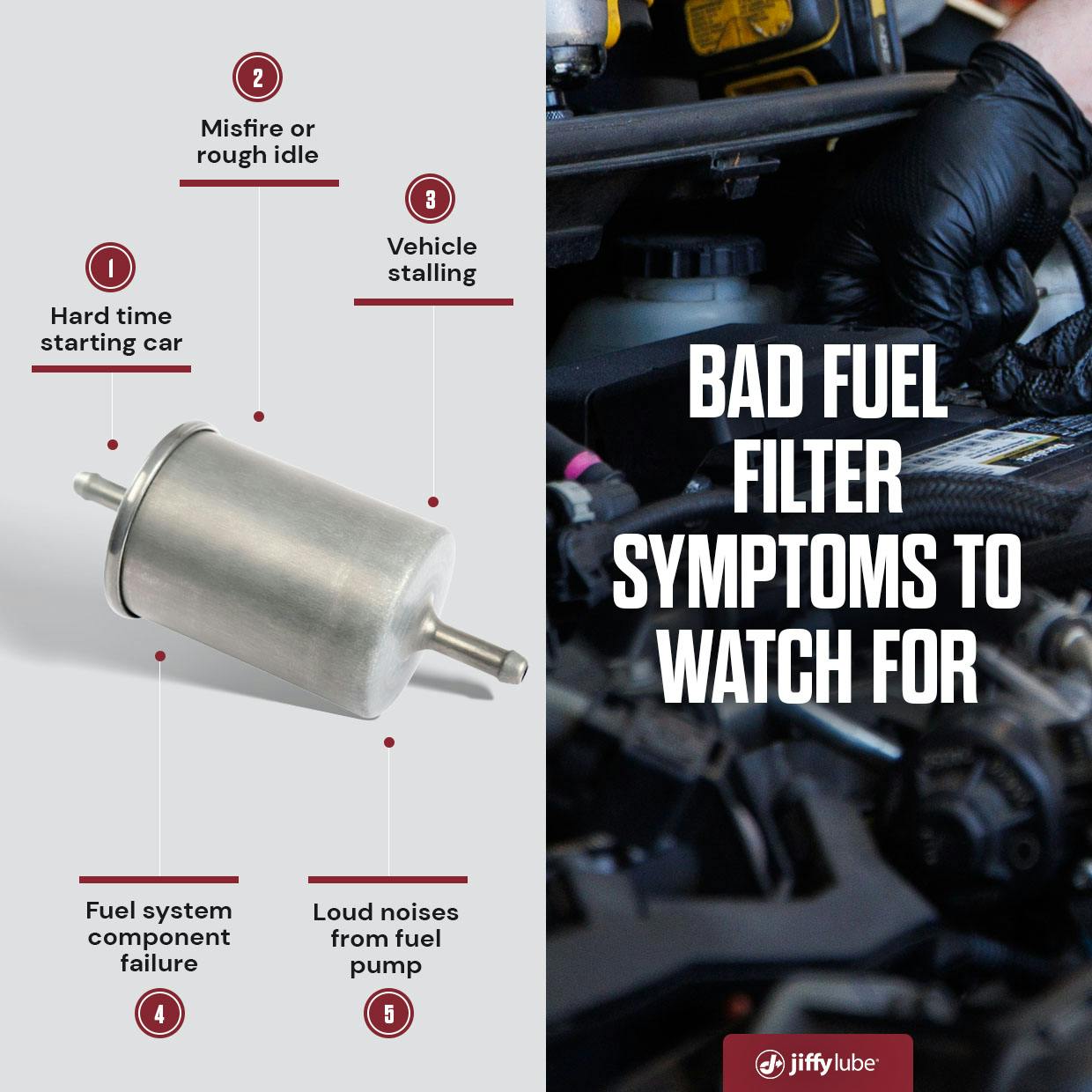
Credit: www.jiffylube.com
Risks Of Ignoring A Bad Fuel Filter
A bad fuel filter can cause serious problems in your vehicle. Ignoring it leads to risks that affect your car’s health and your wallet. Small issues turn into big troubles fast. Understanding these risks helps you act before damage happens.
Engine Damage
A clogged fuel filter stops clean fuel from reaching the engine. Dirt and debris build up inside the engine. This causes poor combustion and engine misfires. Over time, the engine parts wear out faster. Repairing engine damage costs a lot of money.
Reduced Vehicle Performance
Your car will lose power and run unevenly. The engine may stall or hesitate during acceleration. Fuel flow decreases, causing poor mileage. You will notice rough idling and hard starts. Driving becomes frustrating and unsafe.
Increased Repair Costs
Ignoring the fuel filter leads to more damage. Fuel injectors and pumps can fail from dirty fuel. Repairs for these parts are expensive and time-consuming. Regular filter changes save money by preventing big repairs. Acting early keeps your car running smoothly.
Credit: www.import-car.com
Frequently Asked Questions
How To Tell If A Fuel Filter Is Clogged?
A clogged fuel filter causes engine hesitation, stalling, and poor acceleration. Check for reduced engine power and rough idling, which often indicate blockage.
What Symptoms Indicate A Bad Fuel Filter?
Symptoms include engine misfires, difficulty starting, decreased fuel efficiency, and unusual engine noises. These signs suggest the fuel filter needs inspection or replacement.
How Often Should I Replace My Fuel Filter?
Most manufacturers recommend replacing the fuel filter every 20,000 to 40,000 miles. Regular replacement ensures optimal fuel flow and prevents engine damage.
Can A Bad Fuel Filter Damage The Engine?
Yes, a bad fuel filter restricts fuel flow, causing engine strain. Prolonged use may lead to engine misfires and costly repairs.
Conclusion
A bad fuel filter can cause many car problems. Watch for signs like engine stalling or slow acceleration. Clean fuel helps your engine run well and last longer. Replace the fuel filter as soon as you notice issues. Regular checks keep your car healthy and avoid costly repairs.
Stay alert to small changes in how your car drives. Taking care of the fuel filter means smoother, safer trips every time. Don’t wait until problems get worse—act early for best results.


