
Have you noticed your car struggling to start or losing power while driving? These could be warning signs that your fuel filter is clogged.
Your fuel filter plays a crucial role in keeping dirt and debris out of your engine, but over time, it can get blocked and cause serious problems. Knowing how to spot the signs of a clogged fuel filter can save you from costly repairs and keep your vehicle running smoothly.
Keep reading to discover the clear symptoms and simple checks you can do to protect your car and avoid unexpected breakdowns.
Symptoms Of A Clogged Fuel Filter
A clogged fuel filter can cause many problems for your vehicle. It stops fuel from reaching the engine properly. This leads to performance issues and can damage the engine. Recognizing the symptoms early helps prevent bigger repairs and keeps your car running smoothly.
Watch for signs like engine trouble and strange noises. These clues show the fuel filter may be blocked. Acting quickly can save you time and money on repairs.
Engine Misfires And Stalls
A clogged fuel filter can cause the engine to misfire. The fuel flow is uneven, making the engine run rough. Sometimes, the engine may suddenly stall without warning. This happens because the engine does not get enough fuel to keep running.
Reduced Engine Power
Your car may feel weak or slow to respond. The engine loses power during acceleration or on hills. This happens because less fuel reaches the engine. A clogged filter limits the fuel supply, cutting engine power significantly.
Difficulty Starting The Vehicle
The engine may crank but struggle to start. This is a common sign of a fuel delivery problem. A blocked fuel filter restricts fuel flow at startup. The engine does not get enough fuel to fire up quickly.
Unusual Engine Noises
You might hear strange sounds from the engine area. These noises can include sputtering or knocking. They occur because the engine is starving for fuel. A clogged filter causes the fuel pump to work harder, creating noise.
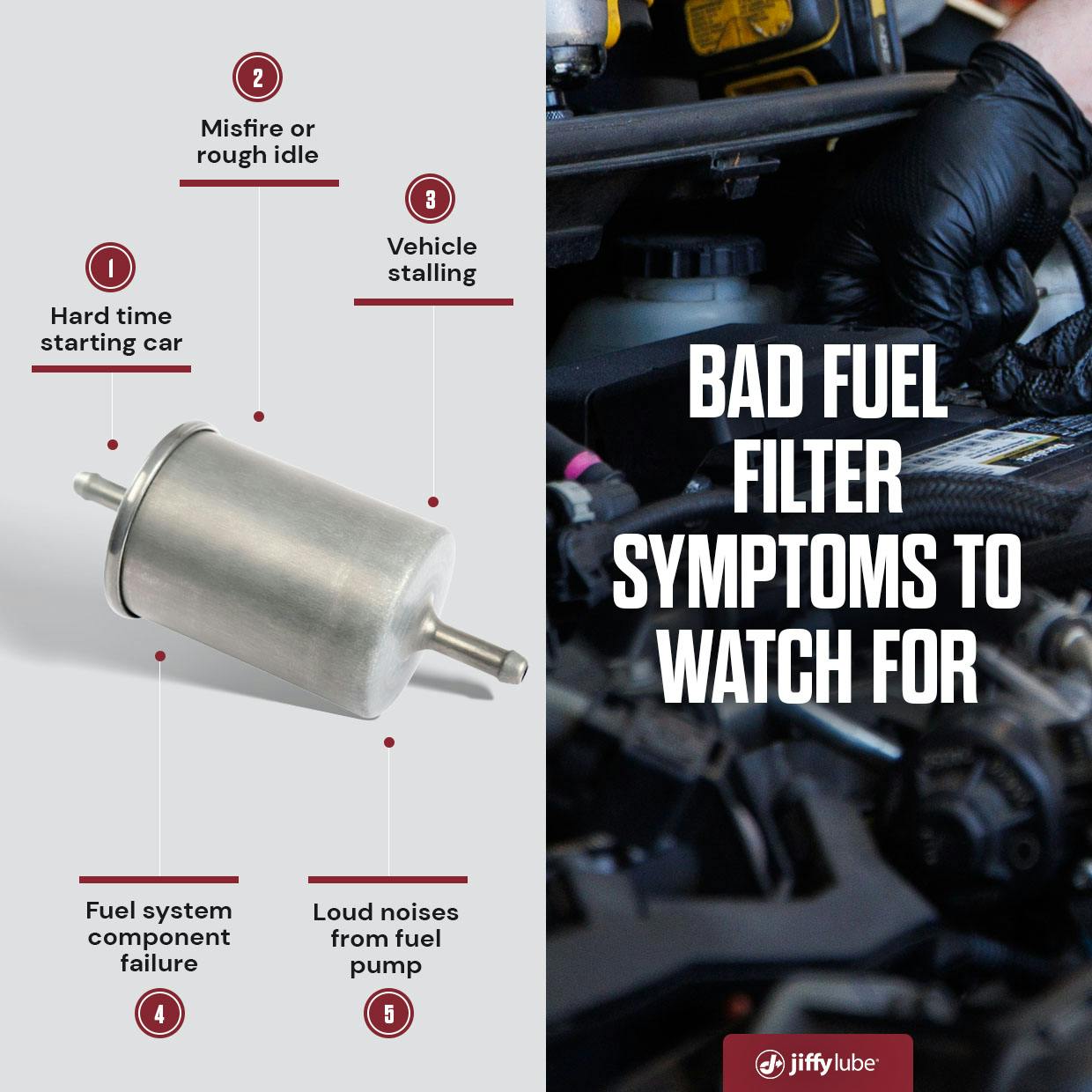
Credit: www.jiffylube.com
Fuel Efficiency Drops
Fuel efficiency drops when the fuel filter is clogged. Engine struggles to get enough fuel, causing poor mileage. Noticeable loss in power and slower acceleration may also happen.
A clogged fuel filter can cause your car to use more fuel than usual. The engine struggles to get enough fuel, so it works harder. This extra effort makes the fuel burn faster.
You may notice your miles per gallon (MPG) dropping. The car needs more gas to travel the same distance. This means you spend more money on fuel.
Fuel efficiency drops are a key sign of a clogged fuel filter. It also affects how smoothly your car runs. Poor fuel flow causes the engine to misfire or hesitate.
Watch for sudden changes in fuel costs or driving range. These changes often point to a fuel delivery problem. A clogged filter restricts fuel flow, reducing engine power.
Fixing or replacing a clogged fuel filter can restore good fuel economy. Keep your fuel system clean to save money and avoid breakdowns.
Check Engine Light Indicators
The check engine light is a key signal on your dashboard. It alerts you when the car detects a problem. A clogged fuel filter can trigger this warning. Understanding these light indicators helps you act fast.
This light does not always mean a serious issue. It can turn on for many reasons. Still, a blocked fuel filter is one common cause. Knowing how to interpret the light saves time and money.
What Does The Check Engine Light Mean?
The check engine light means the car’s computer found an issue. It can be a minor or major problem. The light stays on or blinks to show severity. A steady light often points to fuel or engine issues.
How A Clogged Fuel Filter Affects The Light
A clogged fuel filter restricts fuel flow to the engine. This causes the engine to run poorly. Sensors detect the problem and turn on the check engine light. The car may feel sluggish or hesitate during acceleration.
Reading Diagnostic Trouble Codes (dtcs)
The check engine light stores error codes called DTCs. These codes help identify the exact problem. A mechanic or a scanner tool can read these codes. Codes related to fuel delivery often indicate a clogged filter.
When To Visit A Mechanic
See a mechanic if the check engine light stays on. Also, if the light blinks, get help immediately. Blinking means a serious engine problem. Early checks prevent damage caused by a clogged fuel filter.
Fuel Pump Strain
The fuel pump works hard to send fuel from the tank to the engine. A clogged fuel filter makes this job tougher. The pump has to push fuel through a block, which puts strain on it. This strain can cause problems and even damage the pump over time.
Overheating Fuel Pump
A clogged fuel filter makes the pump work harder. This extra effort causes the pump to heat up. Overheating can lead to pump failure. It reduces the pump’s lifespan and may cause sudden breakdowns.
Fuel Pressure Issues
The fuel pump must keep steady pressure to feed the engine. A clogged filter blocks fuel flow, dropping pressure. Low pressure causes poor engine performance. The engine may stall or hesitate during acceleration.
Visual Inspection Tips
Visual inspection is a simple way to check if your fuel filter is clogged. It helps find problems early. You can spot dirt, damage, or blockages just by looking. This saves time and money on repairs. Follow these tips to do a proper check.
Locating The Fuel Filter
The fuel filter is usually near the fuel tank or engine. It looks like a small canister or tube. Check your vehicle manual to find the exact spot. Some filters are easy to see; others need removing a cover. Use a flashlight for a better view.
Signs Of Physical Damage Or Dirt
Look for cracks, dents, or rust on the filter. These signs mean the filter may fail soon. Dirt or debris on the outside can show clogging inside. A dark or cloudy filter often means it’s dirty. Clean filters should look clear and smooth.

Credit: www.youtube.com
Preventive Maintenance Steps
Preventive maintenance helps keep your fuel system clean and efficient. It stops problems before they start. Regular checks and replacements protect your engine and save money. Paying attention to your fuel filter is an important part of this process.
Recommended Replacement Intervals
Check your vehicle’s manual for fuel filter replacement times. Most experts suggest replacing it every 20,000 to 40,000 miles. Heavy driving or bad fuel may require more frequent changes. Sticking to the schedule avoids clogging and poor engine performance.
Choosing The Right Fuel Filter
Select a fuel filter made for your car’s make and model. Using the wrong filter can cause fuel flow issues. Look for quality brands that meet factory standards. A good filter traps dirt and protects your fuel system effectively.

Credit: www.autonationmobileservice.com
Frequently Asked Questions
How To Identify A Clogged Fuel Filter Symptoms?
A clogged fuel filter often causes engine misfires, slow acceleration, and difficulty starting. You may hear sputtering sounds or notice decreased fuel efficiency. These signs indicate restricted fuel flow, which affects engine performance and requires timely filter replacement.
Can A Clogged Fuel Filter Cause Engine Stalling?
Yes, a clogged fuel filter can cause engine stalling. When fuel flow is blocked, the engine may suddenly lose power or shut off. This happens because the engine doesn’t get enough fuel to run smoothly.
How Often Should You Replace A Fuel Filter?
Most manufacturers recommend replacing the fuel filter every 20,000 to 40,000 miles. Check your vehicle’s manual for specific intervals. Regular replacement ensures proper fuel flow and prevents clogging-related engine problems.
Does A Clogged Fuel Filter Affect Fuel Efficiency?
Yes, a clogged fuel filter reduces fuel efficiency. Restricted fuel flow makes the engine work harder, consuming more fuel. Replacing the filter improves fuel delivery and helps maintain optimal mileage.
Conclusion
A clogged fuel filter can cause many car problems. Engine may run rough or lose power. You might notice strange noises or trouble starting. Regular checks help catch issues early. Clean filters keep your car running well. Don’t wait for serious damage to happen.
Pay attention to signs and act fast. Your car’s performance depends on clean fuel flow. Simple care can save time and money. Keep your vehicle healthy with proper fuel filter care.


