
Have you ever wondered how many cars can fit in an acre of land? Whether you’re planning a big event, managing a parking lot, or just curious about space, knowing this can save you time and stress.
Imagine being able to visualize your parking area perfectly, avoiding overcrowding or wasted space. You’ll discover simple calculations and practical tips to help you make the most out of every inch of your acre. Keep reading, and you’ll soon see how easy it is to turn your land into a well-organized parking space that works for you.
Acre Size And Dimensions
An acre is a common unit used to measure land. It helps to understand how much space is available for parking cars. Knowing the size and shape of an acre is important to estimate how many cars fit in it.
This section explains the size and dimensions of an acre. It breaks down the details into easy parts. Visualizing an acre makes it simpler to picture parking spaces on it.
Standard Acre Measurements
An acre equals 43,560 square feet. This is the standard measurement in the United States. It does not change regardless of the shape of the land.
One acre can be a square or a rectangle. A common shape is a square that measures about 208.7 feet on each side. Another shape is a rectangle, for example, 330 feet by 132 feet.
The shape affects how the space can be used. But the total area remains the same at 43,560 square feet.
Visualizing An Acre
Imagine a football field without the end zones. It is close in size to one acre. This helps to picture the space in real life.
Parking spaces usually measure about 9 feet by 18 feet. This size fits most cars comfortably. By dividing the total square feet by the size of one parking spot, you get an idea of capacity.
Keep in mind, space for driving lanes and walkways reduces the number of cars. Still, visualizing the acre helps to plan parking layouts better.
Average Car Size And Parking Space
Understanding the average car size and the space needed to park it helps estimate how many cars fit in one acre. Cars vary in size, but knowing typical dimensions gives a good starting point. Parking spaces must also follow set sizes to allow easy parking and movement. These factors combined determine the total number of vehicles an acre can hold.
Typical Car Dimensions
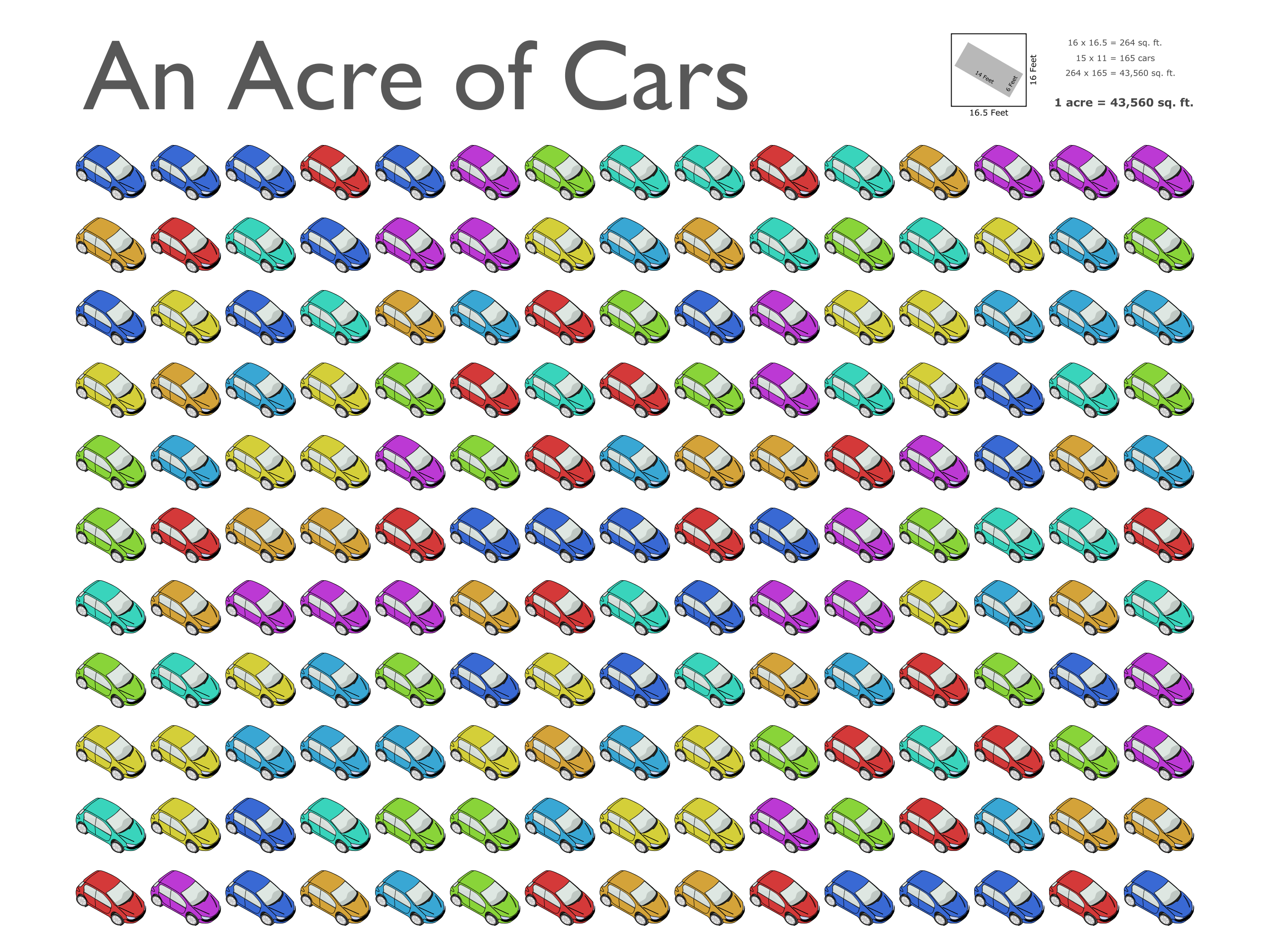
The average car length is about 14 to 16 feet. Width usually ranges from 5.5 to 6.5 feet. Taller vehicles like SUVs may be slightly larger. Compact cars are smaller but less common in large parking areas. Knowing these sizes helps plan the parking layout efficiently.
Standard Parking Space Requirements
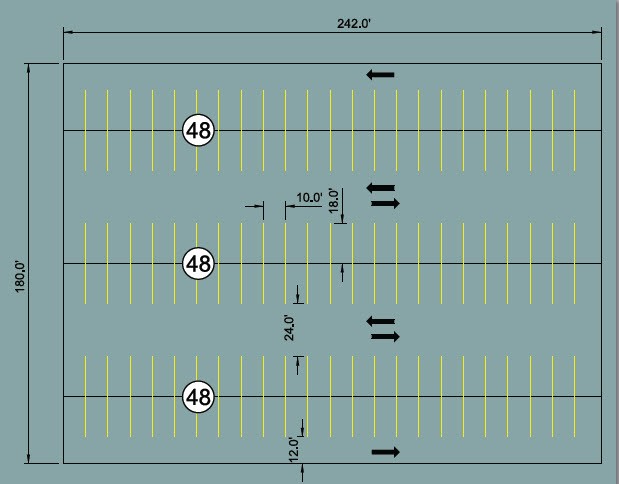
Standard parking spaces measure roughly 9 feet wide and 18 feet long. This size allows enough room for opening doors and walking around. Some spaces may be wider for handicapped or oversized vehicles. Aisle widths between rows add extra space for driving. These dimensions are key to calculating how many cars fit per acre.
Calculating Car Capacity Per Acre
Calculating how many cars fit in an acre requires clear steps. You start by understanding the total space. Then, you divide this space based on the size of each parking spot. This process gives a rough estimate of car capacity. It also helps to adjust for areas cars cannot park, like driveways and aisles.
Basic Area Division Method
One acre equals 43,560 square feet. A typical parking space measures about 9 feet wide and 18 feet long. That means each spot covers 162 square feet. Divide 43,560 by 162 to find the number of cars that fit. This simple math shows about 269 cars per acre. This count assumes perfect use of space without gaps or roads.
Adjusting For Driveways And Aisles
Parking lots need driveways and aisles for car movement. These spaces reduce the total parking spots. Usually, driveways and aisles take 25 to 40 percent of the area. Subtract this percentage from the total space before dividing. For example, using 30 percent for aisles leaves 70 percent for parking. Multiply 43,560 by 0.7, then divide by 162. This method results in about 188 cars per acre. It gives a more realistic car capacity estimate.
Impact Of Parking Layouts
Parking layout greatly affects how many cars fit in an acre. The design decides space use and ease of parking. Choosing the right layout helps maximize capacity and reduce traffic jams. Understanding layout types guides better parking lot planning.
Parallel Vs. Perpendicular Parking
Parallel parking uses less width but more length. Cars line up along the curb, one after another. It saves space on narrow streets but lowers total car count. Perpendicular parking fits cars side by side at right angles. This layout uses more width but packs more cars in less length. It suits large lots and increases total parking spots.
Angle Parking Efficiency
Angle parking places cars at 30 to 60 degrees. It requires less turning space than perpendicular parking. This layout speeds up parking and leaving. Angle parking fits more cars than parallel but fewer than perpendicular. It balances space use and driver convenience well. Angle parking works best in medium-sized lots with moderate traffic.
Additional Factors Influencing Capacity
Parking capacity on an acre of land depends on more than just space. Several factors affect how many cars fit comfortably and safely. These factors shape the final number of parking spots.
Landscaping And Obstacles
Trees, bushes, and garden areas reduce parking space. Natural features can block some areas, limiting car placement. Utility poles, signs, and light posts also take up room. These obstacles create gaps and irregular shapes in the lot. The result is fewer usable parking spots.
Accessibility And Safety Regulations
Parking lots must follow safety rules and local laws. Ramps, crosswalks, and fire lanes require clear space. Handicap parking spots need extra room and easy access. Traffic flow patterns take space for turning and driving. These rules reduce total parking spots but improve safety.
Credit: support.nodebox.net
Examples Of Real-world Parking Lots
Parking lots vary widely in size and layout. Real-world examples help us understand how many cars fit in an acre. Different types of parking lots show unique space uses and designs.
Examining these places shows practical car capacity. It gives a clearer picture beyond just numbers.
Mall Parking Areas
Malls often have large parking lots to serve many shoppers. A typical mall lot uses about 300 to 350 square feet per car. This includes space for driving lanes and aisles. One acre can hold roughly 120 to 145 cars in these areas. Layouts may change based on local rules and design choices.
Malls plan for easy access and smooth traffic flow. Parking spots may be angled or straight. These designs affect how many cars fit in an acre.
Event And Stadium Parking
Event and stadium parking lots handle large crowds at once. These lots often have wider lanes for quick movement. Each car space here might take up 350 to 400 square feet. That means about 100 to 125 cars per acre can park comfortably. Space for pedestrian paths and security is also considered.
Many stadium lots use open fields or large paved areas. This helps fit many vehicles and manage heavy traffic during events.
Maximizing Parking In Limited Space
Maximizing parking in limited space is a key challenge for many property owners. Efficient use of space helps fit more cars without crowding. Planning smartly makes parking easier and safer for everyone. Small changes can make a big difference in how many cars fit.
Using the right strategies can turn a tight area into a well-organized parking zone. The goal is to use every inch wisely. This section explores practical ways to increase parking capacity on an acre of land.
Compact Car Strategies
Compact cars take up less room than larger vehicles. Designing spaces specifically for small cars allows more spots per acre. Narrower lanes and smaller parking bays save space. This approach works well in urban and suburban areas. It also encourages drivers to choose smaller, more efficient cars.
Marking lines clearly ensures cars park neatly. Avoid wasted space by using angled parking spots. Angled spots are easier to enter and exit in tight spaces. Small adjustments in layout can add several extra parking spaces.
Multi-level Parking Solutions
Building up is a smart way to increase parking capacity. Multi-level parking structures use vertical space instead of just ground area. This method can double or triple the number of cars parked on one acre.
Different designs fit different budgets and needs. Simple ramps or automated lifts move cars between levels. Multi-level parking reduces the land needed and helps preserve green space. Safety features and good lighting improve user experience in these structures.
Credit: blog.sior.com
Credit: www.neighbor.com
Frequently Asked Questions
How Many Cars Fit In One Acre Of Parking Space?
One acre can typically fit about 150 to 200 standard cars. This depends on the parking layout and space for aisles.
What Factors Affect Car Capacity Per Acre?
Car size, parking layout, aisle width, and local regulations affect how many cars fit in one acre.
How Much Space Does One Parked Car Need?
A standard parked car requires roughly 162 to 200 square feet, including space for aisles and maneuvering.
Can Parking Efficiency Increase Cars Per Acre?
Yes, using angled parking or multi-level lots can increase the number of cars per acre.
Conclusion
An acre holds many cars, but exact numbers vary. It depends on car size and parking layout. Compact cars fit more; larger vehicles take more space. Planning helps use space well and avoid crowding. Knowing this helps plan parking for events or businesses.
Simple math and space rules guide smart parking choices. Keep these ideas in mind for efficient parking on an acre.

