
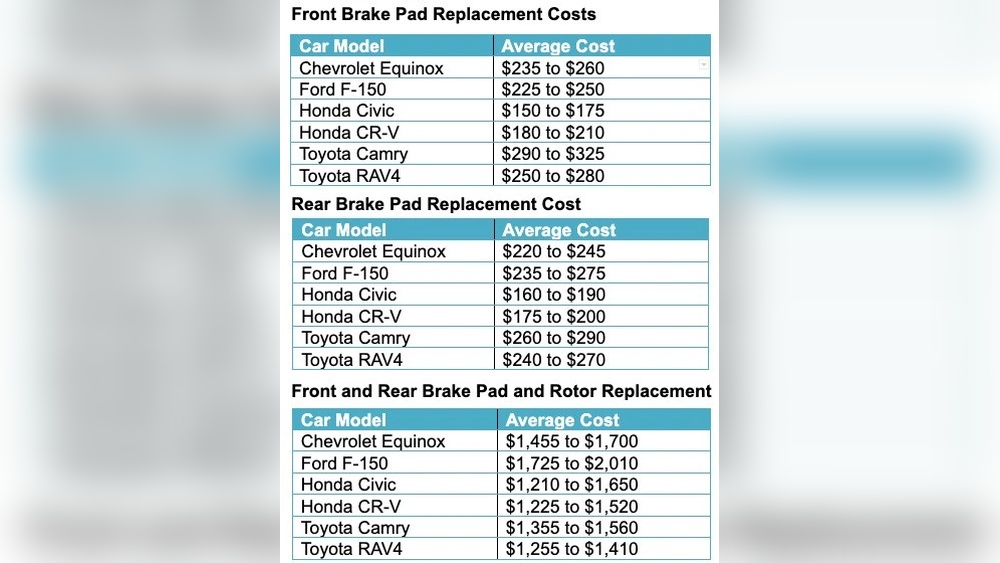
When it comes to your car’s safety, your brakes play a crucial role. But how much should you expect to pay when it’s time to replace your brake pads and rotors?
You might be worried about unexpected costs or wondering if you’re getting a fair price. This article will break down the real expenses behind brake pad and rotor replacements. By the end, you’ll know exactly what to budget for and how to avoid common pitfalls that could cost you more.
Keep reading to protect both your wallet and your safety on the road.
Brake Pads Cost Factors
Brake pads cost depends on many factors. Understanding these factors helps you choose the right pads for your car. Prices vary based on type, material, brand, and car model. Each factor affects the price differently.
Knowing these details can save money and ensure better performance. Let’s explore the main cost factors for brake pads.
Types Of Brake Pads
There are several types of brake pads. Common types include ceramic, semi-metallic, and organic pads. Ceramic pads are usually more expensive but last longer. Semi-metallic pads offer good performance at a lower price. Organic pads are the cheapest but wear out faster. The type you choose affects the total cost significantly.
Material Impact On Price
Materials used in brake pads change their price. High-quality materials cost more but improve safety and durability. Ceramic pads use advanced materials, making them pricier. Semi-metallic pads mix metal and other compounds, costing less. Organic pads contain natural fibers and resins, offering a budget option. The material quality often reflects in price and performance.
Brand Variations
Different brands set different prices for brake pads. Well-known brands charge more for trusted quality. Lesser-known brands offer cheaper options but may lack durability. Brand reputation can affect warranty and customer service. Choosing a reliable brand often means paying a bit extra.
Vehicle Compatibility
Brake pad price also depends on your vehicle type. Luxury and sports cars require specialized pads, costing more. Common cars use standard pads, which are cheaper. Some vehicles need custom-sized pads, raising the price. Always check your car’s compatibility to avoid costly mistakes.
Rotor Price Breakdown
Understanding the cost of brake rotors helps you plan your car maintenance budget better. Rotor prices vary due to several important factors. These affect the overall price you pay for parts and labor.
Knowing these details can save you money and ensure you get the right parts for your vehicle. Let’s break down the main elements that influence rotor prices.
Types Of Rotors
There are mainly two types of rotors: solid and vented. Solid rotors are simple and cheaper. Vented rotors have channels for better cooling, making them more expensive. Some cars need special rotors like drilled or slotted for better performance.
Material Differences
Rotors come in different materials like cast iron, steel, or carbon composite. Cast iron is common and affordable. Steel rotors cost more but last longer. Carbon composite rotors are the most expensive and used in sports cars. Material affects price and durability.
Oem Vs Aftermarket
OEM rotors are made by the car’s manufacturer. They fit perfectly but cost more. Aftermarket rotors come from other companies and vary in price and quality. Some aftermarket options are cheaper but may not last as long. Choose based on your needs and budget.
Rotor Size And Vehicle Type
Large vehicles like trucks need bigger rotors. Bigger rotors cost more because they use more material. Small cars use smaller rotors which are cheaper. The rotor size depends on your vehicle’s make and model, affecting the final price.
Labor And Installation Costs
Labor and installation costs make up a big part of the total brake pad and rotor replacement price. These costs depend on who does the work and where you get it done. Knowing these details helps you plan your budget better.
Diy Vs Professional Service
Doing the brake job yourself saves money on labor. You only pay for parts. But it takes time and some skill. Mistakes can be costly and dangerous.
Professional mechanics charge for their time. They have tools and experience. The work is faster and safer. The price includes labor and sometimes a warranty.
Labor Rates By Region
Labor prices vary by location. Cities often have higher rates than rural areas. The cost also depends on the shop’s reputation.
In expensive regions, labor can cost $80 to $150 per hour. In cheaper areas, it might be $50 to $80. Always ask for a clear quote before work starts.
Additional Services And Fees
Some shops add fees for extra services. These include brake fluid replacement or cleaning parts. Disposal fees for old pads and rotors can also apply.
Check if the price covers these extras. Avoid surprises by getting a full breakdown of charges. This helps you compare different service offers easily.
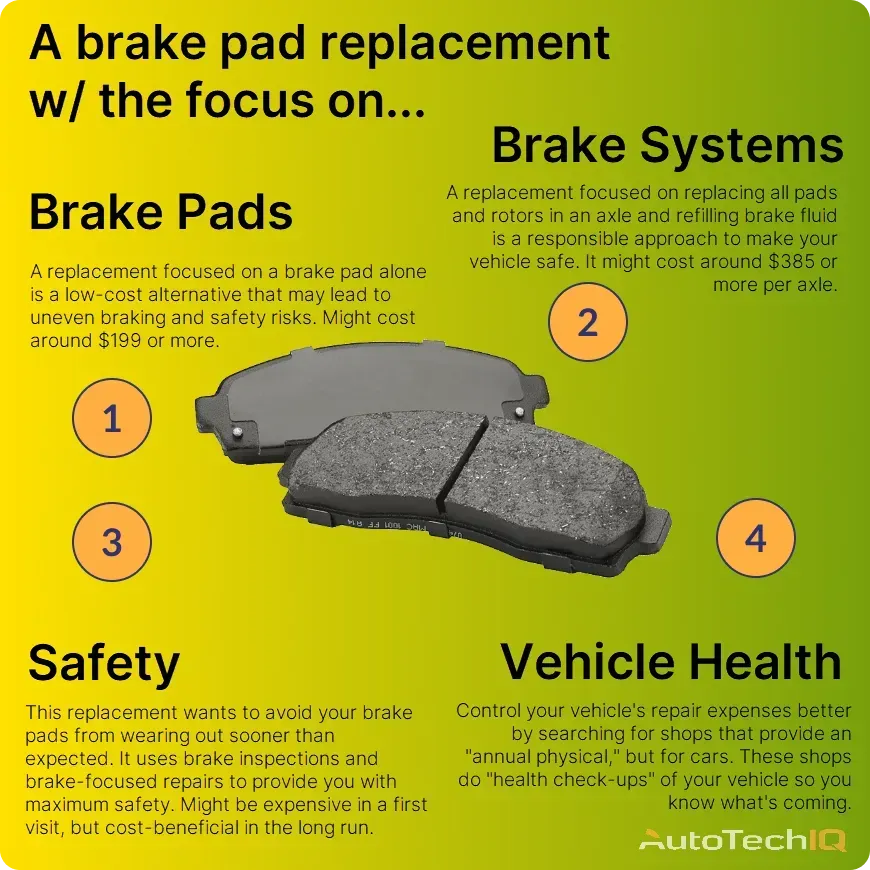
Credit: www.autotechiq.com
Signs You Need New Brake Pads And Rotors
Brake pads and rotors wear out over time and need replacement. Recognizing the signs early helps prevent bigger problems. Paying attention to changes in your vehicle’s braking can save money and keep you safe.
Common Wear Indicators
Squeaking or squealing noises during braking often mean worn brake pads. A grinding sound signals that pads are very thin or gone. Visible grooves or scoring on rotors show damage. Brake pads thinner than 3mm need replacing.
Performance Issues
Longer stopping distances indicate brake wear. Your car may pull to one side when braking. A soft or spongy brake pedal can mean rotor or pad problems. Vibrations or shaking during braking come from warped rotors.
Safety Concerns
Reduced braking power is a serious safety risk. Brake failure can lead to accidents. Warning lights on the dashboard may signal brake issues. Timely replacement protects you and your passengers.
Saving Money On Brake Repairs
Brake repairs can get expensive fast. Knowing how to save money helps keep your car safe and your wallet happy. Small steps make a big difference in cost. Spending a little time and effort today can prevent big bills later. Here are simple ways to cut costs on brake pads and rotors.
Choosing The Right Parts
Select parts that match your car’s needs. Cheap parts may wear out faster, costing more in the long run. Mid-range brake pads often balance price and quality well. OEM parts last longer but cost more upfront. Always check reviews and ask experts before buying. Good parts reduce repair frequency and keep brakes strong.
Timing Maintenance
Fix brakes early before damage spreads. Waiting too long can ruin rotors and pads together. Regular check-ups catch problems early. Changing pads before rotors wear saves money. Follow your car’s maintenance schedule strictly. Timely care avoids costly full brake jobs.
Finding Discounts And Deals
Search for sales at local auto shops. Many stores offer seasonal discounts or coupons. Online retailers sometimes have better prices than physical stores. Joining car clubs or forums can reveal secret deals. Ask mechanics if they have special offers. Small savings add up on brake repairs.
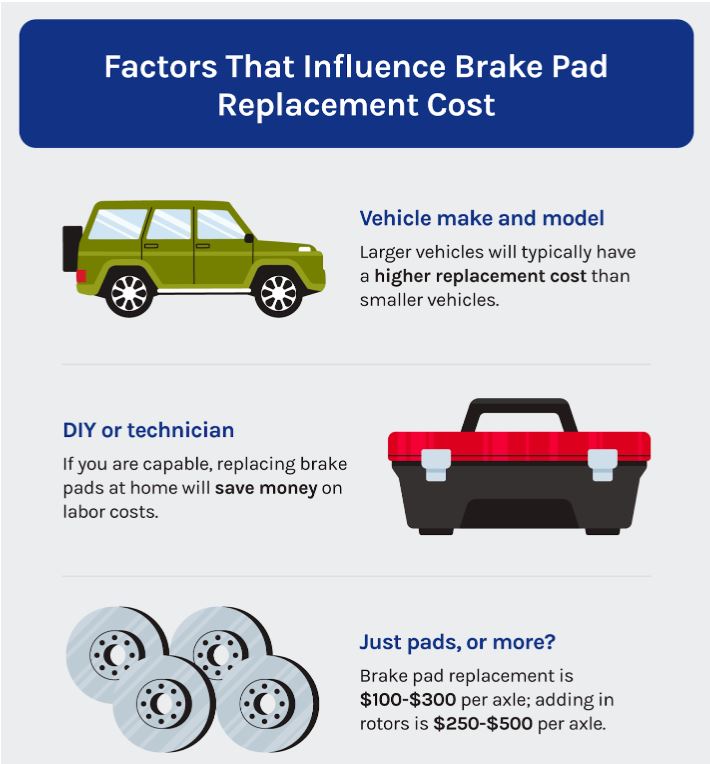
Credit: www.aaa.com
Cost Examples By Vehicle Type
Brake pad and rotor costs vary by vehicle type. Each type has different parts and labor needs. These differences affect the total price. Understanding typical costs helps with budgeting and repair decisions.
Sedans
Sedans usually have smaller brake parts. The cost for pads and rotors ranges from $150 to $300. Labor is generally quicker, lowering the total price. Economy sedans are on the lower end of this range.
Suvs
SUVs have larger brakes for their size and weight. Brake pads and rotors can cost between $250 and $450. Labor may take longer due to bigger parts. Some SUVs need special rotors, which raise the price.
Trucks
Trucks often use heavy-duty brake parts. Costs for pads and rotors range from $300 to $500. Labor may be higher because of tougher components. Trucks that tow or carry loads need stronger brakes.
Luxury Vehicles
Luxury cars require premium brake parts. Prices for pads and rotors start around $400 and can exceed $800. Labor costs increase due to complex systems. High-performance brakes also add to the cost.
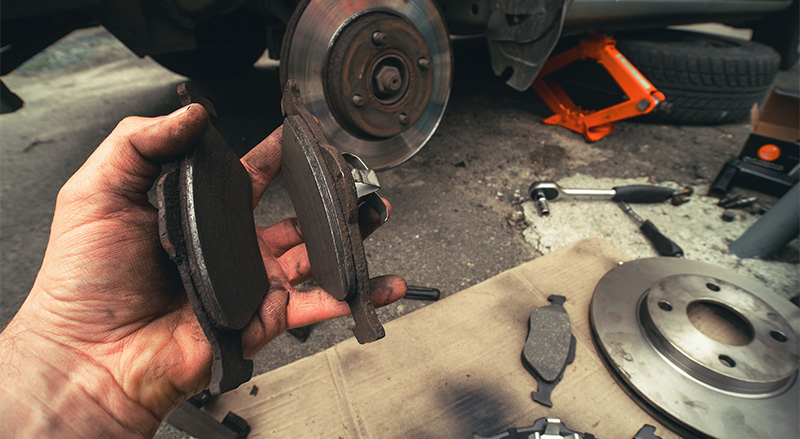
Credit: blog.napacanada.com
Frequently Asked Questions
How Much Do Brake Pads Typically Cost?
Brake pads usually cost between $30 and $80 per set. Prices vary depending on the brand and material quality. High-performance pads may cost more but offer better durability and stopping power.
What Is The Average Price For Brake Rotors?
Brake rotors generally range from $40 to $100 each. Costs depend on rotor type, size, and vehicle compatibility. Premium rotors may increase the price but improve braking efficiency.
Are Labor Costs Included In Brake Pad And Rotor Prices?
Labor costs are often separate and can add $80 to $150. Prices depend on the mechanic’s hourly rate and vehicle complexity. Always ask for a detailed quote before service.
How Often Should Brake Pads And Rotors Be Replaced?
Brake pads typically last 30,000 to 70,000 miles. Rotors can last 50,000 to 70,000 miles but may require replacement sooner if damaged. Regular inspections ensure optimal braking safety.
Conclusion
Brake pads and rotors cost depends on your car and parts quality. You can find budget-friendly or premium options for both. Labor fees also affect the total price. Regular maintenance keeps brakes working well and saves money. Choosing the right parts helps ensure safety on the road.
Always compare prices and services before deciding. Good brakes protect you and your passengers every day. Don’t delay replacing worn brake parts to avoid bigger costs. Simple care keeps your car stopping smoothly and safely.


