
If you’ve just installed ceramic brake pads and rotors, you might be wondering how to get the best performance out of them. Properly breaking them in isn’t just a step—it’s the key to safer stops, longer-lasting brakes, and a smoother ride.
You’ll discover simple, effective steps to break in your ceramic brake pads and rotors the right way. Follow these tips carefully, and you’ll protect your investment while feeling confident every time you hit the brakes. Keep reading to learn exactly what you need to do.

Credit: www.martinispa.com
Why Break-in Matters
Breaking in ceramic brake pads and rotors is a crucial step for your vehicle’s safety and performance. It creates a smooth, even surface between the pads and rotors. This process helps the brakes work better and last longer. Skipping this step can cause problems that affect how your brakes perform.
Benefits Of Proper Break-in
Proper break-in improves brake performance. It helps the pads and rotors wear evenly. This reduces noise and vibration during braking. The brakes will stop the car more smoothly and safely. Proper break-in also extends the life of your brake parts. You get better control and confidence while driving.
Risks Of Skipping The Process
Skipping break-in can cause uneven pad deposits on rotors. This leads to brake noise and pulsing. You may notice reduced braking power. The pads and rotors may wear out faster. In some cases, brakes can become unsafe to use. Proper break-in prevents these risks and saves money on repairs.
Tools And Materials Needed
Breaking in ceramic brake pads and rotors requires the right tools and materials. Using proper equipment ensures the process is safe and effective. Gathering everything before starting saves time and avoids mistakes.
Essential Equipment
Start with a reliable jack and jack stands to lift your vehicle. You will need a lug wrench to remove the wheels. A set of brake pads and ceramic rotors is a must. Use a brake cleaner spray to clean the new rotors. A torque wrench helps tighten bolts to the correct specification. A brake pad spreader or C-clamp is useful to compress the brake caliper pistons. Lastly, keep a clean rag or microfiber cloth nearby for wiping parts.
Safety Gear
Safety gear protects you during the brake break-in process. Wear safety glasses to guard your eyes from dust and debris. Use gloves to keep your hands clean and safe from chemicals. A dust mask can help avoid inhaling brake dust. Choose closed-toe shoes to protect your feet. Consider wearing long sleeves to shield your skin. Always work in a well-ventilated area for fresh air.
Preparing Your Vehicle
Preparing your vehicle is the first step in breaking in ceramic brake pads and rotors. Proper preparation helps ensure the best performance and longer life for your brake system. Taking time to inspect and clean the parts can prevent problems and improve safety.
Inspecting Brake Components
Start by checking all brake parts carefully. Look for any damage, cracks, or uneven wear on the rotors. Check the brake pads for any defects or contamination. Make sure the calipers and brake lines are in good condition. Replace any parts that show signs of wear or damage. Proper inspection avoids future brake issues.
Cleaning New Pads And Rotors
New ceramic brake pads and rotors often have protective coatings or oils. Clean these parts before installation. Use brake cleaner spray and a clean cloth to remove oils and dust. Do not touch the braking surface with bare hands. Cleaning helps the pads and rotors bond well and improves braking power. A clean surface reduces noise and uneven wear.
Credit: www.powerstop.com
Step-by-step Break-in Process
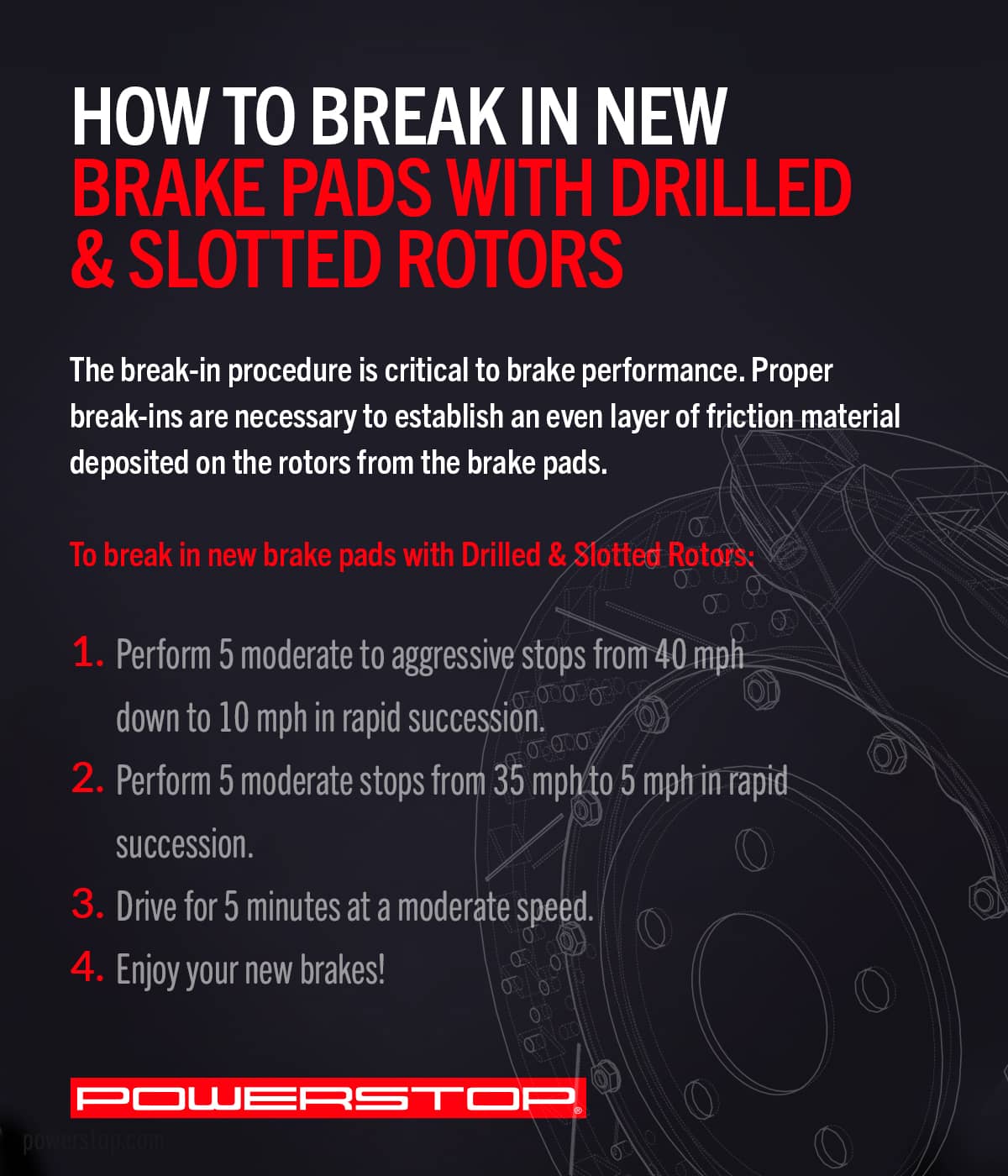
Breaking in ceramic brake pads and rotors is essential for better performance and longer life. The process helps the pads and rotors work smoothly together. It also prevents noise and uneven wear. Follow these simple steps carefully to ensure proper break-in.
Initial Bedding Procedure
Start by driving at a moderate speed on a safe road. Apply the brakes gently but firmly about 10 times. Each stop should slow you down without coming to a full halt. This helps build a thin layer of brake pad material on the rotors. Avoid hard stops during this phase.
Heat Cycling Technique
Next, increase your speed gradually and apply stronger braking. Do this about 5 to 8 times, slowing from higher speeds to low speeds. This step heats up the brakes and bonds the pad material to the rotors. Avoid stopping completely between these stops to keep the brakes warm.
Cooling Periods
After heat cycling, let the brakes cool down. Park your car and do not use the brakes for 30 minutes or more. This cooling allows the materials to settle and harden properly. Avoid parking over grass or flammable surfaces during this time.
Common Mistakes To Avoid
Breaking in ceramic brake pads and rotors is a careful process. Avoiding common mistakes helps ensure the brakes work well and last longer. These errors can cause damage or reduce braking performance. Pay attention to the following common mistakes.
Overheating The Brakes
Applying too much pressure too fast can overheat the brakes. Excess heat wears down the ceramic material quickly. It can cause brake fade or warping of the rotors. Keep the braking gentle and controlled to prevent overheating.
Brake overheating often happens on steep descents or stop-and-go traffic. Use short, light braking instead of constant hard pressure. Let the brakes cool between stops to protect the pads and rotors.
Inconsistent Brake Pressure
Uneven or jerky brake pressure harms the break-in process. It stops the pads from bedding evenly on the rotors. This leads to uneven wear and poor braking feel.
Apply smooth, steady pressure during the break-in drives. Avoid sudden stops or quick releases. Consistency helps the ceramic material bond properly with the rotor surface.
Signs Of Successful Break-in
Knowing the signs of a successful break-in helps confirm your ceramic brake pads and rotors are ready. Proper break-in improves safety and performance. It also extends the life of your brake system. Watch for clear, noticeable changes as you drive.
Improved Brake Performance
Your brakes should feel stronger and more responsive. Press the pedal lightly and notice if the car slows smoothly. The stopping distance should be shorter. No need to push the brake hard for good results. Consistent braking helps build confidence and control.
Reduced Noise And Vibration
Brake noise usually fades after break-in. No more squeaks or grinding sounds. Vibrations through the pedal or steering wheel also lessen. Smooth, quiet brakes indicate proper contact between pads and rotors. This means the break-in process worked well.
Maintenance Tips After Break-in
After breaking in ceramic brake pads and rotors, proper maintenance keeps them working well. Good care helps extend their life and keeps your brakes safe. Follow simple steps to maintain your brake system after break-in.
Routine Inspections
Check your brake pads and rotors regularly. Look for signs of wear, cracks, or damage. Thin pads need replacing soon to avoid rotor damage. Listen for unusual noises during braking. Squeaks or grinding sounds may signal a problem. Also, check brake fluid levels to ensure proper brake function.
Cleaning And Care
Keep your brake parts clean from dirt and dust. Use a soft brush or cloth to remove debris. Avoid harsh chemicals that can damage ceramic materials. Clean rotors with a brake cleaner spray made for ceramic brakes. Regular cleaning prevents buildup that lowers brake efficiency and causes noise.
Credit: www.buybrakes.com
Frequently Asked Questions
How Long Does It Take To Break In Ceramic Brake Pads?
Breaking in ceramic brake pads usually takes about 200 to 300 miles. Proper bedding ensures optimal performance and longevity. Follow manufacturer guidelines for best results.
Why Is Breaking In Rotors Important?
Breaking in rotors ensures even pad material transfer and prevents warping. It improves braking efficiency and extends rotor life. Skipping this step may cause noise and uneven wear.
What Is The Correct Procedure To Break In Ceramic Brakes?
Start with several gentle stops from low speed to warm pads and rotors. Then perform a series of moderate stops from higher speeds. Allow cooling between stops to avoid overheating.
Can I Drive Normally Before Breaking In New Ceramic Brakes?
Avoid aggressive braking during the break-in period. Normal driving with light braking helps pads and rotors bed properly. This prevents glazing and ensures maximum stopping power.
Conclusion
Breaking in ceramic brake pads and rotors helps your brakes work well. Start with gentle stops to let parts wear in smoothly. Avoid hard braking at first to keep pads and rotors safe. Proper break-in extends the life of your brake system.
It also improves stopping power and reduces noise. Take your time and follow steps carefully. Your car will stop better and last longer. Safe driving begins with good brake care.

