
Have you noticed your car acting up lately? Maybe it’s hesitating when you press the gas, or the engine feels weaker than usual.
These could be signs that your fuel filter is causing trouble. Your fuel filter plays a crucial role in keeping your engine clean and running smoothly. But how do you know if it’s gone bad before it causes serious damage?
Keep reading, and you’ll learn the simple yet effective ways to spot a bad fuel filter early—saving you time, money, and stress on the road.

Credit: www.youtube.com
Common Symptoms Of A Bad Fuel Filter
Knowing the common symptoms of a bad fuel filter helps catch problems early. A clogged or dirty fuel filter affects how your car runs. The engine may struggle or act strangely. Recognizing these signs can save time and money on repairs.
Engine Performance Issues
The engine may lose power during driving. Acceleration feels slower than usual. The car might hesitate or sputter on the road. Rough idling is another sign of fuel flow problems. These issues happen because the fuel filter blocks fuel flow.
Starting Problems
The engine takes longer to start or won’t start at all. You might hear the engine trying to turn over without success. A bad fuel filter stops enough fuel from reaching the engine. This causes hard starting or no start situations.
Reduced Fuel Efficiency
Your car uses more fuel than it should. The engine works harder to run smoothly. A clogged fuel filter lowers fuel supply, causing poor combustion. This leads to wasting fuel and lowering miles per gallon.
Unusual Engine Noises
Strange noises like sputtering or knocking come from the engine. These sounds happen because the engine lacks the right fuel flow. A bad fuel filter can cause these unusual noises. It signals the fuel system needs checking.

Credit: www.autonationmobileservice.com
Causes Of Fuel Filter Problems
Fuel filters play a vital role in protecting your engine. They stop dirt, rust, and other particles from entering the fuel system. Problems with fuel filters can cause poor engine performance and damage. Understanding what causes these problems helps in keeping the filter and engine healthy.
Contaminated Fuel
Fuel can get dirty from many sources. Water, dirt, and debris may enter during refueling. Poor quality fuel often contains harmful particles. These contaminants block the fuel filter quickly. A clogged filter reduces fuel flow and affects engine power.
Wear And Tear Over Time
Fuel filters do not last forever. Over time, they collect dirt and become less effective. The filter material can break down or clog with use. Old fuel filters strain the fuel system. Replacing the filter regularly prevents these issues.
Poor Maintenance Practices
Neglecting regular fuel system checks causes problems. Skipping filter changes leads to buildup and damage. Using low-quality fuel or additives worsens filter condition. Following manufacturer advice keeps the fuel filter in good shape.
How To Inspect A Fuel Filter
Inspecting a fuel filter helps find problems early. A clean filter keeps your engine running smooth. A clogged filter causes poor performance and may damage the engine. Checking it regularly saves money and time.
Visual Inspection Tips
Start by locating the fuel filter in your vehicle. It is usually near the fuel tank or engine. Look for cracks, rust, or leaks on the filter body. Check the fuel lines connected to the filter. Any damage or wear means replacement is needed. A dirty filter may look dark or clogged on the outside.
Signs Of Clogging
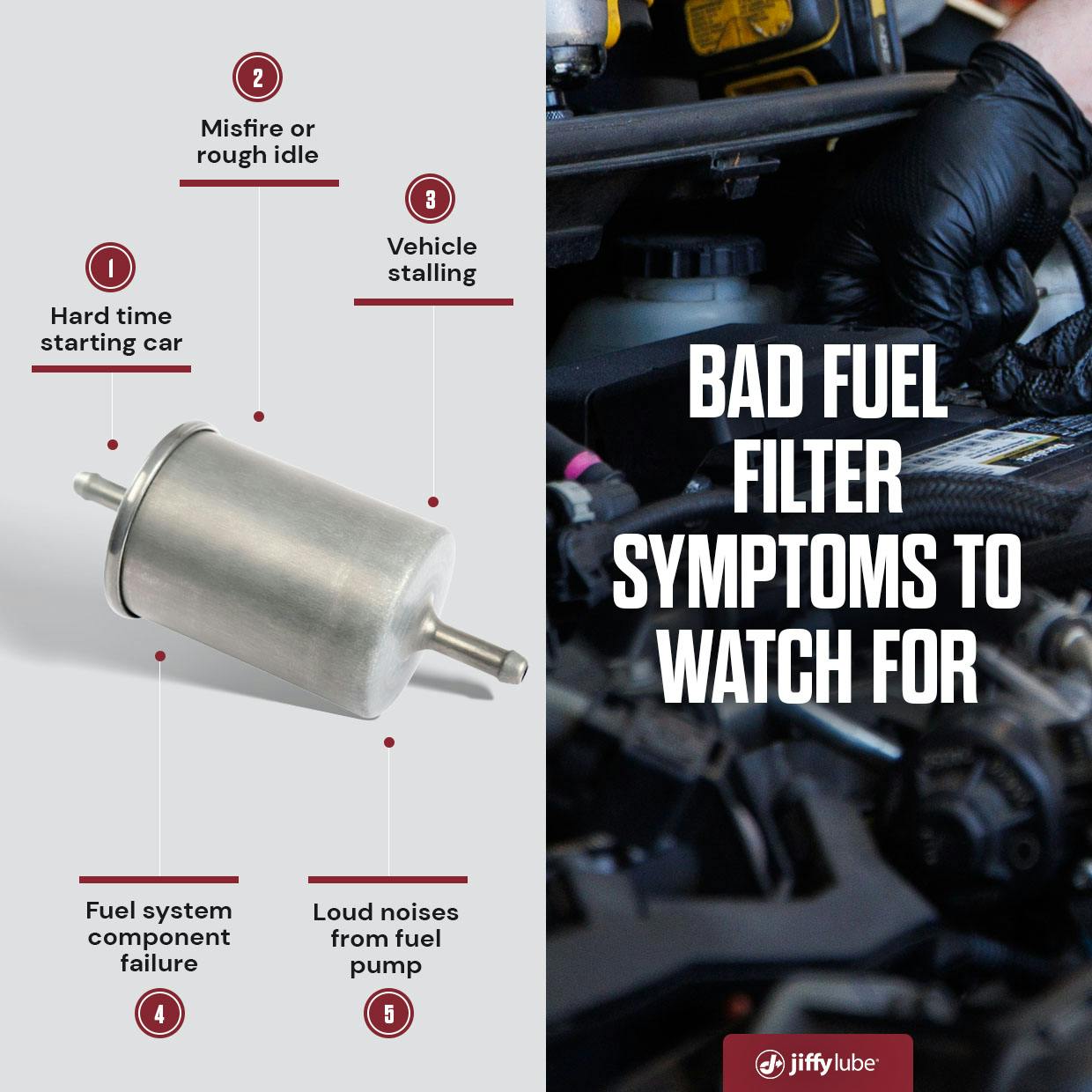
Notice if the engine stalls or hesitates when accelerating. Slow engine start can also mean a blocked filter. Reduced power during driving is a common sign. Listen for strange noises from the fuel pump. These symptoms show the fuel flow is restricted by the filter.
Using Diagnostic Tools
A fuel pressure gauge measures pressure in the fuel system. Low pressure points to a clogged filter. Scan your car’s computer with an OBD-II tool. It shows error codes related to fuel delivery. These tools help find hidden problems fast and accurately.
Credit: www.jiffylube.com
Steps To Replace A Fuel Filter
Replacing a fuel filter is a key task to keep your vehicle running smoothly. A clogged fuel filter can reduce engine power and cause stalling. Changing the filter is simple and saves you from costly repairs.
This guide breaks down the process into clear steps. Follow each carefully for a safe and effective replacement.
Gathering Necessary Tools
Start by collecting all tools before you begin. You will need a new fuel filter that fits your car model. Prepare a wrench set, screwdrivers, and a container to catch fuel drips. Have safety gloves and eye protection ready too.
Safety Precautions
Work in a well-ventilated area. Avoid open flames or sparks near the fuel system. Wear gloves to protect your hands from fuel. Make sure the engine is cool before starting. Disconnect the car battery to prevent accidental sparks.
Removing The Old Filter
Locate the fuel filter under your vehicle or near the engine. Use the wrench to loosen the clamps or bolts holding the filter. Carefully disconnect the fuel lines. Keep the container ready to catch any leaking fuel. Remove the old filter gently to avoid spills.
Installing The New Filter
Check the new filter for correct flow direction. Attach the fuel lines to the new filter securely. Tighten the clamps or bolts but do not over-tighten. Double-check all connections for leaks. Reconnect the battery and start the engine to test the new filter.
Preventing Future Fuel Filter Issues
Preventing future fuel filter issues helps keep your engine running smoothly. A clean fuel filter stops dirt and debris from reaching the engine. This lowers the risk of engine problems and saves money on repairs.
Taking simple steps can extend the life of your fuel filter. These steps also improve fuel efficiency and engine performance. Here are key tips to prevent fuel filter problems.
Regular Maintenance Schedule
Check your fuel filter as part of your car’s routine care. Follow the maintenance schedule in your vehicle’s manual. Replace the fuel filter at recommended intervals. Regular changes stop clogging and keep fuel flowing well. A clean filter reduces strain on the engine and fuel pump.
Using Quality Fuel
Choose clean, high-quality fuel for your vehicle. Low-quality fuel often contains dirt and impurities. These particles can block the fuel filter quickly. Using good fuel lowers the chances of filter damage. It also helps your engine run better and last longer.
Fuel System Cleaners
Use fuel system cleaners occasionally to clear buildup. These cleaners remove deposits in the fuel lines and injectors. Cleaner fuel parts reduce stress on the fuel filter. Follow product instructions carefully for the best results. This simple step supports overall fuel system health.
When To Seek Professional Help
Knowing when to seek professional help for a bad fuel filter can save time and money. Some signs need expert diagnosis and repair. Understanding these moments helps avoid bigger car problems.
Complex Symptoms
Some fuel filter issues show unclear or mixed symptoms. Engine stalling, rough idling, or poor acceleration can mean many things. Professionals use tools to find the exact cause. They spot problems that are hard to see.
Lack Of Tools Or Experience
Replacing a fuel filter is not always simple. Special tools and knowledge are often needed. Wrong steps can damage the car or cause leaks. Mechanics have the right skills to do the job safely and correctly.
Warranty And Service Considerations
Cars under warranty might need repairs by authorized service centers. DIY fixes can void the warranty. Professionals keep your warranty valid. They also keep records that help with future claims.
Frequently Asked Questions
What Are The Common Symptoms Of A Bad Fuel Filter?
A bad fuel filter causes engine misfires, stalling, and poor acceleration. You may notice rough idling and difficulty starting. Reduced fuel efficiency is also common, as the engine struggles to get enough fuel.
How Often Should I Replace My Fuel Filter?
Typically, replace your fuel filter every 20,000 to 40,000 miles. Check your vehicle’s manual for specific intervals. Regular replacement prevents clogging and maintains smooth engine performance.
Can A Bad Fuel Filter Cause Engine Damage?
Yes, a clogged fuel filter restricts fuel flow, causing engine strain. This can lead to overheating, misfires, and potential long-term engine damage. Timely replacement protects your engine’s health.
Is It Possible To Clean A Fuel Filter Instead Of Replacing?
Most modern fuel filters are not designed for cleaning. Replacing the filter is safer and more effective. Cleaning may not remove all debris and could damage the filter.
Conclusion
A bad fuel filter can cause many car problems. Watch for slow engine start, rough idling, or poor acceleration. Strange noises or engine stalling also signal trouble. Regular checks help catch issues early. Clean or replace the filter as needed.
This keeps your engine running smooth and saves money. Don’t ignore these signs to avoid bigger repairs. Taking care of your fuel filter helps your car last longer and perform better. Stay alert and keep your vehicle healthy.


