

Have you ever wondered how often you should change the fuel filter in your car? It’s one of those small parts that can make a big difference.
If your engine feels sluggish or your fuel efficiency drops, the fuel filter might be the hidden culprit. Knowing the right time to replace it can save you from costly repairs and keep your car running smoothly. You’ll discover the signs to watch for, why regular changes matter, and exactly when you should swap out your fuel filter.
Keep reading to protect your engine and get the most out of every drive.
Role Of Fuel Filter
The fuel filter plays an important role in your car’s fuel system. It keeps the fuel clean and helps your engine run smoothly. Without a good fuel filter, dirt and debris can enter the engine and cause problems. Understanding the role of the fuel filter helps you know why regular changes matter.
Function In Fuel System
The fuel filter removes dirt, rust, and other particles from the fuel. Fuel travels from the tank to the engine. The filter catches harmful substances before they reach the engine. This protection prevents damage to engine parts. Clean fuel means better combustion and less wear on the engine.
Impact On Engine Performance
A clogged fuel filter reduces fuel flow. This leads to poor engine performance and lower power. The engine may hesitate or stall during driving. Fuel efficiency also drops with a dirty filter. Changing the fuel filter keeps the engine running strong and smooth.
Credit: www.jiffylube.com
Signs Of A Clogged Fuel Filter
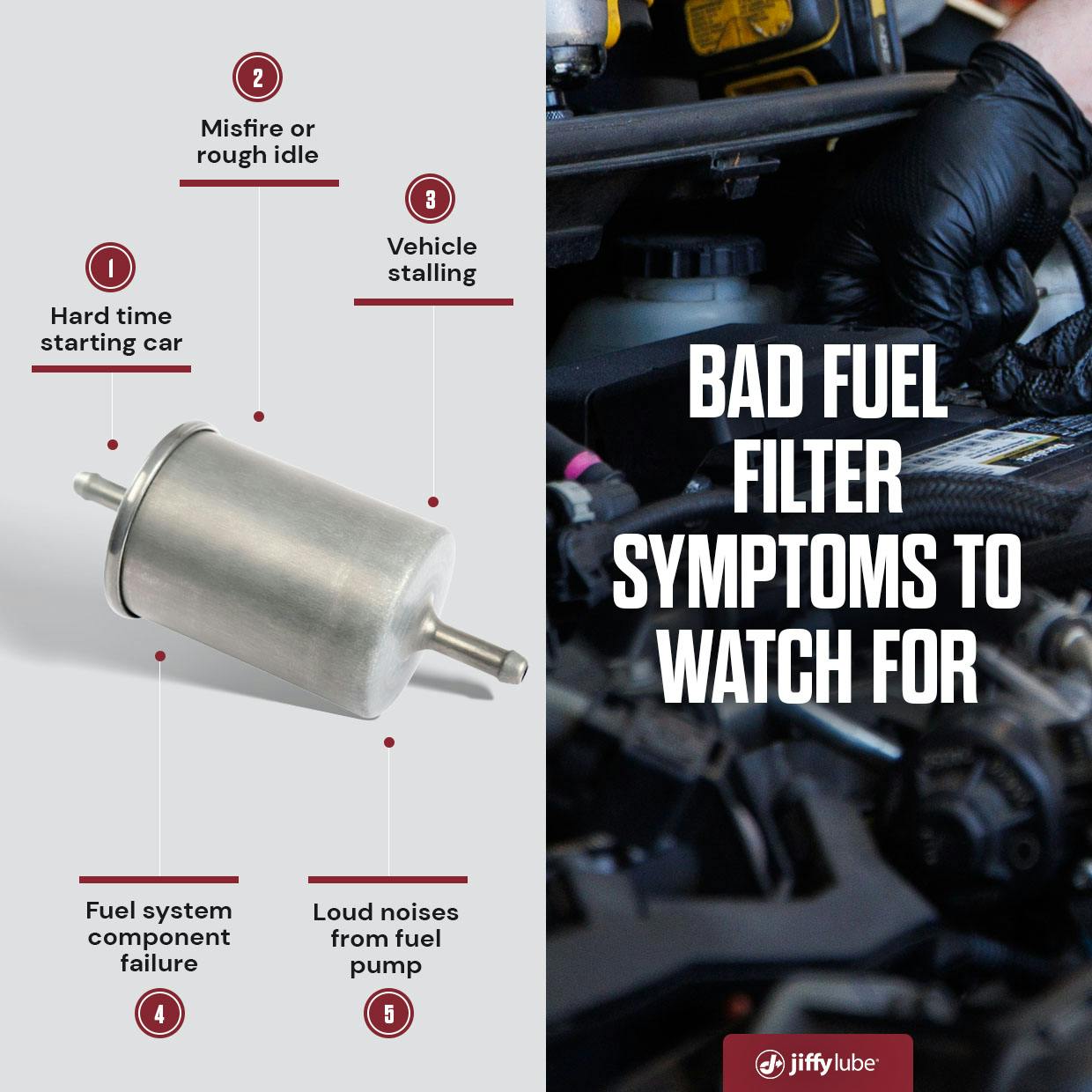
A clogged fuel filter can cause several issues in your car. It stops the fuel from flowing properly. This can hurt your engine’s performance and fuel efficiency. Knowing the signs of a clogged fuel filter helps you fix problems early. It also prevents costly repairs later.
Engine Misfires And Stalling
A clogged fuel filter can make your engine misfire. The engine may lose power suddenly. It might even stall while driving or idling. This happens because the engine does not get enough fuel. The clogged filter blocks the fuel flow. This interrupts the engine’s normal operation and causes rough running.
Reduced Fuel Efficiency
Your car might use more fuel than usual. The engine works harder to get fuel through the clogged filter. This wastes fuel and lowers miles per gallon. You may notice you need to fill the tank more often. Reduced fuel efficiency is a clear sign of fuel filter issues.
Difficulty Starting The Car
Starting your car can take longer than normal. The engine may crank but not start right away. A clogged fuel filter restricts fuel flow to the engine. This makes it hard to get the fuel needed for ignition. Delayed starts or multiple attempts to start can indicate a dirty fuel filter.
Recommended Change Intervals
Knowing when to change your car’s fuel filter keeps the engine running smoothly. The recommended change intervals depend on several factors. These include the car maker’s advice, your driving habits, and how far you drive. Understanding these helps protect your engine and saves money on repairs.
Manufacturer Guidelines
Car makers provide the best advice for fuel filter changes. Check the owner’s manual for exact intervals. Most suggest changing the filter every 20,000 to 40,000 miles. Some newer cars have longer intervals or filters that last the vehicle’s life. Following these guidelines ensures your car runs well.
Driving Conditions And Their Effect
Driving in tough conditions can wear out the fuel filter faster. Dusty roads, heavy traffic, or stop-and-go driving cause more dirt buildup. In such cases, change the filter more often than the manual says. This protects your engine from clogging and fuel system problems.
Mileage Vs. Time Considerations
Both mileage and time affect fuel filter life. If you drive less, change the filter at least once every two years. Fuel can degrade and clog the filter over time. For high-mileage drivers, follow the mileage guidelines closely. Regular changes keep fuel flowing cleanly and your engine healthy.
Credit: www.paulsauto.com
Diy Fuel Filter Replacement
Replacing your car’s fuel filter yourself saves money and gives you control over maintenance. The process is straightforward with the right tools and steps. This guide helps you replace the fuel filter safely and correctly.
Tools Needed
- New fuel filter matching your car model
- Wrenches or socket set
- Screwdriver
- Container to catch fuel
- Rags or paper towels
- Safety glasses and gloves
- Jack and jack stands (if needed)
Step-by-step Process
- Park on a flat surface and turn off the engine.
- Relieve fuel system pressure by removing the fuel pump fuse and starting the car.
- Locate the fuel filter, usually under the car near the fuel tank or engine.
- Place the container under the filter to catch any fuel spills.
- Use wrenches to disconnect fuel lines from the filter carefully.
- Remove old filter and replace it with the new one in the correct direction.
- Reconnect the fuel lines tightly to avoid leaks.
- Replace the fuel pump fuse and start the car to check for leaks.
Safety Precautions
- Work in a well-ventilated area to avoid fumes.
- Wear safety glasses and gloves to protect yourself.
- Keep a fire extinguisher nearby.
- Avoid open flames or sparks near the work area.
- Dispose of old fuel and filter properly.
- Do not rush; take your time to avoid mistakes.
Professional Service Benefits
Choosing professional service for changing your car’s fuel filter brings clear benefits. Experts ensure the job is done right and safely. Your car stays healthy longer, and you avoid costly problems.
Expert Inspection
Professionals check the fuel filter and other parts carefully. They spot issues early before they become big problems. Their experience helps keep your car running smoothly. This inspection saves you time and money in the long run.
Proper Disposal
Old fuel filters contain harmful materials. Professionals know how to dispose of them safely. They follow environmental rules to protect nature. This step prevents pollution and keeps your community clean.
Warranty And Guarantees
Professional services often include warranties on their work. This guarantee gives you peace of mind. If something goes wrong, they fix it without extra cost. It shows their confidence in quality service.

Credit: www.mercedesbenzportland.com
Consequences Of Neglecting Fuel Filter Changes
Neglecting to change your car’s fuel filter can cause serious problems. The fuel filter stops dirt and debris from reaching the engine. When it gets clogged, the engine may not get the clean fuel it needs. This can lead to many issues that affect your car’s performance and lifespan.
Engine Damage Risks
A dirty fuel filter can cause the engine to run poorly. Contaminants may reach the engine and damage its parts. Over time, this leads to costly repairs. The engine might also stall or fail to start. This puts your safety and car’s health at risk.
Increased Repair Costs
Ignoring fuel filter changes often results in bigger problems. Small issues grow and become expensive repairs. Fixing an engine damaged by dirty fuel costs much more. Regular fuel filter changes save money by preventing these costly repairs.
Poor Vehicle Reliability
A clogged fuel filter reduces your car’s reliability. The engine may hesitate or lose power during driving. Your car could break down unexpectedly. This can cause inconvenience and stress. Keeping the fuel filter clean helps your car run smoothly every day.
Tips For Maintaining Fuel System Health
Keeping your car’s fuel system healthy helps it run smoothly. A clean fuel system improves engine performance and saves money. Small steps can protect your fuel system from damage. Follow these simple tips to maintain it well.
Using Quality Fuel
Always choose fuel from trusted stations. Cheap fuel may contain dirt or water. Poor fuel clogs the filter faster. High-quality fuel burns cleaner and keeps parts safe. It reduces the chance of engine trouble.
Regular System Checks
Check your fuel system regularly. Look for leaks, strange smells, or poor engine response. Replace the fuel filter as recommended in your car manual. Early checks catch problems before they grow. Keeping parts clean extends their life.
Fuel Additives And Cleaners
Use fuel additives to clean the system. They remove deposits from fuel injectors and valves. Add cleaners to the tank occasionally. This helps maintain smooth fuel flow and better mileage. Follow product instructions carefully for best results.
Frequently Asked Questions
How Often Should You Change Your Car’s Fuel Filter?
Most experts recommend changing the fuel filter every 20,000 to 40,000 miles. Check your car’s manual for specific intervals. Regular replacement ensures clean fuel flow and prevents engine problems.
What Are Signs Of A Clogged Fuel Filter?
Common signs include engine misfires, poor acceleration, and difficulty starting. A clogged filter restricts fuel flow, causing these issues. Timely replacement can restore performance and fuel efficiency.
Can A Dirty Fuel Filter Damage The Engine?
Yes, a dirty fuel filter can cause engine damage by restricting fuel supply. This leads to poor combustion and increased wear. Regular changes protect your engine and maintain smooth operation.
Is Fuel Filter Replacement Necessary For All Vehicles?
Yes, all vehicles with internal combustion engines need fuel filter replacement. The frequency varies by make and model. Always consult your owner’s manual for the recommended service schedule.
Conclusion
Changing your car’s fuel filter regularly keeps the engine healthy. Most cars need a new filter every 20,000 to 40,000 miles. Clean filters help fuel flow smoothly and protect engine parts. Ignoring this can cause poor performance or damage. Check your car’s manual for the best advice.
Simple care saves money and avoids trouble. Stay on schedule to drive safely and efficiently. Don’t wait until problems appear. A clean fuel filter helps your car run better every day.


