

If you want your brakes to work smoothly and last longer, knowing how to bed brakes and rotors is a must. This simple process helps your brake pads and rotors form a perfect connection, giving you better stopping power and less noise.
Skipping this step can cause uneven wear or even damage your brakes. You’ll learn exactly how to bed your brakes and rotors the right way, saving you money and keeping your car safe on the road. Keep reading to find out how a few easy steps can make a big difference in your driving experience.
Why Bed Brakes And Rotors
Bedding brakes and rotors is a vital step after installing new brake parts. It helps both components work well together. Without this process, brakes may not perform at their best. Proper bedding creates a smooth, even surface on the rotors. It also transfers a thin layer of brake pad material to the rotor.
This process improves stopping power and safety. It also extends the life of the brakes. Skipping this step can cause problems later. Understanding why bedding is important helps keep your brakes reliable.
Benefits Of Proper Bedding
Proper bedding allows brakes to stop smoothly and quietly. It reduces vibration and brake noise during use. The process creates better contact between pad and rotor. This means the brakes react faster and with more power. It also helps prevent uneven wear on the brake parts. Proper bedding extends the life of pads and rotors. It saves money by avoiding early replacements. Brakes also stay cooler and work better in tough conditions.
Consequences Of Skipping Bedding
Skipping the bedding process can cause brake problems. Brakes may feel weak or grab suddenly. This leads to unsafe driving and longer stopping distances. Rotors can develop uneven surfaces, causing vibrations. Pads wear out faster and unevenly. This results in noisy brakes and costly repairs. Skipping bedding may cause brake fade in heavy use. The brakes can overheat and lose effectiveness. Overall, skipping bedding reduces brake performance and safety.
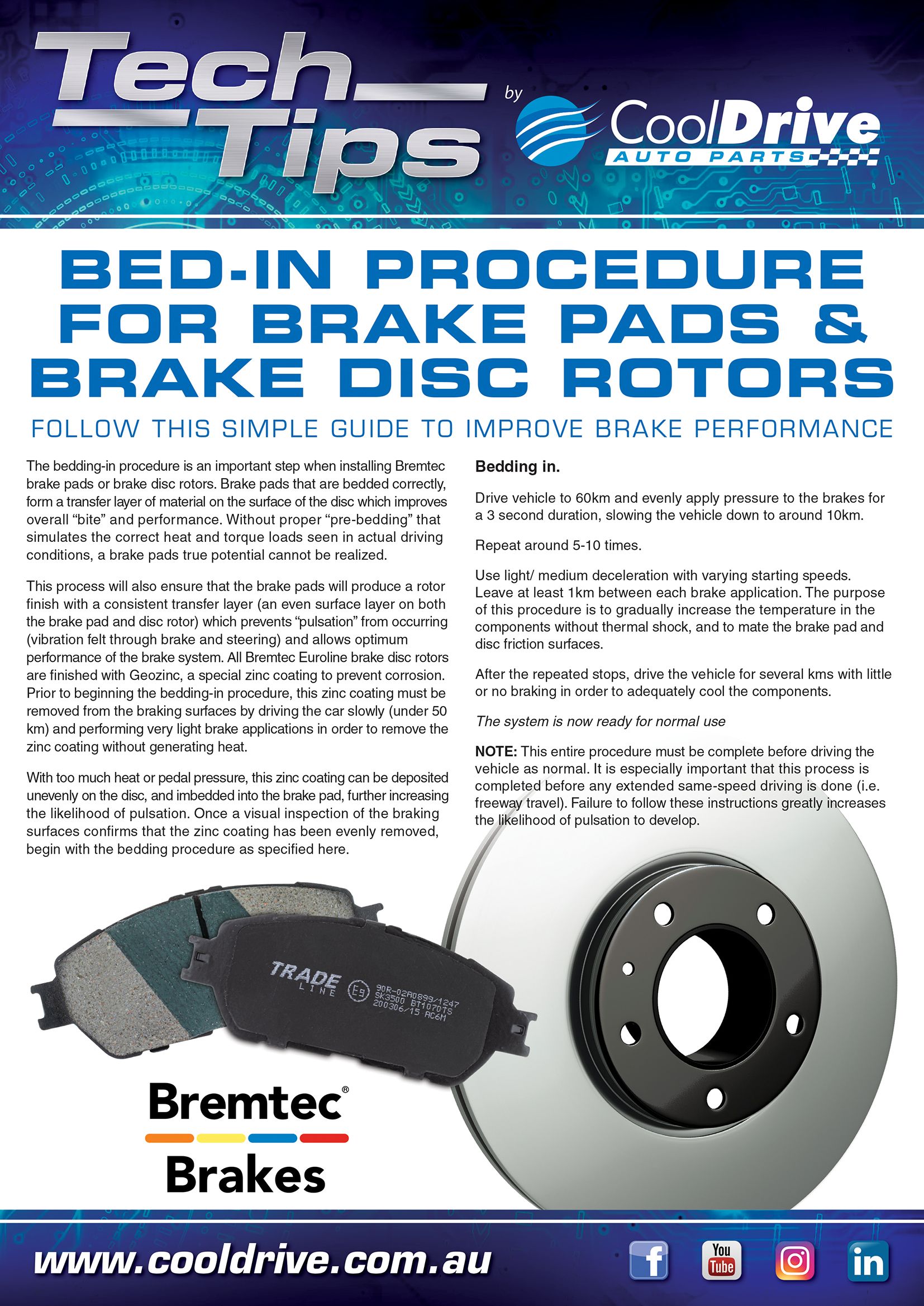
Credit: ishop.cooldrive.com.au
Tools And Materials Needed
Bedding brakes and rotors requires the right tools and materials. Proper preparation helps ensure safety and performance. Without the correct items, the process can be difficult or unsafe.
Gather everything before starting. This saves time and avoids interruptions. Here is what you need for a smooth brake and rotor bedding procedure.
Essential Tools
- Car jack and jack stands for lifting and securing the vehicle
- Lug wrench to remove and tighten wheel nuts
- Brake cleaner to clean rotors and pads
- Clean rags or paper towels for wiping surfaces
- Socket set and wrenches for brake caliper bolts
- Brake grease to lubricate caliper parts
- Safety glasses and gloves to protect eyes and hands
- Torque wrench to tighten bolts to correct specifications
Recommended Brake Pads And Rotors
Choose brake pads and rotors designed for your vehicle model. Use parts from trusted brands for better quality. Avoid cheap or unknown brands that wear out quickly.
Ceramic or semi-metallic brake pads offer good performance and less dust. Rotors should be smooth and free of rust or damage before bedding. Properly matched pads and rotors improve braking response and lifespan.
Preparing For Bedding
Preparing for bedding is a crucial step to ensure your brakes work well. This process helps new brake pads and rotors perform smoothly. Proper preparation extends the life of these parts and improves safety on the road.
Before starting, take time to prepare carefully. Clean and inspect everything. Follow safety rules strictly. These steps set the stage for effective bedding.
Safety Precautions
Always wear gloves to protect your hands. Use safety glasses to guard your eyes. Work in a well-ventilated area to avoid breathing dust. Keep a fire extinguisher nearby just in case. Make sure your car is on a flat surface and use wheel chocks. Never rely only on a jack; use jack stands for support.
Cleaning New Components
New rotors often have a protective oil coating. Clean this off with brake cleaner and a clean cloth. Avoid touching the rotor surface with greasy hands. Wipe brake pads gently to remove any dust or debris. Clean parts help brakes grip better and avoid noise. Proper cleaning ensures the bedding process works as it should.

Credit: www.youtube.com
Step-by-step Bedding Process
Bedding brakes and rotors is a key step after installation. It helps parts work well together. This process improves braking power and extends the life of parts. Follow these clear steps to bed your brakes safely and effectively.
Initial Warm-up
Start by driving at a moderate speed. Avoid heavy braking at this stage. This warms the brakes gradually. Heat helps the brake pads and rotors adjust to each other. Do this for about 5 to 10 minutes.
Controlled Stops
Next, make several firm stops from moderate speeds. Press the brake pedal smoothly but firmly. Do not lock the wheels. Repeat this 8 to 10 times with short breaks in between. This helps transfer pad material evenly on the rotors.
Cooling Periods
Allow the brakes to cool down after each set of stops. Avoid driving or braking hard during cooling. Cooling prevents warping and damage to the rotors. Let the brakes cool for 10 to 15 minutes before the next step.
Signs Of Successful Bedding
Knowing the signs of successful bedding helps ensure your brakes work well. Proper bedding improves safety and extends brake life. It allows the brake pads and rotors to work smoothly together. You will notice clear changes in how your brakes feel and perform. These signs show the bedding process is complete and effective.
Improved Brake Feel
Your brake pedal should feel firm and steady. No sponginess or vibrations when pressing the brake. The pedal response will be smoother and more predictable. You can control braking better without sudden grabs or fades. This improved feel means the pads and rotors have bonded well.
Consistent Stopping Power
Your car should stop reliably at the same brake pressure. No fading or loss of power after several stops. The brakes will feel strong and consistent on all stops. This steady stopping power confirms the bedding process worked correctly. It makes driving safer and more comfortable.
Common Mistakes To Avoid
Bedding brakes and rotors is a key step to ensure safe driving. Many people make mistakes during this process. These errors can reduce brake performance and cause damage. Avoiding common mistakes leads to better stopping power and longer brake life.
Overheating Rotors
Overheating rotors is a frequent problem. Pressing the brakes too hard or too long causes high heat. This heat can warp the rotors, making brakes feel shaky. Warped rotors lead to uneven braking and noise. Let the brakes cool down between stops. Use gentle pressure to avoid excess heat.
Uneven Pad Deposits
Uneven pad deposits happen when braking is inconsistent. This causes patches of brake pad material to stick to the rotors. These patches make the rotors rough and cause vibration. Brake pads wear out faster with uneven deposits. Apply steady pressure and repeat stops evenly to spread the material. This helps brakes work smoothly and last longer.
Maintaining Brakes Post-bedding
Proper care after bedding brakes and rotors keeps them working well. This stage helps the brake parts last longer. It also keeps stopping power strong and safe.
Simple steps can protect your investment. Regular checks and knowing when to re-bed are key. These habits prevent damage and costly repairs.
Regular Inspection
Look at your brakes often. Check the pads and rotors for wear and damage. Listen for unusual noises during braking. Feel for vibrations or pulling to one side. Catching problems early avoids bigger issues.
Clean brake parts to remove dust and dirt. Keep the brake fluid at the right level. These small actions help brakes stay smooth and reliable.
When To Re-bed
Re-bedding is needed if brakes lose power or feel spongy. New noises or vibrations also signal re-bedding time. After replacing pads or rotors, always bed them again. This step ensures proper contact and brake performance.
Driving habits can affect how often re-bedding is required. Heavy braking or mountain driving wears parts faster. Pay attention to brake behavior and act quickly when changes appear.

Credit: www.goldwagen.com
Frequently Asked Questions
What Does It Mean To Bed Brakes And Rotors?
Bedding brakes and rotors means breaking in new brake pads and rotors. This process ensures optimal contact and performance. It prevents uneven wear and improves braking efficiency, safety, and longevity of the braking system.
How Long Does It Take To Bed New Brakes?
Bedding new brakes typically takes about 20 to 30 minutes. It involves repeated moderate stops to gradually heat the brakes. Proper bedding ensures pads and rotors wear evenly and function effectively.
Why Is Bedding Brakes Important For Safety?
Bedding brakes ensures maximum friction between pads and rotors. This improves stopping power and prevents brake fade. Proper bedding reduces the risk of brake failure and enhances overall vehicle safety.
Can I Skip Bedding Brakes And Rotors?
Skipping bedding can cause uneven pad deposits on rotors. This leads to brake noise, reduced performance, and faster wear. Always bed new brakes to ensure smooth, safe, and reliable braking.
Conclusion
Bedding brakes and rotors improves your car’s stopping power. It helps parts work well together and last longer. Follow the steps carefully and take your time. Avoid rushing to keep safety and performance high. Proper bedding reduces noise and vibrations too.
Drive smoothly during the process for best results. Your brakes will feel more reliable and steady. A good bed-in can save money on repairs later. Try these tips next time you change your brakes. Safe driving starts with well-prepared brakes.


