
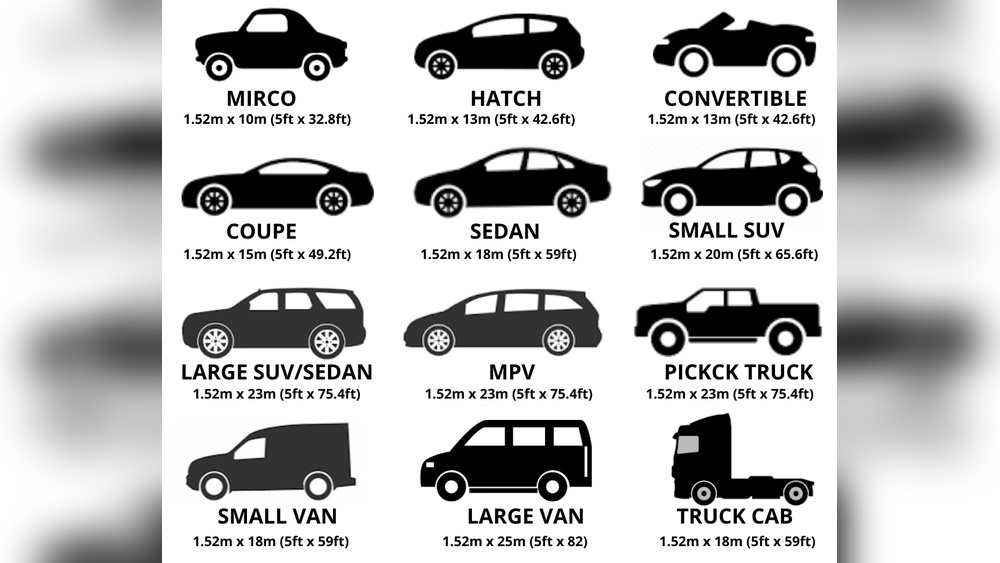
Are you thinking about giving your car a fresh new look with vinyl wrap but unsure how much material you’ll need? Getting the right amount is crucial — too little means an incomplete job, and too much wastes your money.
Don’t worry, you’re in the right place. This guide will walk you through simple steps to calculate exactly how much vinyl wrap your car requires. By the end, you’ll have the confidence to order just the right amount and make your car stand out on the road.
Let’s get started!

Credit: yeswrap.com
Measuring Your Car
Measuring your car is the first step to know how much vinyl wrap you need. Accurate measurements help avoid buying too little or too much wrap. Take your time to measure every part carefully. Use a flexible tape measure for best results.
Calculate Surface Area
Start with the main panels of your car. Measure the length and height of the hood, roof, and trunk. Multiply length by height to get each panel’s area. Add these areas to find the total flat surface area. This gives a basic idea of how much vinyl you need.
Include Doors And Mirrors
Don’t forget the doors. Measure their width and height, then calculate the area. Count all doors on both sides. Side mirrors also need wrapping. Measure their height and width. Add these areas to your total surface area.
Account For Curves And Contours
Cars have curves that add extra surface area. Vinyl needs to cover these smoothly. Add about 10-15% more vinyl to cover curves well. This extra amount prevents running out of material during installation. It also helps with stretching and folding around edges.
Choosing The Right Vinyl
Choosing the right vinyl is key for a successful car wrap. The vinyl affects how the wrap looks and lasts. Picking the best type helps protect your car and keeps it looking good.
Types Of Vinyl Wrap
There are many types of vinyl wrap for cars. Cast vinyl is thin and flexible. It fits curves well and lasts long. Calendered vinyl is thicker and cheaper. It is best for flat surfaces and short-term use. Choose cast vinyl for a smooth, professional finish.
Consider Thickness And Durability
Vinyl thickness matters for durability. Thicker vinyl can resist scratches and weather better. Thin vinyl wraps can tear more easily. Check the product details for thickness. A durable wrap saves money on repairs later.
Select Color And Finish
Vinyl comes in many colors and finishes. Glossy finish shines and looks new. Matte finish gives a sleek, modern style. Satin finish is between glossy and matte. Pick a color that matches your style. The finish changes the car’s overall look.
Estimating Vinyl Quantity
Estimating the right amount of vinyl wrap is key for a successful car wrap project. Getting the quantity right saves money and avoids shortages. Careful measurement and calculation help you buy just enough vinyl without waste. Follow these steps to estimate your vinyl needs accurately.
Calculate Total Square Feet Needed
Start by measuring each part of the car you want to wrap. Note the length and width of doors, hood, roof, and bumpers. Multiply length by width to get the area of each section in square feet. Add all areas together to find the total square feet needed. This total shows how much vinyl you need to cover your car’s surface.
Add Extra For Mistakes And Overlaps
Vinyl wrapping needs extra material for errors and overlaps. Add about 10-15% more vinyl than your total area. This extra covers cutting mistakes, alignment adjustments, and overlapping edges. It prevents running out of material mid-wrap and keeps the finish smooth and neat.
Convert Measurements To Rolls
Vinyl wrap comes in rolls of set widths and lengths. Check the roll size before buying. Divide your total square feet (including extra) by the square feet per roll. This calculation tells you how many rolls you need. Round up to ensure you have enough vinyl to complete the wrap.
Tools And Materials Checklist
Before starting a car vinyl wrap project, gather the right tools and materials. This step saves time and ensures better results. Having everything ready helps avoid mistakes and frustration during wrapping. Use this checklist to prepare your workspace and tools.
Essential Tools For Wrapping
- Vinyl wrap film – enough to cover the entire car
- Squeegee with felt edge – removes air bubbles smoothly
- Heat gun – helps stretch and mold the vinyl
- Utility knife – cuts vinyl precisely
- Measuring tape – measures areas accurately
- Surface cleaner – removes dirt and grease before wrapping
- Gloves – prevent fingerprints and dirt on the vinyl
Additional Supplies For Best Results
- Masking tape – holds vinyl in place temporarily
- Microfiber cloths – clean surfaces without scratches
- Isopropyl alcohol – cleans and prepares the car surface
- Magnets or clamps – help hold large vinyl pieces
- Plastic scraper – smooths out stubborn bubbles or wrinkles
- Soft brush – removes dust before application
Tips For Accurate Measurement
Measuring your car correctly ensures you buy the right amount of vinyl wrap. Accurate measurements help avoid extra costs and wasted material. Taking your time and using proper methods makes the process easier and more precise.
Follow these tips to get the best results for your car wrap project.
Double-check Dimensions
Measure each part of the car twice. Check length, width, and height carefully. Use a tape measure that is easy to read. Write down all numbers clearly. Re-measure to confirm no mistakes. Small errors can cause big problems later.
Use Templates Or Patterns
Templates help capture the shape of your car parts. Use paper or cardboard cutouts to fit panels. This shows the exact size and curves. Templates reduce guesswork and improve fit. They also save time during the wrap installation.
Seek Professional Advice If Needed
Ask a vinyl wrap expert for help if unsure. Professionals have tools and experience for perfect sizing. They can guide you on how much vinyl to buy. Getting advice prevents common errors and saves money.
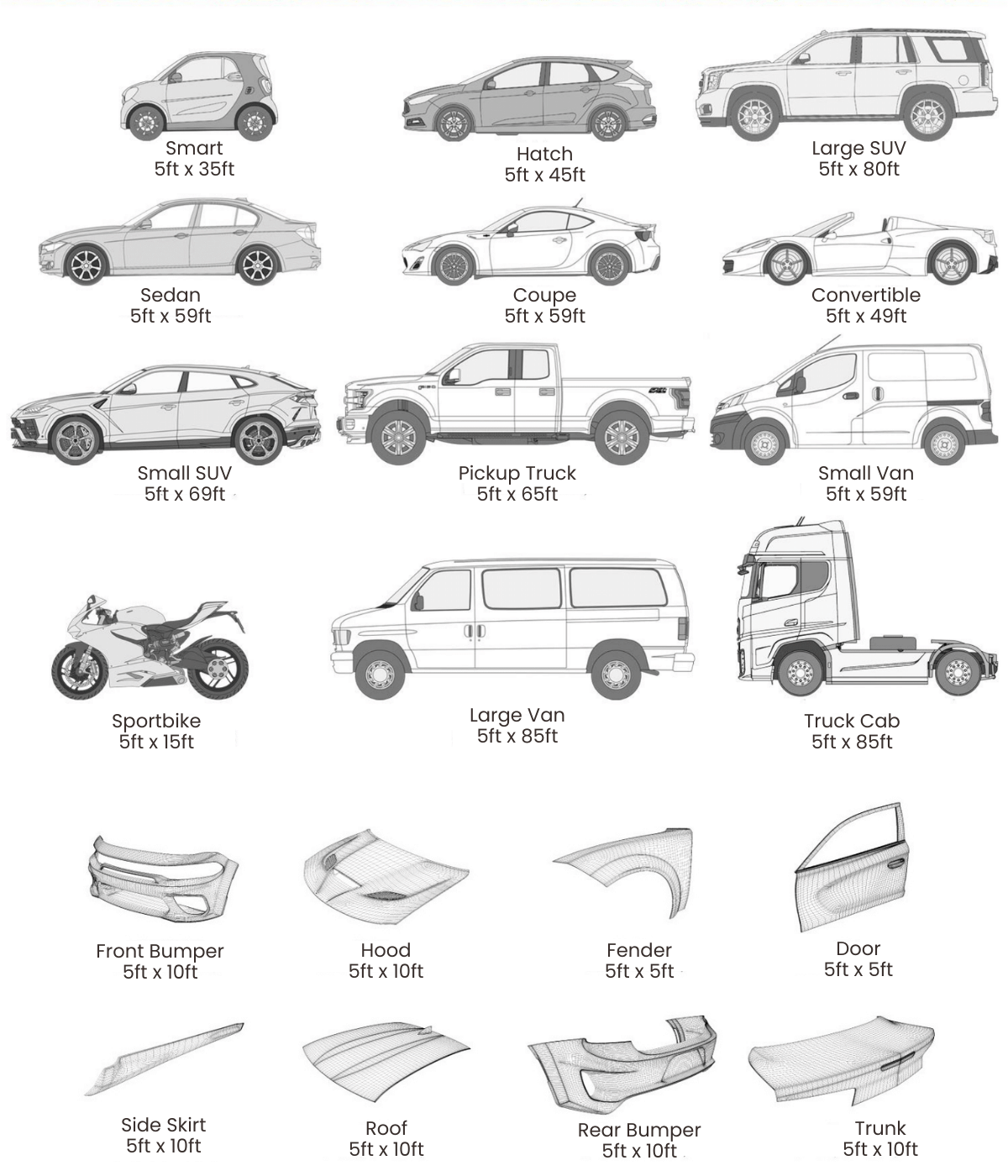
Credit: yeswrap.com
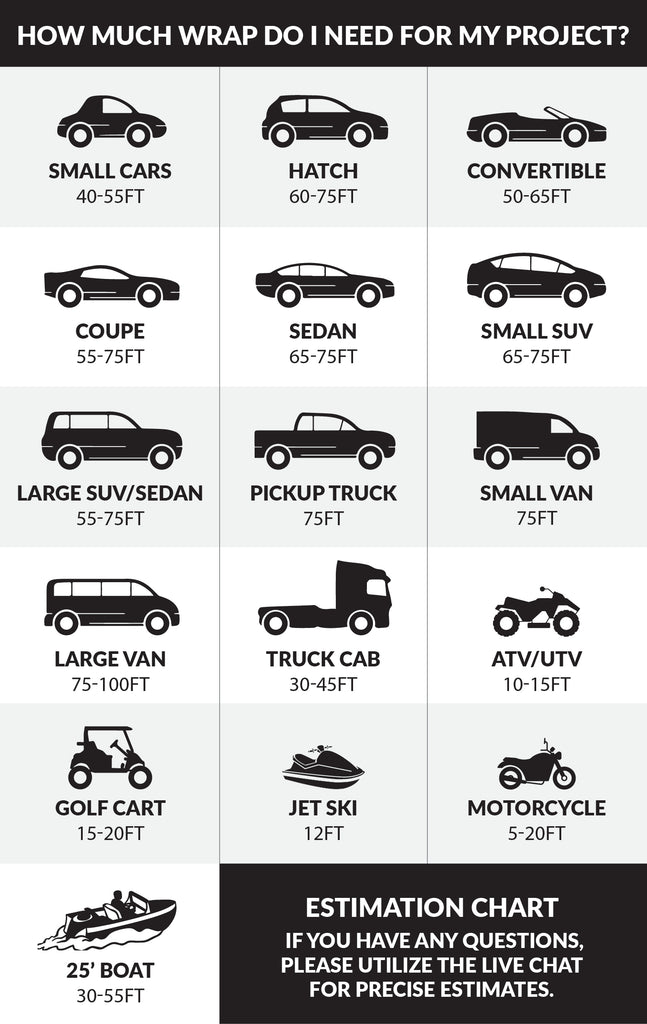
Credit: metrorestyling.com
Frequently Asked Questions
How Do I Measure My Car For Vinyl Wrap?
Measure your car’s length, width, and height accurately. Include doors, mirrors, and bumpers. Use a tape measure for precise dimensions. Add extra inches for overlaps and errors. This ensures you purchase enough vinyl wrap material.
How Much Vinyl Wrap Is Needed For A Full Car Wrap?
Typically, 50 to 75 square feet of vinyl wrap covers an average car. Larger vehicles may need up to 100 square feet. Always buy extra wrap to accommodate mistakes and complex curves. This prevents running out mid-project.
Can I Calculate Vinyl Wrap For Partial Car Wrapping?
Yes, measure the specific area you want to wrap. Multiply the length by the width of that section. Add 10-15% extra for adjustments. This method helps you buy the right amount without waste.
Does Car Shape Affect Vinyl Wrap Quantity Needed?
Yes, complex curves and contours require more vinyl wrap. More material is needed for edges, trims, and recesses. Smooth, flat surfaces use less vinyl. Account for these factors when calculating wrap size.
Conclusion
Calculating vinyl wrap for a car is simple with the right steps. Measure your car’s length and height carefully. Add extra for mistakes and overlaps. This helps avoid running out of material. Always buy a little more than your exact size.
Doing this saves time and money in the long run. Now, you can plan your wrap project with confidence. Ready to give your car a fresh new look? Just measure, add, and wrap!

