

If you drive an F350 diesel truck, you know how important it is to keep it running smoothly. One key part that often gets overlooked is the fuel filter.
A dirty or clogged fuel filter can cause poor engine performance, reduced fuel efficiency, and even costly repairs. But don’t worry—you don’t have to be a mechanic to change it yourself. You’ll learn step-by-step how to change the fuel filter on your F350 diesel truck quickly and safely.
Keep reading, and you’ll save money, avoid downtime, and keep your truck in top shape.
Tools And Materials Needed
Changing the fuel filter on your F350 diesel truck requires the right tools and materials. Having everything ready helps you finish the job quickly. It also makes the process safer and easier. Below is a list of what you need for this task.
Basic Hand Tools
A set of wrenches is essential for loosening and tightening bolts. Use a ratchet and sockets for hard-to-reach areas. Screwdrivers may be needed to remove clamps or covers.
Replacement Fuel Filter
Choose a fuel filter that matches your F350 diesel model. Check the owner’s manual or ask at the auto parts store. Using the correct filter ensures proper fuel flow and engine protection.
Fuel Line Disconnect Tool
This tool helps remove the fuel lines safely without damage. It fits the connectors on your truck’s fuel system. Having this tool prevents fuel leaks and makes the job smoother.
Drain Pan And Rags
A drain pan collects any spilled fuel during the filter change. Keep rags nearby to clean up drips quickly. This keeps your workspace clean and safe from fire hazards.
Safety Gear
Wear gloves to protect your hands from fuel and dirt. Safety glasses shield your eyes from splashes. Good ventilation is important if you work in a garage.
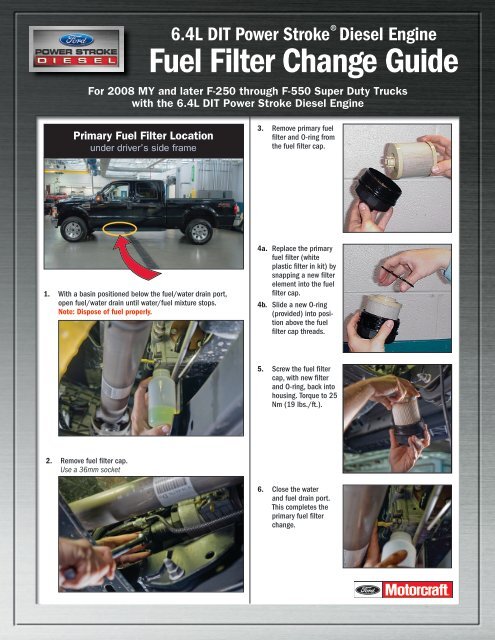
Credit: www.yumpu.com
Locate The Fuel Filter
Knowing where the fuel filter is on your F350 diesel truck is important. The fuel filter cleans dirt and rust from the fuel. This keeps the engine running smoothly. Before changing the filter, you must first find its location.
The fuel filter is not hard to find. It usually sits near the fuel tank or engine. Different model years might have slightly different spots. Look carefully around the engine bay and under the truck.
Check Under The Hood
Open the hood and look around the engine. The fuel filter often mounts on the side of the engine block. It looks like a small metal or plastic canister. Follow the fuel lines to find it.
Look Near The Fuel Tank
Some F350 diesel trucks have the fuel filter near the fuel tank. Crawl under the truck if needed. Look for a metal or plastic housing with fuel lines attached. It may be protected by a shield or bracket.
Use The Owner’s Manual
The owner’s manual shows the exact fuel filter location. It has pictures and diagrams. This helps you find the part fast. Manuals also list part numbers and replacement tips.
Identify The Fuel Lines
Fuel lines lead to and from the fuel filter. They are rubber or metal tubes. Follow these lines carefully. They connect the fuel tank, filter, and engine together.
Prepare The Truck For Service
Preparing your F350 diesel truck for a fuel filter change is a key step. It ensures safety and smooth work. Taking time to prepare saves effort later.
Follow simple steps to get your truck ready. This will help you avoid mistakes and finish the job faster.
Park On A Flat Surface
Choose a flat, stable place to park your truck. This stops it from moving while you work. Use the parking brake to lock the wheels. Safety first.
Turn Off The Engine And Let It Cool
Turn off the engine completely. Wait until the engine cools down. Hot parts can cause burns. Cooling also stops fuel pressure issues.
Gather All Necessary Tools
Collect tools like wrenches, gloves, and a container for old fuel. Having everything ready avoids delays. It helps to keep the workspace neat.
Wear Safety Gear
Wear gloves and safety glasses. Fuel can irritate skin and eyes. Protecting yourself is very important. Keep a fire extinguisher nearby just in case.
Relieve Fuel System Pressure
Release fuel pressure before removing the filter. This reduces fuel spray and spills. Consult your truck’s manual for the proper method.
_1200x1200.png)
Credit: sinisterdiesel.com
Drain The Fuel Filter
Draining the fuel filter on your F350 diesel truck is a key step. It removes water and old fuel trapped inside. This process helps keep your engine clean and running well. Doing it right stops damage and saves money on repairs.
Drain the fuel filter carefully. Follow these simple steps to avoid spills and mess.
Locate The Drain Valve
Find the drain valve at the bottom of the fuel filter. It looks like a small screw or plug. Use a flashlight if needed. Make sure the truck is off and cool before starting.
Prepare A Container For Fuel
Place a clean container under the drain valve. It must catch the fuel and water. Use a container that is safe for diesel fuel. This prevents spills and protects the ground.
Open The Drain Valve Slowly
Turn the drain valve slowly to release fuel. Let the water and old fuel drain out. Watch for clean fuel to flow. Close the valve as soon as only clean fuel runs out.
Dispose Of Old Fuel Properly
Do not pour old fuel on the ground. Take it to a recycling center or auto shop. Proper disposal helps the environment and follows the law.
Remove The Old Fuel Filter
Start by loosening the clamps and bolts holding the old fuel filter. Carefully pull it out to avoid spilling fuel. Dispose of the old filter properly before installing a new one.
Prepare Your Workspace
Start by parking your F350 on a flat surface. Turn off the engine and let it cool down. Wear gloves to protect your hands from fuel and dirt. Keep a container ready to catch any fuel that may spill. This prevents mess and environmental harm.
The fuel filter on the F350 diesel truck sits near the engine or under the hood. It looks like a small metal or plastic cylinder. Check your owner’s manual for the exact spot. Knowing the location saves time and hassle during removal.
Release The Fuel System Pressure
Before removing the filter, release pressure in the fuel system. This stops fuel from spraying out. Use a wrench or a special tool to loosen the fuel lines carefully. Work slowly to avoid sudden fuel bursts.
Disconnect The Fuel Lines
Use pliers or a wrench to disconnect the fuel lines from the filter. Hold the lines firmly and twist gently. Place rags or a container below to catch drips. Keep the fuel lines clean to avoid dirt entering the system.
Turn the filter counterclockwise to unscrew it. Some filters may have a clip or bracket holding them. Remove any clamps or screws first. Take the filter out carefully to avoid spilling fuel. Dispose of the old filter properly.
Install The New Fuel Filter
Installing the new fuel filter on your F350 diesel truck is a key step. It ensures clean fuel flow and protects the engine from dirt and debris. The process is simple but requires care and attention.
Follow these steps to install the new fuel filter properly. This will help your truck run smoothly and avoid fuel system problems.
Prepare The New Fuel Filter
Take the new fuel filter out of its packaging. Check for any damage or defects. Some filters need to be filled with diesel before installation. This helps prevent air locks in the fuel system.
Position The Fuel Filter
Place the new filter in the holder. Align it exactly as the old one was. Make sure the arrows on the filter point in the direction of fuel flow. This is usually from the tank to the engine.
Secure The Filter In Place
Tighten the filter by hand until it is snug. Use a wrench to give it a slight turn, but do not over-tighten. Over-tightening can cause damage or leaks.
Reconnect Fuel Lines
Attach the fuel lines to the new filter. Check that the connections are tight. Loose lines can cause fuel leaks or air to enter the system.
Check For Leaks
Start the engine and watch the filter area closely. Look for any signs of fuel leaks. If you see leaks, turn off the engine and tighten connections again.
Bleed The Fuel System
Bleeding the fuel system is a key step after changing the fuel filter on your F350 diesel truck. It removes air trapped inside the fuel lines. Air pockets can stop fuel flow and cause engine problems.
Without proper bleeding, the engine might fail to start or run rough. The process ensures that clean fuel reaches the engine smoothly. It helps your truck perform well and prevents damage.
Locate The Bleed Screw
Find the bleed screw near the fuel filter housing. It is usually a small valve or bolt. Use a wrench to open it carefully. Keep a rag nearby to catch any fuel spills.
Pump The Primer Bulb
Press the primer bulb several times. This action pushes fuel through the lines. Watch for air bubbles escaping from the bleed screw. Fuel should flow without bubbles.
Tighten The Bleed Screw
Once fuel flows steadily, close the bleed screw. Tighten it firmly but do not overtighten. This seals the fuel system and stops leaks.
Start The Engine
Turn on the engine and listen carefully. It should run smoothly without sputtering. If the engine stalls, repeat the bleeding process. Air may still be trapped inside.
Check For Leaks And Test
After installing the new fuel filter on your F350 diesel truck, checking for leaks is very important. This step ensures the filter fits well and no fuel escapes. A leak can cause poor engine performance or even damage.
Testing the fuel system helps confirm everything works correctly. This process also helps spot any issues early. Proper testing keeps your truck running smoothly and safely.
Visual Inspection For Leaks
Start by looking closely at the fuel filter area. Check all connections and fittings for wet spots or drips. Use a clean cloth to wipe around the filter. Watch for fresh fuel stains or puddles.
Turn the ignition key to the “on” position without starting the engine. This action pressurizes the fuel system. Look again for any fuel leaks around the filter. If you see leaks, tighten the fittings carefully.
Start The Engine And Observe
Once no leaks appear during the visual check, start the engine. Let it run for a few minutes at idle. Watch the fuel filter and nearby hoses closely. Look for any signs of leaking fuel.
Listen for unusual engine sounds like sputtering or hesitation. These sounds may indicate air in the fuel lines or installation issues. If you notice anything odd, shut off the engine and inspect again.
Check Fuel Pressure
Use a fuel pressure gauge to test the system’s pressure. Connect the gauge to the test port near the fuel filter. Turn the engine on and read the gauge.
The fuel pressure should match the truck’s specifications. Low pressure can mean a clogged filter or loose fittings. High pressure might indicate a blocked fuel return line. Adjust or replace parts if the pressure is not correct.
Maintenance Tips For Fuel Filters
Fuel filters keep your F350 diesel truck’s engine clean. They stop dirt and rust from reaching the fuel system. Proper care of fuel filters helps the engine run smoothly. It also extends the life of the fuel pump and injectors.
Regular maintenance of fuel filters is important. It prevents clogs and fuel flow problems. Here are some key tips to keep your fuel filters in top shape.
Check Fuel Filter Regularly
Look at the fuel filter every few months. Check for dirt or damage. A dirty filter can reduce engine power. Replace it if you see signs of clogging.
Use Quality Fuel
Fill your truck with clean, high-quality diesel. Bad fuel can cause filter clogging fast. Good fuel helps keep the filter clean longer.
Replace Fuel Filter On Time
Follow the truck’s manual for replacement schedules. Usually, change the filter every 15,000 to 25,000 miles. Timely replacement avoids fuel flow issues.
Drain Water From Fuel Filter
Some filters have a water trap. Water can harm the engine. Drain any water buildup regularly to protect the fuel system.
Keep Fuel Tank Clean
Dirty fuel tanks cause filter problems. Clean the tank during major services. This stops dirt from reaching the filter and engine.

Credit: www.youtube.com
Frequently Asked Questions
How Often Should I Change The Fuel Filter On F350 Diesel?
Change the fuel filter every 15,000 to 25,000 miles. Regular replacement prevents clogs and maintains engine performance.
What Tools Do I Need To Change F350 Fuel Filter?
You need a wrench, fuel line disconnect tool, new filter, and rags. These tools ensure a safe and efficient filter change.
Can I Change The Fuel Filter Myself Safely?
Yes, with proper tools and safety precautions, you can change it. Always relieve fuel pressure and work in a well-ventilated area.
How Do I Know If The Fuel Filter Is Clogged?
Symptoms include engine misfires, reduced power, and poor fuel economy. These signs indicate it’s time to replace the fuel filter.
Conclusion
Changing the fuel filter on your F350 diesel truck helps keep the engine running well. Clean fuel means better performance and fewer problems. Follow each step carefully to avoid mistakes. This task saves money and time by preventing bigger repairs.
Regular filter changes protect your truck’s parts. Take your time and work safely. A well-maintained truck drives smoother and lasts longer. Simple care makes a big difference. Keep your F350 in top shape with this easy fix.

