
Have you noticed your car acting up lately? Maybe it’s struggling to start, losing power, or stalling unexpectedly.
These signs could mean your fuel filter is going bad. Knowing how to tell if you have a bad fuel filter can save you time, money, and a lot of frustration on the road. You’ll learn the simple signs to watch for and what steps to take next.
Keep reading to protect your car and keep it running smoothly.
Credit: www.jiffylube.com
Symptoms Of A Failing Fuel Filter
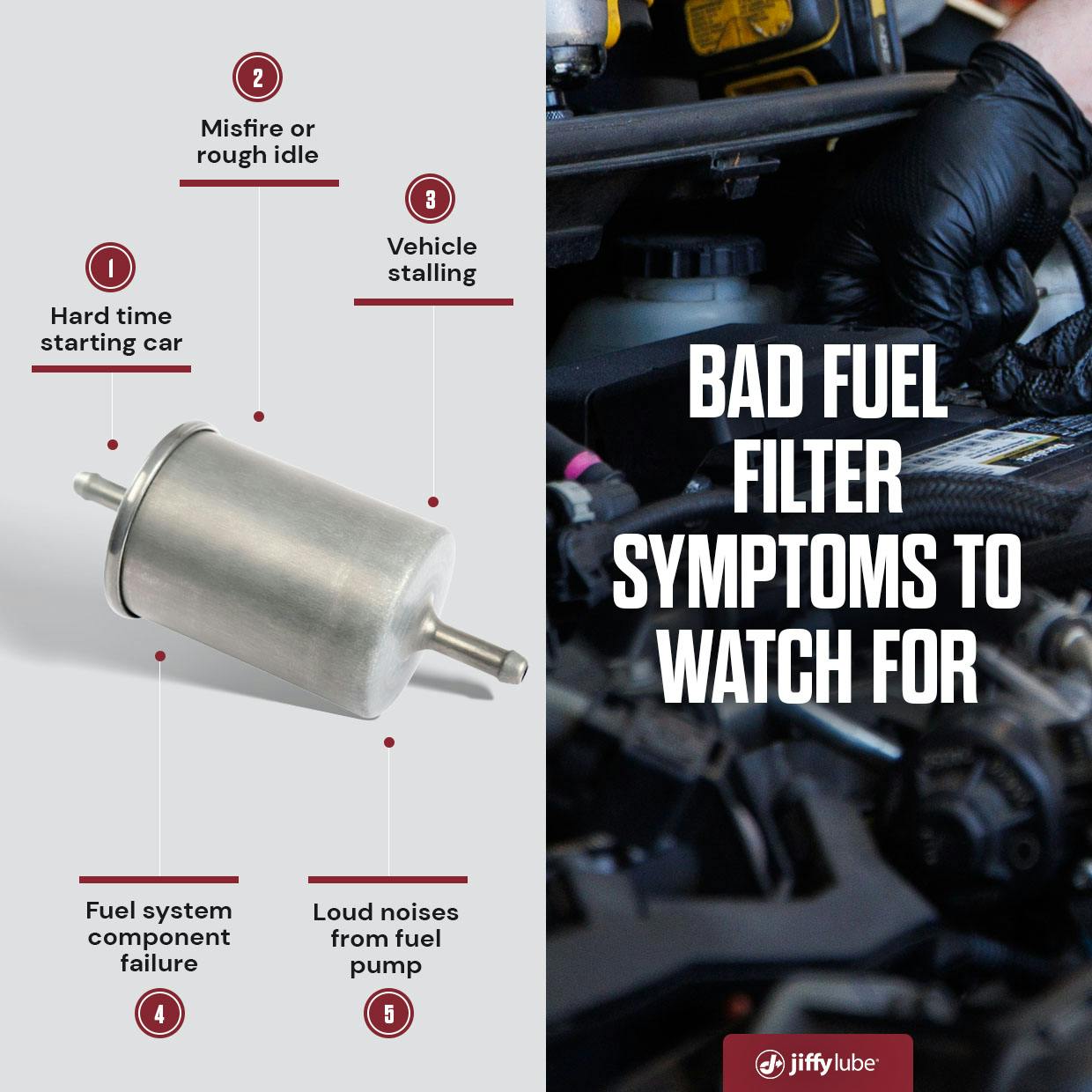
The fuel filter plays a key role in keeping your engine clean. It traps dirt and rust from the fuel before it reaches the engine. A failing fuel filter can cause several problems. Knowing the signs helps you act early. This section highlights common symptoms of a bad fuel filter.
Engine Stalling And Hesitation
One clear sign of a bad fuel filter is engine stalling. The engine may suddenly stop while driving. Hesitation can happen during acceleration. The filter blocks fuel flow, causing the engine to struggle. This makes driving unsafe and frustrating.
Reduced Engine Power
A clogged fuel filter limits fuel supply to the engine. This results in less power when you press the gas pedal. The car feels weak and slow. Hills and heavy loads become harder to manage. Reduced engine power often points to fuel filter issues.
Difficulty Starting The Engine
Starting the engine takes longer than usual. The engine may crank but fail to start quickly. A dirty fuel filter restricts fuel flow at startup. This causes delays and multiple attempts to start. Pay attention to slow or hard starts.
Unusual Engine Noises
A failing fuel filter can cause strange engine sounds. You might hear sputtering or coughing noises. These happen because the engine starves for fuel. Odd noises often mean the fuel filter needs checking. Don’t ignore these warning sounds.

Credit: www.autonationmobileservice.com
Visual And Physical Signs
Visual and physical signs often reveal a bad fuel filter before serious problems arise. These signs are easy to spot with a quick check. They help you decide if your vehicle needs attention. Pay close attention to changes in the fuel filter’s look, smell, and any signs of leaks. These clues can save you time and money.
Fuel Filter Appearance
A bad fuel filter may look dirty or clogged. Check for dark spots or debris on the filter’s surface. Rust or corrosion can also show that the filter is failing. Sometimes the filter looks swollen or damaged. Any cracks or dents mean it needs replacement. A clean filter should look smooth and free from dirt.
Fuel Smell Around The Vehicle
A strong fuel smell near your car can mean a bad fuel filter. The smell might be stronger around the engine or near the fuel tank. This happens if fuel leaks or vapors escape through a damaged filter. The smell may get worse after driving or when the engine is hot. Trust your nose—it often senses problems early.
Fuel Leaks And Wet Spots
Look under your vehicle for wet spots or fuel leaks. A bad fuel filter may cause fuel to drip or pool under the car. Wet areas near the fuel filter or fuel lines are warning signs. Fuel leaks are dangerous and need quick fixing. Clean, dry surfaces show the fuel system is working well.
Impact On Fuel Efficiency
The fuel filter plays a key role in keeping your engine clean. It stops dirt and debris from entering the fuel system. A bad fuel filter can block the flow of fuel. This blockage affects how well your engine runs. One clear sign of a bad fuel filter is its impact on fuel efficiency.
Fuel efficiency means how far your car can travel on a certain amount of fuel. When the fuel filter is clogged, the engine does not get enough fuel. The engine works harder to maintain power. This extra effort uses more fuel than normal. It makes your car less efficient and costs more money on fuel.
Decreased Mileage
One common sign of a bad fuel filter is lower mileage. Mileage means how many miles your car can drive per gallon of fuel. A clogged fuel filter reduces fuel flow. The engine burns fuel less efficiently. This causes your car to travel fewer miles on the same fuel amount. You may notice your car’s mileage dropping suddenly.
Frequent Refueling
Another sign is needing to refuel more often. You might find yourself filling the tank sooner than usual. The bad fuel filter causes the engine to use more fuel. This leads to frequent stops at gas stations. Frequent refueling is a clear hint that your fuel filter could be bad.
Diagnosing A Bad Fuel Filter
Diagnosing a bad fuel filter is important to keep your car running well. A clogged or dirty fuel filter can cause poor engine performance. It can also lead to starting problems and reduced fuel efficiency. You can check the fuel filter condition by testing fuel pressure, using diagnostic tools, or getting a professional inspection. Each method helps find issues early and saves money on big repairs.
Checking Fuel Pressure
Fuel pressure shows how well fuel flows to the engine. Low pressure often means a clogged fuel filter. Use a fuel pressure gauge to test it. Attach the gauge to the fuel rail or test port. Turn the ignition on without starting the engine. Read the gauge. If pressure is below the car’s manual specs, the fuel filter may be bad. This simple test helps spot fuel flow problems fast.
Using Diagnostic Tools
Diagnostic tools scan your car’s computer for fuel system errors. A scanner can detect issues like lean fuel mixture or fuel pump problems. These errors might point to a blocked fuel filter. Plug the scanner into the OBD-II port under the dashboard. Read error codes related to fuel delivery. Clear the codes and run the engine again. If errors return, the fuel filter could be the cause.
Professional Inspection
Mechanics have special tools and experience to check fuel filters. They inspect the fuel lines, filter, and pump closely. Professionals may remove the fuel filter to check for dirt and debris. They also test fuel pressure accurately. A professional inspection finds hidden problems that simple tests might miss. This step ensures your fuel system is clean and working properly.
Risks Of Ignoring A Faulty Fuel Filter
Ignoring a faulty fuel filter can lead to serious problems. The fuel filter keeps dirt and debris from entering the engine. A clogged or damaged filter blocks fuel flow. This causes several risks that affect your car’s health and your wallet.
Engine Damage
A bad fuel filter starves the engine of fuel. This makes the engine run rough or stall. Over time, it can cause permanent damage to engine parts. Repairing engine damage is costly and time-consuming.
Fuel System Contamination
Dirty fuel can pass through a faulty filter. This dirt clogs fuel injectors and carburetors. Contaminated fuel reduces engine efficiency. It can also cause misfires and poor acceleration.
Costly Repairs
Ignoring the fuel filter leads to more damage. Repairs for the engine and fuel system add up fast. Replacing a fuel filter is cheaper than fixing engine problems. Regular maintenance saves money and avoids headaches.
Preventive Measures And Maintenance
Taking care of your fuel filter helps your vehicle run smoothly. Preventive steps stop problems before they start. Regular maintenance keeps your engine healthy and avoids costly repairs.
Fuel filters catch dirt and rust from fuel. Over time, they get clogged and reduce fuel flow. This causes poor engine performance and can damage parts.
Regular Fuel Filter Replacement
Change the fuel filter as recommended by your car’s manual. Old filters block fuel and lower engine power. Replacing it on time keeps fuel flowing freely. This simple task saves money and stress later.
Using Quality Fuel
Fill your tank with clean, high-quality fuel. Cheap or dirty fuel clogs filters faster. Good fuel protects the filter and the engine. It also helps your car run better and last longer.
Routine Vehicle Checkups
Check your vehicle regularly for signs of filter trouble. Mechanics can spot issues before they get worse. Regular inspections catch problems early. This keeps your car reliable and safe on the road.

Credit: www.youtube.com
Frequently Asked Questions
What Are Common Signs Of A Bad Fuel Filter?
A bad fuel filter causes engine misfires, stalling, poor acceleration, and difficulty starting. It may also trigger the check engine light. These symptoms occur due to restricted fuel flow to the engine.
How Often Should You Replace A Fuel Filter?
Replace your fuel filter every 20,000 to 40,000 miles. Check your vehicle’s manual for specific intervals. Regular replacement prevents clogging and maintains optimal engine performance.
Can A Clogged Fuel Filter Damage The Engine?
Yes, a clogged fuel filter reduces fuel supply, causing engine strain. Prolonged use can lead to engine misfires and damage fuel injectors. Timely replacement avoids costly repairs.
How Do Mechanics Test A Faulty Fuel Filter?
Mechanics check fuel pressure and inspect for debris in the filter. They may also observe engine performance during acceleration. These tests help confirm if the fuel filter is the issue.
Conclusion
A bad fuel filter can cause many car problems. Watch for signs like poor engine performance or trouble starting. Regular checks help keep your vehicle running smoothly. Don’t ignore strange noises or smells from the fuel system. Changing the filter on time saves money and stress.
Keep your car healthy by paying attention to these clues. Simple steps can prevent bigger issues down the road. Stay aware and act quickly to avoid costly repairs. Your car will thank you for the care.

