

Have you noticed your car acting up lately? Maybe it’s struggling to start, or the engine feels weaker than usual.
These problems could be a sign that your fuel filter is bad. Your fuel filter plays a crucial role in keeping your engine running smoothly by catching dirt and debris before they reach the fuel system. But how do you know when it’s time to replace it?
You’ll learn the clear signs to watch for and simple ways to check if your fuel filter is causing trouble. Keep reading to protect your engine and avoid costly repairs down the road.
Common Fuel Filter Problems
Fuel filters play an important role in keeping your engine clean. Dirt and debris in fuel can cause serious damage. Over time, fuel filters face common problems that affect car performance. Knowing these issues helps you spot trouble early. This keeps your vehicle running smoothly and saves repair costs.
Clogged Fuel Filter
A clogged fuel filter blocks fuel flow to the engine. Dirt and particles build up inside the filter. This causes poor engine performance and low power. The engine may sputter or stall during driving. Fuel efficiency also drops, making your car use more gas.
Fuel Pressure Drop
When the fuel filter is dirty, fuel pressure can fall. Low fuel pressure makes the engine run rough. Starting the car becomes harder. The fuel pump works harder, which can lead to early failure. This problem affects acceleration and overall driving experience.
Contaminated Fuel Filter
Contamination comes from bad or dirty fuel. It clogs the filter quickly and damages engine parts. Water, rust, and debris cause corrosion inside the filter. This shortens the filter’s life and harms fuel injectors. Replacing the filter prevents bigger engine issues.
Fuel Pump Strain
A blocked filter forces the fuel pump to work extra hard. This strain can cause the pump to fail early. A failing pump leads to no fuel supply and engine shutdown. Regular filter checks reduce stress on the fuel pump and improve car reliability.

Credit: oilchangers.com
Engine Performance Issues
Engine performance issues often signal a bad fuel filter. This part cleans the fuel before it reaches the engine. A clogged filter can block fuel flow, causing problems. These problems affect how your engine runs and feels while driving. Watch for signs that your fuel filter might be failing.
Loss Of Power
Your car may struggle to speed up or climb hills. The engine does not get enough fuel to work well. This loss of power happens because the fuel filter blocks the fuel. The engine feels weak and less responsive. It may stall during acceleration or under heavy load.
Engine Misfires
Misfires happen when the engine does not burn fuel correctly. A dirty fuel filter causes uneven fuel flow. This makes the engine run rough or shake. You might hear popping sounds from the engine. Misfires can damage other parts if ignored for long.
Difficulty Starting
Starting the car becomes harder with a bad fuel filter. The engine may crank but fail to start quickly. It takes longer to get the engine running. This happens because the fuel does not reach the engine fast enough. Repeated hard starts can strain the battery and starter motor.
Fuel Efficiency Drops
Your car uses more fuel when the fuel filter is bad. The engine does not get enough clean fuel. This makes the engine work harder than usual. The harder the engine works, the more fuel it burns.
Fuel filters catch dirt and rust from your gas tank. Over time, they get clogged. A clogged fuel filter slows down fuel flow. This causes the engine to run poorly and waste fuel.
Reduced Miles Per Gallon
You may notice fewer miles per gallon on your car’s display. The drop in fuel efficiency means you fill up more often. This is a clear sign of a bad fuel filter.
Engine Hesitation And Stalling
The engine may hesitate or stall during acceleration. This happens because the fuel flow is blocked. Less fuel means less power, causing these problems.
Hard Starting
Your car may take longer to start. A clogged fuel filter restricts fuel to the engine. The engine struggles to get enough fuel to start quickly.
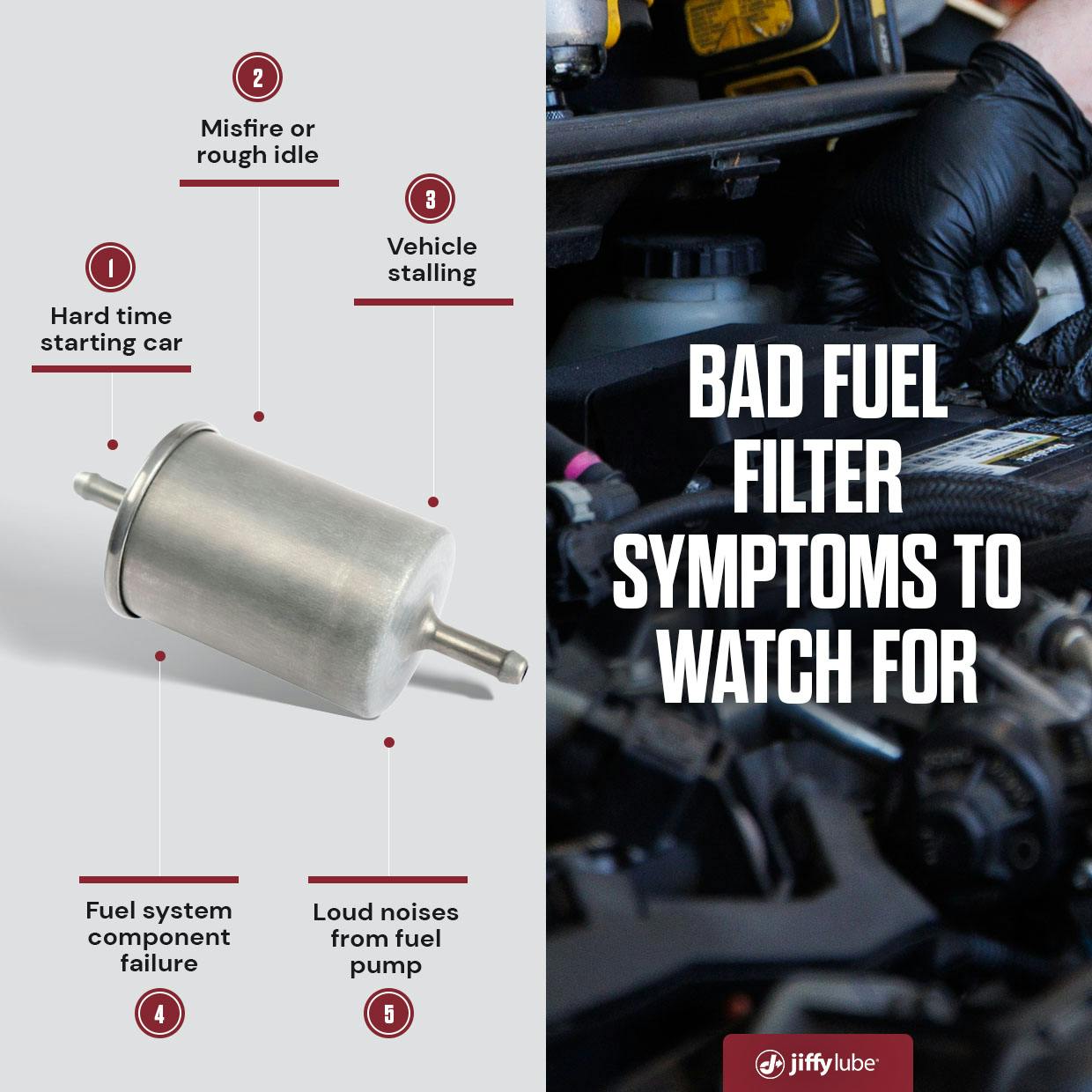
Credit: www.jiffylube.com
Unusual Noises And Smells
Unusual noises and smells can signal a problem with your fuel filter. These signs often appear before major engine trouble. Paying attention to these clues helps you act early. It keeps your car running smoothly and safely.
Sputtering Sounds
Sputtering sounds during acceleration may come from a clogged fuel filter. The engine struggles to get enough fuel. It causes jerking or uneven running. These noises happen because fuel flow is uneven. The engine tries to adjust but fails. This sputtering often gets worse over time.
Fuel Odor
A strong fuel smell near your vehicle can mean a fuel filter issue. Leaks or cracks in the filter allow fuel to escape. This odor is hard to miss and is a safety risk. It also means your car wastes fuel. Check the filter and fuel lines for damage. Fixing it quickly avoids bigger problems.
Visual Signs Of Fuel Filter Damage
Visual signs of fuel filter damage help identify problems early. Spotting these signs can save time and money on repairs. The fuel filter keeps dirt and rust out of the engine. When damaged, it may cause engine trouble or poor performance. Check the fuel filter regularly to avoid big issues.
Rust Or Corrosion On The Fuel Filter
Rust or corrosion shows the filter’s metal parts wear out. This damage can cause leaks or block fuel flow. Look for orange or brown spots on the filter surface. Corrosion often means the filter needs replacement soon.
Visible Dirt Or Debris On The Filter
Dirt or debris stuck on the filter means it is clogged. A dirty filter cannot clean fuel properly. This may cause the engine to run rough or stall. Check the filter through any clear housing or by removal.
Fuel Leaks Around The Filter Area
Leaks near the fuel filter indicate damage or loose fittings. Fuel spots or wetness can appear on or near the filter. Leaks reduce fuel pressure and harm engine performance. Fix leaks immediately to avoid fire risk.
Cracks Or Physical Damage To The Filter Body
Cracks or dents on the filter show it is physically damaged. This damage can let dirt enter the fuel system. It also causes leaks or fuel loss. Replace any filter with visible cracks or breaks.

Credit: www.youtube.com
Impact On Vehicle Safety
The fuel filter plays a key role in keeping your vehicle safe. It cleans dirt and particles from the fuel before it reaches the engine. A bad fuel filter can cause problems that affect how safely your car runs.
Clean fuel helps the engine work smoothly. When the filter is clogged, fuel flow slows down. This can lead to engine stalling or hesitation. Such issues increase the risk of accidents, especially in traffic or on highways.
Fuel filter problems can also reduce engine power. Losing power during driving can cause dangerous situations. For example, it may be hard to speed up or climb hills safely. This limits your control over the vehicle.
Engine Stalling And Sudden Stops
A bad fuel filter can cause the engine to stall unexpectedly. This means the car may stop running without warning. Sudden stops can surprise other drivers and cause crashes. Avoid this risk by keeping the fuel filter clean.
Reduced Acceleration And Control
Clogged filters limit the fuel supply to the engine. The car may feel slow to respond when you press the gas. Losing acceleration hurts your ability to merge or pass other cars safely. This loss of control can be dangerous on busy roads.
Engine Misfires And Unsafe Driving Conditions
Dirty fuel filters can cause engine misfires. Misfires make the engine run roughly or shake. This can distract you and make driving uncomfortable. Rough engine performance also increases the chance of mechanical failure during trips.
When To Replace Your Fuel Filter
Knowing when to replace your fuel filter helps keep your vehicle running smoothly. A clogged filter limits fuel flow and causes engine problems. Replacing it at the right time prevents costly repairs and improves fuel efficiency.
Recommended Replacement Intervals
Most car makers suggest changing the fuel filter every 20,000 to 40,000 miles. Check your owner’s manual for exact numbers. Older cars may need more frequent changes. Frequent stops in dusty areas may also require earlier replacement.
Inspection Tips
Look for signs like engine hesitation or trouble starting. A weak engine or rough idling may indicate a bad filter. Check for dark smoke from the exhaust. Listen for unusual engine noises while driving. Regular inspections by a mechanic can catch issues early.
Diy Fuel Filter Check
Checking your fuel filter yourself can save time and money. It helps spot problems early before they get worse. This simple DIY check requires a few tools and careful steps. Follow this guide to see if your fuel filter needs attention.
Tools Needed
- Safety gloves
- Eye protection
- Wrench set
- Rags or paper towels
- Container for fuel catch
- Flashlight
Step-by-step Guide
- Park your car on a flat surface and turn off the engine.
- Wear gloves and eye protection for safety.
- Locate the fuel filter. It is usually near the fuel tank or engine.
- Place a container under the filter to catch any spilled fuel.
- Use a wrench to loosen the fuel lines connected to the filter.
- Remove the fuel filter carefully to avoid spilling fuel.
- Check the filter for dirt, rust, or damage. Look inside if possible.
- If the filter looks clogged or dirty, it needs replacement.
- Reattach the fuel lines and tighten them securely.
- Start the engine and check for leaks around the filter.
Frequently Asked Questions
How Do I Know If My Fuel Filter Is Clogged?
A clogged fuel filter causes engine hesitation, poor acceleration, and stalling. You may also notice difficulty starting the car. These symptoms indicate fuel flow restriction, signaling a bad fuel filter that needs replacement.
What Are Common Signs Of A Bad Fuel Filter?
Common signs include engine misfires, rough idling, decreased fuel efficiency, and trouble starting. These issues occur because a dirty filter restricts fuel supply to the engine.
Can A Bad Fuel Filter Damage My Engine?
Yes, a bad fuel filter can cause fuel starvation, leading to engine damage. It puts stress on the fuel pump and reduces engine performance, risking costly repairs if ignored.
How Often Should I Replace My Fuel Filter?
Replace your fuel filter every 20,000 to 40,000 miles or as recommended by your vehicle’s manual. Regular changes ensure optimal fuel flow and engine health.
Conclusion
A bad fuel filter can cause many car problems. Watch for signs like engine trouble or poor gas mileage. Regular checks help keep your vehicle running well. Changing the filter on time saves money and stress. Trust your senses; strange sounds or smells matter.
Stay safe by maintaining your car’s fuel system. Taking small steps now avoids big repairs later. Keep your car healthy and enjoy smooth rides. Simple care goes a long way.


