
Have you noticed your car acting up lately? Maybe it’s slower to start or feels like it’s losing power on the road.
These could be signs that your fuel filter is bad. But how do you know for sure? Understanding the warning signs can save you time, money, and the frustration of unexpected breakdowns. You’ll learn exactly what to look for and how to tell if your fuel filter needs attention—so you can keep your vehicle running smoothly and avoid costly repairs.
Keep reading to find out what your car is trying to tell you.
Credit: www.jiffylube.com
Symptoms Of A Bad Fuel Filter
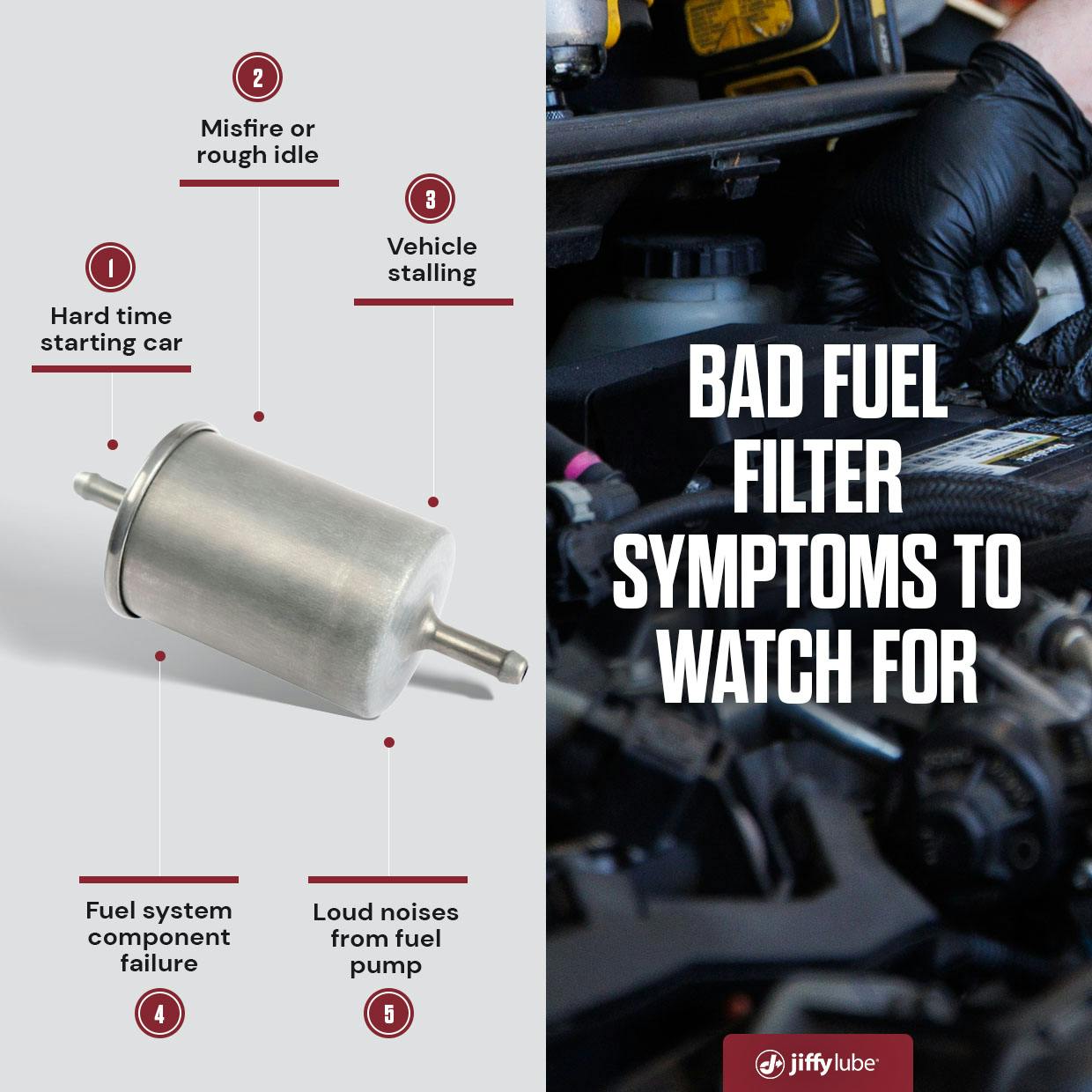
The fuel filter plays a key role in keeping your engine clean by stopping dirt and debris. A bad fuel filter can cause many problems. Recognizing the symptoms early helps avoid bigger issues. Here are some common signs of a bad fuel filter.
Engine Performance Issues
A clogged fuel filter limits fuel flow. The engine may run rough or lose power. Acceleration can feel weak or slow. This happens because the engine does not get enough fuel.
Difficulty Starting The Engine
The engine may take longer to start. It might need several tries before it runs. This occurs as the fuel supply is restricted. A bad fuel filter makes it hard for fuel to reach the engine.
Frequent Stalling
The engine may stop suddenly while driving. Stalling happens due to uneven fuel delivery. The fuel filter blocks dirt but can get clogged. This causes the engine to lose power and stall.
Poor Fuel Efficiency
A bad fuel filter can cause higher fuel use. The engine works harder to get fuel. This lowers miles per gallon. You may notice you need fuel more often.
Unusual Engine Noises
The engine might make strange sounds. Popping or sputtering noises are common signs. These noises come from fuel flow problems. A bad fuel filter can cause these odd engine sounds.

Credit: www.youtube.com
Common Causes Of Fuel Filter Problems
Fuel filters keep your engine clean by trapping dirt and particles. Problems with the fuel filter can cause engine issues and poor performance. Understanding common causes helps spot signs early. Here are key reasons fuel filters fail and how they affect your vehicle.
Clogged Filter From Dirt And Debris
Dirt and debris from the fuel can block the filter. A clogged filter stops fuel from flowing smoothly. This can make your engine sputter or lose power. Dust, rust, and particles in fuel tanks cause this clogging. Regular filter checks prevent this problem.
Contaminated Fuel
Fuel mixed with water or other substances harms the filter. Contaminated fuel causes rust and corrosion inside the filter. These contaminants reduce filter efficiency quickly. This leads to engine misfires and poor fuel economy. Always use clean fuel to avoid this issue.
Wear And Tear Over Time
Fuel filters wear out naturally with use. Over time, filter material breaks down and loses strength. This reduces its ability to trap particles effectively. Old filters cause fuel flow problems and engine hesitation. Replacing filters regularly keeps the engine healthy.
Testing A Fuel Filter
Testing a fuel filter helps find problems early. It shows if the filter blocks fuel flow. This keeps the engine running smooth. Several easy tests check the filter’s condition. Each test gives clues about fuel flow and filter health.
Visual Inspection
Start by looking at the fuel filter closely. Check for dirt or rust on the outside. Look for cracks or leaks in the filter body. Dark fuel or debris inside the filter means clogging. A clean filter looks clear and intact. Replace the filter if you see damage or dirt.
Fuel Pressure Test
A fuel pressure test shows how well fuel flows. Use a pressure gauge on the fuel line. Turn the engine on and watch the gauge. Low pressure may mean a clogged filter. Compare the reading with the car’s manual. If pressure is below the limit, the filter needs changing.
Flow Rate Check
This test measures how fast fuel passes through. Disconnect the fuel line after the filter. Place a container to catch fuel safely. Turn on the engine briefly to let fuel flow. Slow flow means the filter is dirty or blocked. A good flow means the filter works well.
Replacing A Bad Fuel Filter
Replacing a bad fuel filter is key to keeping your vehicle running smoothly. A clogged filter blocks fuel flow, causing poor engine performance. Changing it restores fuel flow and engine power. The process is simple with the right tools and steps. Follow safety rules to avoid accidents.
Tools Needed
- New fuel filter matching your vehicle
- Wrenches or socket set
- Screwdrivers
- Fuel line disconnect tool (if required)
- Drain pan to catch fuel
- Safety gloves and glasses
- Rags for spills
Step-by-step Replacement Guide
- Park the car on a flat surface and turn off the engine.
- Relieve fuel system pressure by removing the fuel pump fuse and running the engine until it stalls.
- Disconnect the battery to avoid sparks.
- Locate the fuel filter, usually near the fuel tank or engine bay.
- Place the drain pan under the filter to catch fuel drips.
- Use wrenches or disconnect tool to remove fuel lines from the filter.
- Remove the old fuel filter carefully.
- Install the new filter in the correct direction of fuel flow.
- Reconnect fuel lines tightly to prevent leaks.
- Reinstall the fuel pump fuse and connect the battery.
- Start the engine and check for leaks.
Safety Precautions
- Work in a well-ventilated area away from flames.
- Wear gloves and safety glasses to protect skin and eyes.
- Keep a fire extinguisher nearby in case of emergencies.
- Dispose of old fuel and filter properly.
- Do not smoke or use phones during the process.
Preventing Future Fuel Filter Issues
Preventing future fuel filter issues helps keep your vehicle running smoothly. A clean fuel filter stops dirt and debris from damaging your engine. Taking simple steps can extend the life of your fuel filter and avoid costly repairs.
Regular Maintenance Schedule
Check your vehicle’s manual for fuel filter replacement times. Change the fuel filter as recommended by the manufacturer. Regular checks catch problems early and keep fuel flowing well. Set reminders to stay on track with maintenance. A clean filter improves engine performance and fuel efficiency.
Using Quality Fuel
Choose fuel from trusted gas stations only. Poor-quality fuel contains dirt and water that harm the filter. Clean fuel reduces buildup inside the filter and fuel system. Avoid cheap or unknown fuel sources to protect your engine. Good fuel helps your car run better and last longer.
Fuel Additives And Cleaners
Use fuel additives designed to clean the fuel system. These products help dissolve deposits that clog the filter. Follow product instructions carefully for best results. Fuel cleaners can improve engine power and reduce emissions. Regular use keeps your fuel filter and injectors clean.

Credit: www.youtube.com
Frequently Asked Questions
How Can I Tell If My Fuel Filter Is Clogged?
A clogged fuel filter causes engine hesitation, reduced power, and stalling. Check for rough idling or difficulty starting your vehicle. Regular inspection helps detect blockages early, preventing fuel flow issues and engine damage.
What Are Common Symptoms Of A Bad Fuel Filter?
Symptoms include poor acceleration, engine misfires, and frequent stalling. You may notice decreased fuel efficiency and unusual engine noises. These signs indicate restricted fuel flow due to a failing fuel filter.
How Often Should I Replace The Fuel Filter?
Replace the fuel filter every 20,000 to 40,000 miles or as per your vehicle’s manual. Timely replacement ensures optimal fuel flow and prevents engine performance issues caused by contaminants.
Can A Bad Fuel Filter Damage My Engine?
Yes, a bad fuel filter can cause engine damage. It restricts fuel flow, leading to lean fuel mixture and overheating. This stresses engine components, potentially causing costly repairs if ignored.
Conclusion
A bad fuel filter can cause many car problems. Signs include engine trouble, poor fuel flow, and strange noises. Regular checks help catch issues early. Clean filters keep your engine running smooth. Don’t ignore warning signs or delays in service.
A healthy fuel filter means better fuel use and fewer repairs. Keep your car in good shape by staying alert. Simple care goes a long way for your vehicle’s health.

