

Have you noticed your car acting up lately? Maybe it’s slowing down, stalling, or struggling to start.
These problems could be a sign that your fuel filter is going bad. But how can you tell for sure? Knowing the warning signs can save you time, money, and frustration. You’ll discover clear, easy ways to spot a bad fuel filter before it causes serious damage.
Keep reading to protect your vehicle and keep it running smoothly.
Role Of A Fuel Filter
The fuel filter plays a key role in keeping a vehicle’s engine healthy. It cleans the fuel before it reaches the engine. Dirt, rust, and other tiny particles can enter the fuel system. These impurities can cause damage to engine parts over time.
A clean fuel filter ensures smooth fuel flow. It helps the engine run efficiently and prevents breakdowns. Without a good fuel filter, the engine may face serious problems.
What Does A Fuel Filter Do?
The fuel filter traps dirt and debris in the fuel. This stops harmful particles from reaching the engine. It protects the fuel injectors and carburetor from clogging. Clean fuel means better engine performance and longer engine life.
Why Is The Fuel Filter Important?
The fuel filter stops fuel contamination. Dirty fuel can cause poor engine performance. It may lead to rough idling, misfires, or stalling. A bad fuel filter reduces fuel efficiency and increases emissions.
How Often Should The Fuel Filter Be Replaced?
Fuel filters wear out over time. They get clogged with trapped particles. Regular replacement keeps the fuel system clean. Most cars need a new fuel filter every 20,000 to 40,000 miles. Check the owner’s manual for exact intervals.
Common Fuel Filter Issues
The fuel filter plays a key role in keeping your engine clean. It stops dirt and debris from reaching the engine. Over time, the filter can get clogged or damaged. This causes several problems that affect your car’s performance.
Knowing the common fuel filter issues helps you spot problems early. It saves you from costly repairs and keeps your vehicle running smoothly.
Clogged Fuel Filter
A clogged fuel filter blocks fuel flow to the engine. It happens when dirt and rust build up inside the filter. The engine may start to hesitate or stall. You might notice a loss in power during acceleration. The car may also take longer to start.
Reduced Fuel Efficiency
A bad fuel filter can lower fuel efficiency. When fuel flow is restricted, the engine works harder. This uses more fuel than usual. You may see a drop in miles per gallon. Your fuel costs could increase without any other warning signs.
Engine Misfires Or Rough Idling
If the fuel filter is dirty, the engine might misfire. This causes rough idling or shaking. The engine may run unevenly or lose power suddenly. These symptoms show the engine is not getting enough fuel. It can lead to further engine damage if not fixed.
Fuel Pump Strain
A blocked fuel filter makes the fuel pump work harder. This strain can cause the pump to fail early. Fuel pump replacement is costly and time-consuming. Keeping the fuel filter clean helps protect the pump and saves money.
Engine Performance Symptoms
Engine performance often shows clear signs when a fuel filter is bad. These symptoms affect how smoothly your vehicle runs. They also hint at potential fuel flow problems. Recognizing these signs early can help avoid bigger engine troubles.
Reduced Power And Acceleration
A clogged fuel filter limits fuel supply to the engine. This causes reduced power during driving. You may notice slower acceleration or difficulty reaching higher speeds. The engine struggles to get enough fuel for strong performance. This drop in power is a key sign of a bad fuel filter.
Engine Misfires And Stalling
Fuel flow disruption can cause the engine to misfire. Misfires make the engine run unevenly or jerk while driving. Stalling can also happen when the engine suddenly stops. These issues occur because the engine lacks steady fuel delivery. Misfires and stalling point to possible fuel filter blockage.

Credit: www.youtube.com
Fuel Efficiency And Emissions
Fuel efficiency and emissions reveal much about a vehicle’s health. A bad fuel filter can reduce gas mileage and increase harmful emissions. This happens because the engine does not get the right fuel flow. Dirt and debris block the filter, causing problems.
Drop In Gas Mileage
Fuel filters that are clogged reduce fuel flow. The engine works harder to get fuel. This extra effort uses more gas. You may notice your car needs gas more often. Less miles per gallon means your fuel filter might be bad. Regular checks can catch this early.
Increased Exhaust Smoke
Blocked fuel filters can cause incomplete fuel burning. This leads to more smoke from the exhaust. The smoke may look darker than usual. More smoke means more pollution and wasted fuel. This is a clear sign the fuel filter needs attention.
Starting Problems
Starting problems often point to a bad fuel filter. The filter stops dirt and debris from reaching the engine. When it clogs, fuel flow slows down. The engine does not get enough fuel to start smoothly. This can cause various issues during ignition.
Difficulty Starting Engine
The engine may turn over slowly or not start at all. A clogged fuel filter limits fuel supply to the engine. This makes ignition difficult, especially in cold weather. You might hear the engine struggle or cough before it starts. This is a clear sign the fuel filter needs checking.
Frequent Engine Cranks
The engine may crank many times before it starts. This means the fuel is not reaching the engine fast enough. The filter blocks fuel flow, causing repeated attempts to start. You might waste fuel and battery power trying to start the car. This problem often signals a bad fuel filter that needs replacement.
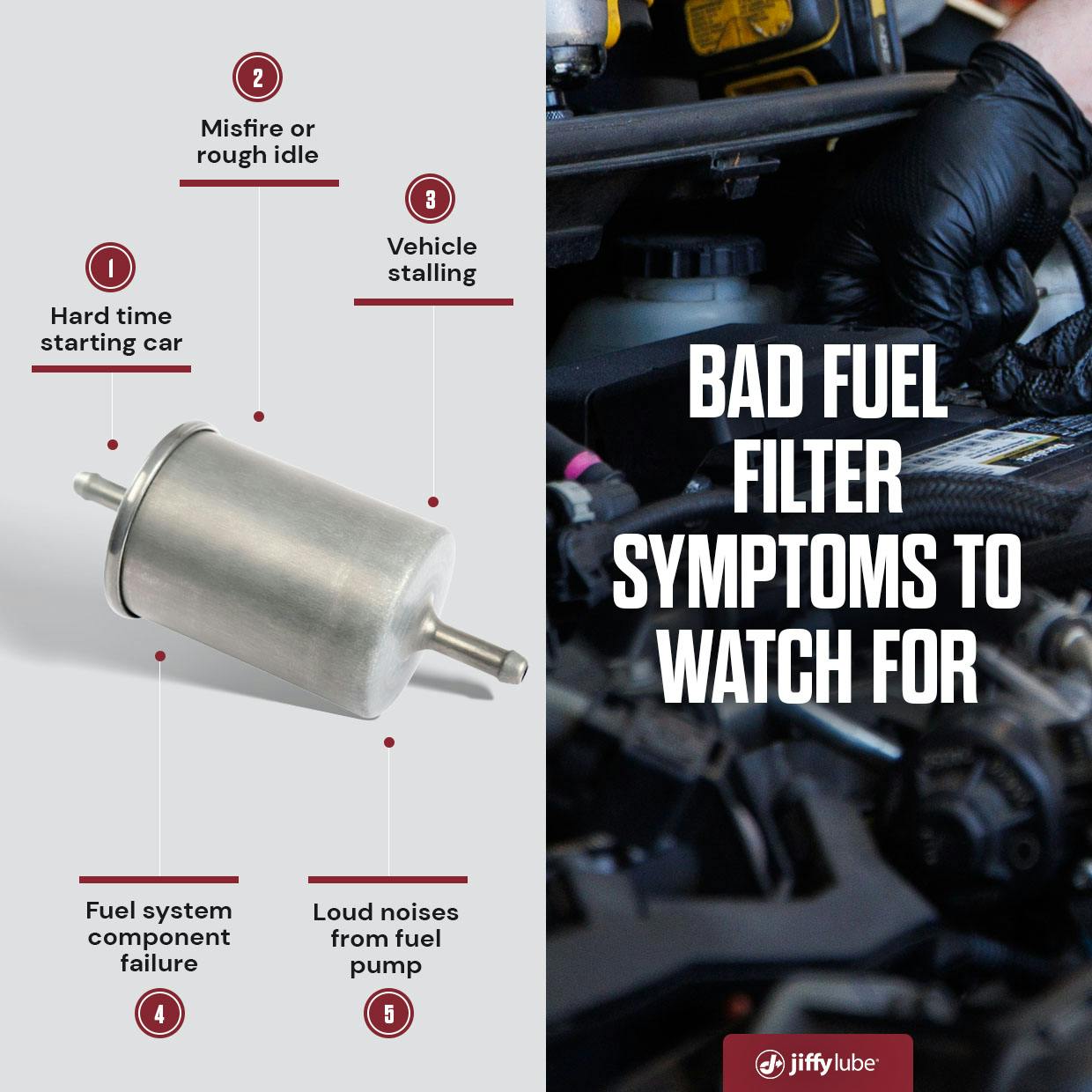
Credit: www.jiffylube.com
Fuel System Warning Lights
Fuel system warning lights are key signals from your vehicle. They alert you to problems in the fuel system. These lights can help detect a bad fuel filter early. Ignoring them can cause engine trouble and poor performance.
When the fuel filter clogs, it restricts fuel flow. The engine struggles to get enough fuel. This triggers the fuel system warning light on your dashboard. The light may appear as a gas pump icon or “Check Engine.”
Understanding The Fuel System Warning Light
This light shows issues in the fuel delivery system. A bad fuel filter can cause the light to come on. Sensors detect low fuel pressure and send a signal. The car’s computer then turns on the warning light.
Common Causes Behind The Warning Light
Besides a bad fuel filter, the warning light can mean other problems. It might indicate a faulty fuel pump or dirty fuel injectors. Still, a clogged fuel filter is a frequent cause. It blocks fuel flow and causes pressure drops.
Steps To Take When The Warning Light Appears
Stop driving if the light stays on. Check the fuel filter soon. A mechanic can test fuel pressure and inspect the filter. Replacing a bad fuel filter solves the problem quickly. This restores proper fuel flow and engine performance.
Physical Signs Of A Bad Fuel Filter
Physical signs often reveal a bad fuel filter before engine problems start. These signs help you catch issues early. Spotting them can save time and money on repairs. Pay close attention to your vehicle’s fuel system to avoid bigger troubles.
Fuel Odor Near The Filter
A strong fuel smell near the filter is a clear warning sign. It means fuel might be leaking or trapped. This smell can appear even when the engine is off. Fuel odors can also indicate cracks or loose connections. Check the filter area carefully for any unusual scent.
Visible Dirt Or Corrosion
Look closely at the fuel filter for dirt buildup or rust. Dirt can block fuel flow, causing poor engine performance. Corrosion weakens the filter’s metal parts, leading to leaks. A clean, shiny filter usually means good condition. Replace the filter if you see dirt or rust on it.
Preventive Maintenance Tips
Keeping your fuel filter in good shape protects your engine from dirt and debris. Regular care helps avoid costly repairs and keeps your car running smoothly. Simple steps can extend the life of your fuel filter and improve fuel efficiency. Follow these tips to catch problems early and maintain steady engine performance.
Recommended Replacement Intervals
Check your vehicle’s manual for fuel filter replacement times. Most cars need a new filter every 20,000 to 40,000 miles. Replace it sooner if you drive in dusty or rough conditions. Changing the filter on time avoids blockages and fuel flow problems. Regular replacements keep your engine clean and prevent damage.
Choosing The Right Fuel Filter
Use a fuel filter designed for your car’s make and model. Quality matters to stop dirt without restricting fuel flow. Avoid cheap, generic filters that might not fit well or last long. Buy filters from trusted brands or your car dealer. Proper fit and quality improve your car’s performance and fuel economy.
Diy Fuel Filter Checks
Checking your fuel filter at home can save time and money. It helps find problems early. You do not need special tools for basic checks. A simple look and feel can tell a lot about the filter’s condition. Safety is important. Work in a well-ventilated area and keep fire away. Wear gloves to protect your hands.
Basic Inspection Steps
First, locate the fuel filter under the hood or near the fuel tank. Make sure the engine is off and cool. Look for cracks, rust, or leaks on the filter body. Check the fuel lines connected to it. They should be tight and without damage. Tap the filter gently. If it feels clogged or heavy, it may be bad. Smell the fuel near the filter. A strong, unusual odor could mean contamination. Also, watch for engine problems like rough idling or slow acceleration. These signs suggest the fuel filter might need replacement.
When To Seek Professional Help
Some fuel filter problems need expert tools and knowledge. If you see fuel leaks or damaged fuel lines, call a mechanic. Do not try to fix complex fuel system parts yourself. Strange engine noises or frequent stalling also require a professional check. A mechanic can test fuel pressure and replace the filter safely. Avoid risks that could harm your car or yourself. Regular visits to a trusted service center keep your vehicle running well.

Credit: oilchangers.com
Frequently Asked Questions
How Do I Know If My Fuel Filter Is Clogged?
A clogged fuel filter reduces fuel flow, causing engine stalling and poor acceleration. Check for engine misfires and rough idling. Regular maintenance helps prevent clogging.
What Are Common Symptoms Of A Bad Fuel Filter?
Symptoms include engine hesitation, reduced power, difficulty starting, and poor fuel efficiency. These signs indicate restricted fuel flow needing immediate attention.
How Often Should I Replace The Fuel Filter?
Replace the fuel filter every 20,000 to 40,000 miles, or as recommended in your vehicle’s manual. Regular changes ensure optimal engine performance.
Can A Bad Fuel Filter Cause Engine Misfires?
Yes, a dirty or clogged fuel filter can starve the engine of fuel. This leads to misfires and rough running.
Conclusion
A bad fuel filter can cause many car problems. Watch for slow engine start or poor power. Strange noises or stalling also hint at trouble. Regular checks keep your car running smooth. Changing the filter on time saves money. Don’t wait for serious damage to show.
Take care of your fuel system well. Stay alert to signs and act fast. Your car will thank you with better drive. Simple steps keep your engine healthy.


