

Thinking about giving your car a fresh new look without the high cost of a paint job? You might have heard about vinyl wrapping and wondered, “How hard is it to vinyl wrap a car?”
If you’re curious whether this is a DIY project you can handle or something best left to the pros, you’re in the right place. Vinyl wrapping can transform your car’s appearance, but it comes with its own set of challenges.
By the end of this article, you’ll know exactly what to expect, what skills you need, and how to decide if vinyl wrapping your car is the right move for you. Ready to find out how tough this task really is? Let’s dive in.
Preparing Your Car
Preparing your car is the first important step in the vinyl wrapping process. A well-prepared surface helps the vinyl stick better. It also prevents bubbles and wrinkles. Taking time to prepare your car can make the whole job easier and the finish look great. Let’s break down what you need to do before applying the vinyl wrap.
Cleaning And Surface Prep
Start by washing your car thoroughly. Dirt and dust can stop the vinyl from sticking properly. Use soap and water to clean every inch. After washing, dry the car completely. Any moisture left can cause bubbles under the vinyl. Next, use a surface cleaner or rubbing alcohol. This removes oils and waxes that block adhesion. Be sure to clean all areas where you plan to apply the wrap.
Removing Parts And Trims
Take off any parts that might get in the way. This includes mirrors, door handles, and badges. Removing these parts makes it easier to wrap around curves and edges. It also prevents wrinkles and tears in the vinyl. Use the right tools to avoid damaging your car. Keep all screws and clips safe for reassembly later. Smaller parts make the wrap look smooth and professional.
Choosing The Right Vinyl
Not all vinyl is the same. Pick a vinyl that fits your needs and budget. Some vinyl types are thicker and easier to work with. Others have a glossy or matte finish. Consider the car’s color and the look you want. High-quality vinyl lasts longer and resists fading. Choose vinyl made for vehicles to ensure good flexibility and durability.
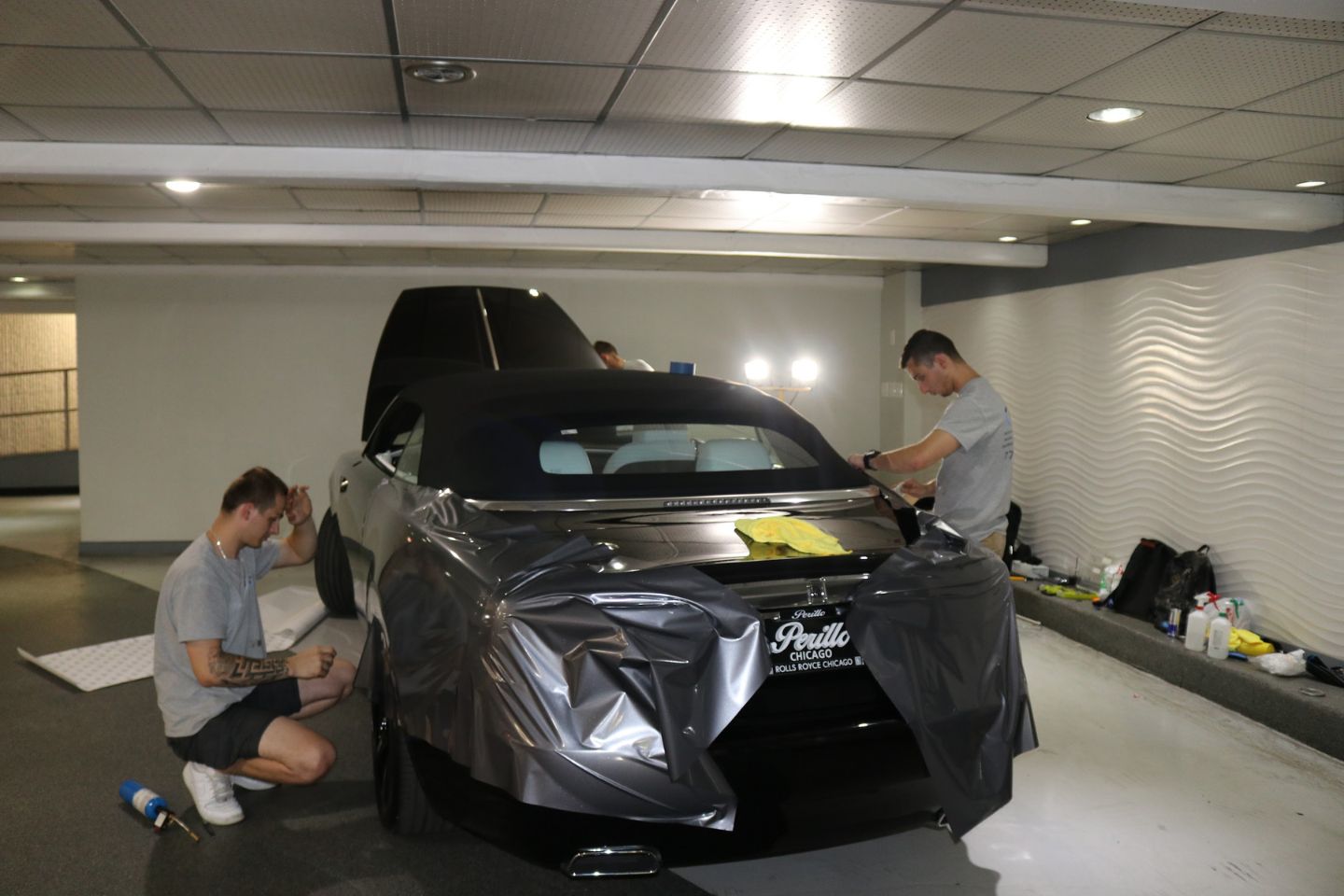
Credit: www.tintingchicago.com
Tools You’ll Need
Vinyl wrapping a car needs the right tools. Good tools make the job easier and help avoid mistakes. Some tools are a must-have. Others help you get better results and save time.
Gathering your tools before starting saves frustration. It also helps you work faster and cleaner. Here’s a list of what you need and what can help.
Essential Tools List
- Vinyl wrap film – the main material for covering your car.
- Heat gun – softens the vinyl to stretch and shape it.
- Squeegee – smooths out air bubbles and wrinkles.
- Sharp knife or blade – cuts the vinyl accurately.
- Gloves – protect hands and keep the vinyl clean.
- Measuring tape – ensures correct vinyl size and fit.
- Surface cleaner – removes dirt and oils for better vinyl adhesion.
- Lint-free cloth – cleans the car surface without leaving fibers.
Optional Accessories
- Magnets – hold the vinyl in place before sticking it down.
- Felt edge squeegee – prevents scratches on delicate paint.
- Vinyl primer – improves adhesion on tricky surfaces.
- Plastic scraper – helps with tight corners and edges.
- Infrared thermometer – checks surface temperature for optimal application.
- Masking tape – marks areas and protects parts you don’t want covered.
Step-by-step Wrapping Process
Vinyl wrapping a car is a detailed process. It needs care and patience. Each step affects the final look. Knowing the process helps set clear expectations. Here is a simple guide to the main steps.
Measuring And Cutting Vinyl
Start by measuring the car’s panels carefully. Measure twice to avoid mistakes. Cut the vinyl slightly larger than the area. This extra vinyl helps during application. Use a sharp blade for clean edges.
Applying Vinyl Smoothly
Peel the backing off the vinyl slowly. Place the vinyl on the panel gently. Use a squeegee to smooth it out. Work from the center to the edges. This prevents wrinkles and bubbles.
Handling Curves And Edges
Vinyl needs stretching to fit curves well. Heat the vinyl with a heat gun carefully. Stretch the vinyl slightly to follow the shape. Wrap it around edges neatly. Trim extra vinyl for a clean finish.
Dealing With Bubbles And Wrinkles
Use the squeegee to push bubbles out. Small bubbles can be pierced with a pin. Press the air out gently to avoid damage. Wrinkles need reheating and smoothing. Patience fixes most issues.

Credit: carwrapsupplieraustralia.com
Common Challenges
Vinyl wrapping a car is a popular way to change its look. The process can be tricky. Several challenges can make the job harder for beginners and even for some pros. Knowing these common challenges helps prepare for the task.
Many people underestimate the skill and patience needed. Small mistakes can ruin the finish. Understanding the main difficulties makes wrapping smoother and more successful.
Avoiding Stretch Marks
Stretch marks happen when the vinyl is pulled too hard. They look like thin lines or wrinkles on the wrap. These marks spoil the smooth appearance. Controlling the tension while stretching is key. Too much force causes damage. Work slowly and gently to prevent marks.
Managing Temperature And Environment
Temperature affects how vinyl behaves. Cold weather makes it stiff and hard to stretch. Hot weather can make it too soft and sticky. The ideal temperature range is usually between 60°F and 80°F. Dust and wind also cause problems. Dust sticks to the glue. A clean, calm workspace improves results.
Fixing Mistakes
Mistakes happen even to experts. Wrinkles, bubbles, and dirt under the vinyl are common problems. Fixing bubbles requires lifting the vinyl carefully. Use a heat gun to soften and smooth the wrap. Some mistakes need peeling off and reapplying. Patience is vital during corrections to avoid further damage.
Time And Effort Required
Vinyl wrapping a car takes a clear amount of time and effort. It is not just about sticking vinyl on a car’s surface. The process requires careful preparation, patience, and skill. Knowing the time and effort needed helps you plan better.
Typical Project Duration
Wrapping a whole car usually takes a few days. Small parts or simple designs can be done in a few hours. The size of the car matters a lot. A bigger car will take longer to wrap than a smaller one. Weather and workspace conditions also affect the time.
Each step must be done carefully. Cleaning the car, removing old decals, and fixing dents take time. Applying the vinyl wrap needs slow, steady work to avoid bubbles and wrinkles. Cooling the vinyl after application is also important. Rushing through these steps can cause mistakes and extra work later.
Skill Level Expectations
Vinyl wrapping is not easy for beginners. It needs steady hands and good attention to detail. Understanding how vinyl stretches and sticks is key. Professionals spend years learning to wrap cars properly.
Simple wraps can be done by hobbyists with practice. Complex designs or full car wraps require more skill. Mistakes like folds or air pockets can ruin the look. Knowing how to fix these issues comes with experience. Learning by watching tutorials and practicing on small parts helps improve skills.

Credit: www.turtlewax.com
Cost Considerations
Vinyl wrapping a car involves several costs that can add up quickly. Understanding these costs helps plan your budget better. Expenses go beyond just buying the vinyl. Tools and labor can also impact the total price.
Material Costs
Vinyl wrap prices vary by quality and brand. Basic vinyl rolls cost less but may not last long. Premium vinyl offers better durability and finish. The size of your car also matters. Larger vehicles need more material, increasing the cost. Colors and special finishes can raise prices too.
Tool Investments
Proper tools are essential for a smooth wrap job. Common tools include squeegees, heat guns, and cutting knives. These tools are affordable but add to the initial expense. Good-quality tools improve results and reduce mistakes. Buying or renting tools is a cost to consider.
Professional Vs Diy Expenses
Hiring a professional costs more upfront. Experts charge for labor and materials. The job is faster and usually flawless. DIY wrapping saves money on labor but takes time. Mistakes can lead to extra costs for repairs or new materials. Weigh your skills and budget before deciding.
Tips For Success
Vinyl wrapping a car can be tricky without the right approach. Using simple tips can improve your chances of success. These tips focus on building skill, creating good work conditions, and knowing when to ask for help.
Following these steps can make wrapping easier and less stressful. Each tip helps you avoid common mistakes and achieve a smooth finish.
Practice On Small Areas
Start by practicing on small parts of your car. This helps you get used to handling the vinyl wrap. You learn how the material stretches and sticks. Mistakes on small areas are easier to fix and less noticeable.
Work In A Controlled Environment
Choose a clean, dust-free place for wrapping. Avoid windy or hot spots. Dust and dirt can stick under the vinyl and cause bubbles. A controlled space keeps the wrap smooth and clean.
Seek Help When Needed
Don’t hesitate to ask for help if you struggle. A friend or professional can guide you or hold the vinyl. Extra hands make the process faster and reduce errors. Teamwork often leads to better results.
When To Hire A Professional
Vinyl wrapping a car can be a fun project. Yet, not every situation suits a DIY approach. Knowing when to hire a professional saves time and avoids mistakes. Professionals have tools and skills for a smooth wrap.
Some car shapes or designs need expert handling. Complex curves and edges challenge beginners. A pro can make the wrap look perfect without wrinkles or bubbles.
Complex Car Shapes And Designs
Cars with many curves or sharp edges require skill. Professionals know how to stretch vinyl without damage. They use heat and special tools to fit the wrap tightly. This process needs experience to avoid tears or gaps.
Large Or Full Car Wraps
Wrapping an entire car takes patience and precision. A professional wraps faster and with better results. They manage large sheets of vinyl without wrinkles. This saves time and ensures a clean finish.
Lack Of Proper Tools And Space
Good wraps need specific tools like heat guns and squeegees. Professionals have these tools and know how to use them. They also work in clean, controlled spaces to prevent dust and dirt.
Time Constraints
Wrapping a car takes several hours or days. Professionals complete the job faster. If time is limited, hiring a pro is wise. They avoid delays and deliver quality work on schedule.
Desire For Long-lasting Results
Vinyl wraps last longer when installed correctly. Pros ensure the wrap adheres well and lasts years. They prevent peeling and fading by using high-quality materials and techniques.
Frequently Asked Questions
How Difficult Is It To Vinyl Wrap A Car Yourself?
Vinyl wrapping a car yourself can be challenging. It requires skill, patience, and proper tools. Beginners often struggle with air bubbles and alignment. Professional experience helps in achieving a smooth, durable finish. Practice and learning are essential for good results.
What Tools Are Needed For Car Vinyl Wrapping?
Essential tools include a heat gun, squeegee, utility knife, and cleaning supplies. These help with stretching, smoothing, and cutting vinyl. Proper tools ensure a clean, professional-looking wrap. Using the right equipment reduces errors and improves application speed.
How Long Does Vinyl Wrapping A Car Usually Take?
Vinyl wrapping a car typically takes 1 to 3 days. Time varies based on car size, complexity, and experience. Professionals may finish faster, while beginners need more time. Proper preparation and careful application are key to quality results.
Can Vinyl Wraps Damage My Car’s Paint?
Vinyl wraps generally do not damage paint if applied correctly. They protect the paint from scratches and UV rays. Removing the wrap properly avoids paint peeling. However, poorly applied or long-term wraps may cause minor issues.
Conclusion
Vinyl wrapping a car takes patience and some skill. It is not as easy as it looks on videos. Small bubbles and wrinkles can appear if you rush. Using the right tools helps a lot during the process. Practice on smaller surfaces before the whole car.
The results can be very satisfying when done well. Remember, it may take several tries to get it right. This project fits those who enjoy hands-on work and learning new skills. Vinyl wrapping can change your car’s look without permanent paint.

