

You just replaced your car’s alternator, and now you’re wondering—how long should you let your car run afterward? It’s a simple question, but the answer can save you from future headaches and costly repairs.
If you want to make sure your new alternator works perfectly and your car stays in top shape, you need to know the right steps to take next. Keep reading, because you’ll discover exactly how long to keep your engine running, why it matters, and what signs to watch for to ensure your car is ready to hit the road safely.
Don’t risk your vehicle’s health—get the facts now.

Credit: urbsgarage.com
Signs Of A Failing Alternator
Knowing the signs of a failing alternator helps prevent car breakdowns. The alternator charges the battery and powers electrical parts. If it fails, the car can lose power quickly. Watch for early signs to fix problems fast. Below are common signals that your alternator may be failing.
Dim Lights And Electrical Issues
One sign is dim or flickering lights. Headlights may look weak at night. Dashboard lights can also fade or flicker. Other electrical parts may act strange. Power windows or radio might work slowly. These happen because the alternator struggles to provide power.
Battery Warning Light
The battery warning light on the dashboard can turn on. This light looks like a battery symbol. It shows the alternator is not charging the battery well. Do not ignore this warning. It means the car’s electrical system has a problem.
Strange Noises
Odd noises can come from the engine area. A failing alternator may cause a grinding or whining sound. These noises appear due to worn bearings or slipping belts. Pay attention to any new or unusual sounds while driving.
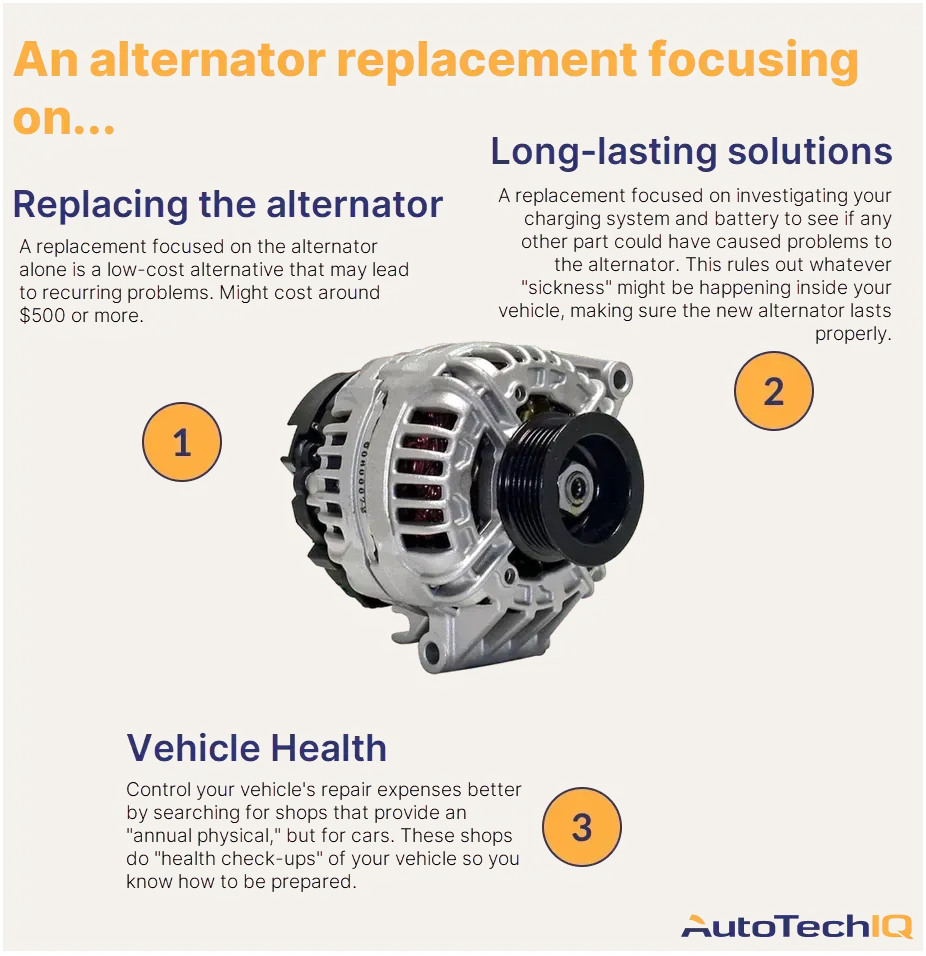
Credit: www.autotechiq.com
Steps After Replacing The Alternator
After replacing the alternator, certain steps are necessary to ensure your car works well. These steps help check the new part and prevent any issues. Follow them carefully to keep your vehicle in good shape.
Initial Inspection
Start with a visual check. Look at the alternator and surrounding parts. Make sure the belt is tight and fits correctly. Check wires and connectors for secure attachment. Look for any signs of damage or loose parts. This quick inspection avoids problems before starting the car.
Reconnect Battery Properly
Next, connect the battery terminals in the right order. Attach the positive terminal first, then the negative. Tighten the clamps to avoid loose connections. A loose battery connection can stop the car from starting or cause electrical faults. After reconnecting, double-check the connections for safety.
How Long To Let The Car Run
After replacing the alternator, it is important to know how long to let the car run. This helps the battery charge fully and ensures the new alternator works properly. Running the car for the right time prevents starting problems later. It also checks that the electrical system is stable and the alternator is doing its job.
Recommended Running Time
Let the car run for about 20 to 30 minutes after replacing the alternator. This time allows the battery to regain enough charge. Running the engine at idle or low speed is usually enough. Avoid turning off the car too soon to prevent battery drain. If possible, take a short drive to increase the alternator’s output.
Factors Influencing Running Duration
The battery’s current charge level affects how long the car should run. A weak or old battery needs more time to charge. The car’s electrical load also matters. Using lights, radio, or air conditioning can slow charging. Weather conditions play a role too. Cold weather can reduce battery efficiency, requiring longer running time. Always check the battery and alternator after running to confirm proper function.
Charging The Battery Post-replacement
After replacing your car’s alternator, it’s important to focus on charging the battery properly. The alternator helps keep the battery charged while driving, but the battery might need extra help right after replacement. Charging the battery ensures your car starts easily and runs smoothly.
A weak or drained battery can cause starting problems. Proper charging restores its power and helps the new alternator work efficiently. Below are simple tips for charging your battery after alternator replacement.
Jump-starting And Charging Tips
If the battery is low, jump-starting your car can help. Use jumper cables and connect to another vehicle’s battery. Start the other car first, then your car.
After jump-starting, let your car run for at least 20 to 30 minutes. This time allows the new alternator to charge the battery gradually. Avoid turning off the engine immediately after starting.
Drive your car during this time instead of idling. Driving helps the alternator produce more power and charge faster. Keep electrical devices like the radio or air conditioning off to save battery power.
Using A Battery Charger
A battery charger is helpful if the battery is very low. Remove the battery cables and connect the charger properly. Follow the charger’s instructions carefully.
Use a slow or trickle charge setting for best results. This method charges the battery safely without causing damage. Charging times vary but usually take several hours.
After charging, reconnect the battery cables tightly. Start your car and check if the battery holds the charge. A fully charged battery supports the new alternator’s function well.
Common Mistakes To Avoid
After replacing your car’s alternator, proper care is essential. Many drivers make mistakes that can reduce the alternator’s lifespan. Avoiding these errors helps keep your car running smoothly and prevents costly repairs. Below are common mistakes to watch out for after a replacement.
Turning Off The Car Too Soon
Some drivers turn off the engine immediately after the alternator is replaced. This can stop the alternator from fully charging the battery. Let the car run for at least 15 to 20 minutes. This time allows the alternator to recharge the battery properly. Turning off too soon might leave the battery weak.
Ignoring Warning Signs
Warning lights and unusual noises indicate problems. Do not ignore the battery or alternator warning lights on your dashboard. Strange sounds from the engine area also need attention. These signs may mean the alternator is not working well. Address these issues quickly to avoid bigger damage.

Credit: www.jdpower.com
Maintaining Alternator Health
Maintaining your alternator’s health is key after replacement. Proper care helps it last longer and work well. Small habits can prevent future problems and save money. Focus on simple checks and smart use of your car’s electrical system. This keeps the alternator strong and your car running smoothly.
Regular Battery Checks
Check your car battery often. A weak battery makes the alternator work harder. This shortens the alternator’s life. Use a voltmeter to test battery voltage. It should read about 12.6 volts when the engine is off. When the engine runs, it should be between 13.7 and 14.7 volts.
Clean battery terminals to avoid poor connections. Corrosion can stop electricity flow. Tighten loose cables for a solid link. Healthy batteries reduce stress on the alternator.
Avoiding Electrical Overloads
Do not run many electrical devices at once. High power use strains the alternator. Lights, radio, heater, and other gadgets draw electricity. Turn off what is not needed. This prevents overload and keeps the alternator cool.
Avoid modifying your car’s electrical system without expert help. Wrong changes can cause short circuits or damage. Use only recommended parts and follow guidelines. Careful use protects the alternator and the whole car.
Frequently Asked Questions
How Long Should I Let My Car Run After Alternator Replacement?
Let your car run for about 15 to 30 minutes after replacing the alternator. This time allows the battery to recharge and ensures the alternator is functioning correctly. Avoid turning off the engine immediately to prevent strain on the new alternator.
Can I Drive Immediately After Changing The Alternator?
Yes, you can drive immediately after changing the alternator. However, it’s best to let the engine run idle for 15-30 minutes first. This helps recharge the battery and stabilizes the electrical system before putting extra load on the alternator.
Why Is Running The Car After Alternator Replacement Important?
Running the car after alternator replacement recharges the battery and tests the alternator’s performance. It helps detect any installation issues early. This step ensures the electrical system operates smoothly and prevents unexpected breakdowns.
What Happens If I Don’t Run The Car After Replacing Alternator?
If you don’t run the car after replacing the alternator, the battery may stay undercharged. This can cause starting problems and reduce the alternator’s efficiency. Running the engine prevents these issues and extends the alternator’s lifespan.
Conclusion
Letting your car run for a few minutes after a new alternator helps charge the battery. This time allows the alternator to work properly and stabilize the electrical system. Avoid running the engine too long to save fuel and prevent wear.
Watch your dashboard lights for any warning signs. Regular checks keep your car healthy and safe. Taking these steps ensures your alternator replacement lasts longer. Simple care can prevent future problems and save money. Keep your vehicle running smoothly with small, smart actions.

