

Have you ever struggled with a brake rotor that just won’t budge? It’s frustrating when your car won’t cooperate, especially if you’re trying to fix it yourself.
Getting a stuck brake rotor off can seem like a tough job, but you don’t have to be an expert to do it. You’ll discover simple, effective steps to free that rotor without causing damage or needing expensive tools. Keep reading, and you’ll have your brakes back in working order faster than you thought possible.

Credit: www.reddit.com
Causes Of A Stuck Brake Rotor
Stuck brake rotors cause trouble during car maintenance. Knowing why a rotor gets stuck helps fix it faster. Several common issues lead to this problem. Understanding these causes avoids damage and saves time.
Rust And Corrosion Build-up
Rust forms when moisture sits on the rotor surface. This makes the rotor stick to the hub tightly. Corrosion grows over time, especially if the car stays unused. Removing rust helps free the rotor and prevents future sticking.
Seized Brake Caliper
A brake caliper can seize due to dirt or old brake fluid. When the caliper does not move, it holds the rotor tightly. This stops the rotor from turning or coming off easily. Fixing the caliper often solves the stuck rotor problem.
Overtightened Wheel Bolts
Wheel bolts hold the rotor and wheel in place. If these bolts are too tight, the rotor can get stuck. Proper bolt tightening prevents rotor damage and makes removal easier. Always use the correct torque settings on wheel bolts.
Warped Rotor Issues
A warped rotor has an uneven surface. This causes the rotor to press tightly against other parts. Warping happens from overheating or heavy braking. Straightening or replacing the rotor solves the sticking problem.
Tools Needed For Removal
Removing a stuck brake rotor needs the right tools. Using proper tools makes the task easier and safer. Prepare these tools before you start to save time and avoid frustration.
Basic Hand Tools
You need a set of wrenches or sockets to remove bolts. A screwdriver helps to pry off dust caps or clips. A breaker bar gives extra leverage for tight bolts. Keep these tools handy for quick access.
Penetrating Oil
Penetrating oil loosens rust and dirt between the rotor and hub. Spray it on the stuck areas and let it sit for a while. This oil makes the rotor easier to move and reduces damage risk.
Rubber Mallet Or Hammer
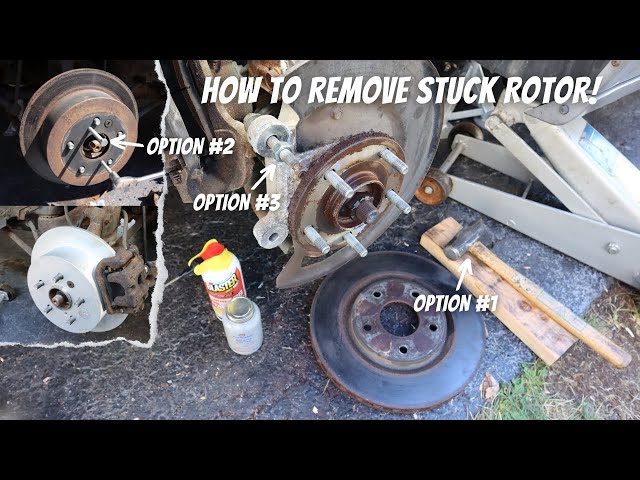
A rubber mallet helps tap the rotor without causing damage. A regular hammer can work but use it gently. Tapping breaks the rust bond and frees the rotor from the hub.
Heat Source Options
Heat expands metal and loosens stuck parts. Use a heat gun or propane torch carefully. Avoid overheating to prevent damage to brake parts. Heat helps break stubborn rust and makes removal smoother.
Safety Precautions
Taking safety precautions is vital before removing a stuck brake rotor. This task can be risky without proper care. Safety helps avoid injuries and vehicle damage. Follow these key steps to stay safe.
Protective Gear
Wear gloves to protect your hands from sharp edges. Use safety glasses to shield your eyes from dust and debris. Closed-toe shoes keep your feet safe from falling tools or parts. Dress in clothes that cover your arms and legs fully.
Vehicle Stability
Park the vehicle on a flat, solid surface. Use wheel chocks to stop the vehicle from rolling. Secure the car with a jack stand after lifting it. Never rely only on a jack; it can fail and cause injury.
Working In A Safe Environment
Choose a well-lit area for clear visibility. Keep your workspace clean and free of clutter. Avoid distractions to focus fully on the task. Have tools and parts organized within reach.
Credit: www.youtube.com
Step-by-step Removal Process
Removing a stuck brake rotor can be tough. Rust and dirt hold it tight. Following a clear, step-by-step process makes the job easier. Patience and the right tools help you get it done safely.
Loosen Wheel Nuts
Start by loosening the wheel nuts while the car is still on the ground. Use a wrench to turn each nut counterclockwise. Do not remove them completely yet. Just break the tight grip.
Remove The Wheel
Lift the car using a jack and secure it with jack stands. Now remove the loosened wheel nuts and take off the wheel. This gives clear access to the brake rotor.
Apply Penetrating Oil
Spray penetrating oil around the rotor hub and bolts. Let the oil sit for at least 10 minutes. The oil helps break down rust and makes the rotor easier to remove.
Tap The Rotor Gently
Use a rubber mallet to tap the rotor edges. Tap around the rotor evenly. This loosens rust and debris holding the rotor in place. Avoid hitting too hard to prevent damage.
Use Heat To Loosen Rust
Apply heat to the rotor hub with a heat gun or propane torch. Heat expands metal and helps break the rust bond. Heat the area evenly for a few minutes. Be careful not to overheat.
Free The Rotor With Proper Force
Try to pull the rotor off by hand. If stuck, use a pry bar gently between the rotor and hub. Work slowly and carefully to avoid damage. Repeat tapping and heating if needed until the rotor comes free.
Preventing Rotor Sticking
Stuck brake rotors cause trouble and delay car repairs. Preventing rotor sticking saves time and effort. Simple care steps keep rotors moving smoothly. Avoid damage and keep brakes working well.
Regular Maintenance
Check your brakes often. Clean rotors with a soft brush or cloth. Remove dirt and dust to stop rust build-up. Replace worn brake pads on time. Good maintenance avoids rotor problems.
Proper Torque On Wheel Bolts
Tighten wheel bolts to the correct level. Too tight bolts can press rotors against the hub. Use a torque wrench for accuracy. Follow the car maker’s torque guide. Correct tightening prevents rotor sticking.
Rust Prevention Techniques
Rust causes rotors to stick. Spray anti-rust lubricant on rotor surfaces. Keep your car in a dry place. Drive the car often to stop rust forming. Regular use and care protect the rotors.
When To Seek Professional Help
Knowing when to seek professional help is important if your brake rotor is stuck. Some problems need special skills and tools. Trying to fix serious issues on your own can cause more damage or be unsafe. Recognizing these signs saves time and protects your vehicle.
Severe Rust Damage
Rust can hold the rotor tightly against the hub. Light rust can be cleaned, but severe rust is harder to remove. If rust looks thick or flakey, professional help is needed. Experts have the right tools to remove heavy rust safely.
Damaged Brake Components
Broken or bent parts around the rotor can cause the rotor to stick. If you see cracks, warping, or broken bolts, do not try to fix it yourself. Professionals can replace or repair damaged parts correctly without causing more problems.
Lack Of Proper Tools
Removing a stuck brake rotor often needs special tools like pullers or impact wrenches. Without these, you may damage the rotor or other parts. Professionals have the right equipment to handle tough rotors easily and safely.

Credit: www.autonationmobileservice.com
Frequently Asked Questions
How Do I Remove A Stuck Brake Rotor Safely?
To remove a stuck brake rotor, first loosen the lug nuts and remove the wheel. Use penetrating oil on the rotor hub. Tap the rotor gently with a rubber mallet to break rust bonds. Avoid using excessive force to prevent damage.
Why Does My Brake Rotor Get Stuck?
Brake rotors get stuck due to rust and corrosion buildup between the rotor and hub. Moisture and road salt accelerate this process. Lack of regular maintenance and long periods of inactivity also contribute to rotor seizing.
Can Heat Help Loosen A Stuck Brake Rotor?
Yes, applying heat with a propane torch can expand the metal and loosen rust bonds. Heat the rotor around the hub area, but avoid overheating brake components. Always use caution to prevent damage or injury.
What Tools Are Needed To Free A Stuck Brake Rotor?
Essential tools include a rubber mallet, penetrating oil, a breaker bar, and a propane torch. A wire brush helps clean rust. Sometimes, rotor retaining screws or bolts need removal with a screwdriver or socket wrench.
Conclusion
Getting a stuck brake rotor off takes patience and the right steps. Use gentle tapping and rust remover to loosen it. Avoid forcing the rotor to prevent damage. Clean parts well before reassembling for smooth brakes. Regular maintenance helps stop rotors from sticking again.
Keep safety in mind during the whole process. With care, you can fix the problem yourself. This saves time and money on repairs. Try these tips next time your brake rotor feels stuck. Simple actions can make a big difference.


