

Do you want your foam cannon to produce thicker, creamier foam that sticks longer and cleans better? If you’ve ever been frustrated by thin, watery foam that just slides off your car, you’re not alone.
Getting that perfect thick foam isn’t as hard as you might think. With a few simple tweaks and the right tips, you can transform your foam cannon’s performance and make every wash feel professional. Keep reading, because your car deserves that rich, luxurious foam—and you’re about to learn how to get it.

Credit: www.amazon.com
Choosing The Right Foam Cannon
Choosing the right foam cannon plays a key role in getting thick foam. The right tool helps create rich, dense foam that covers your vehicle well. Not all foam cannons perform the same. Picking one that fits your needs makes washing easier and better.
Types Of Foam Cannons
Foam cannons come in two main types: foam cannons and foam lances. Foam cannons mix soap and water using a pressure washer. Foam lances attach to pressure washers but offer finer control of foam thickness. Some models are designed for home use, while others suit professional use. Choose a type that fits your cleaning setup and foam needs.
Materials And Build Quality
Strong materials help foam cannons last longer and work better. Look for cannons made of brass or stainless steel parts. Plastic parts should be thick and durable. A solid build prevents leaks and breaks. Good quality ensures steady foam output and saves money over time.
Nozzle And Adjustment Features
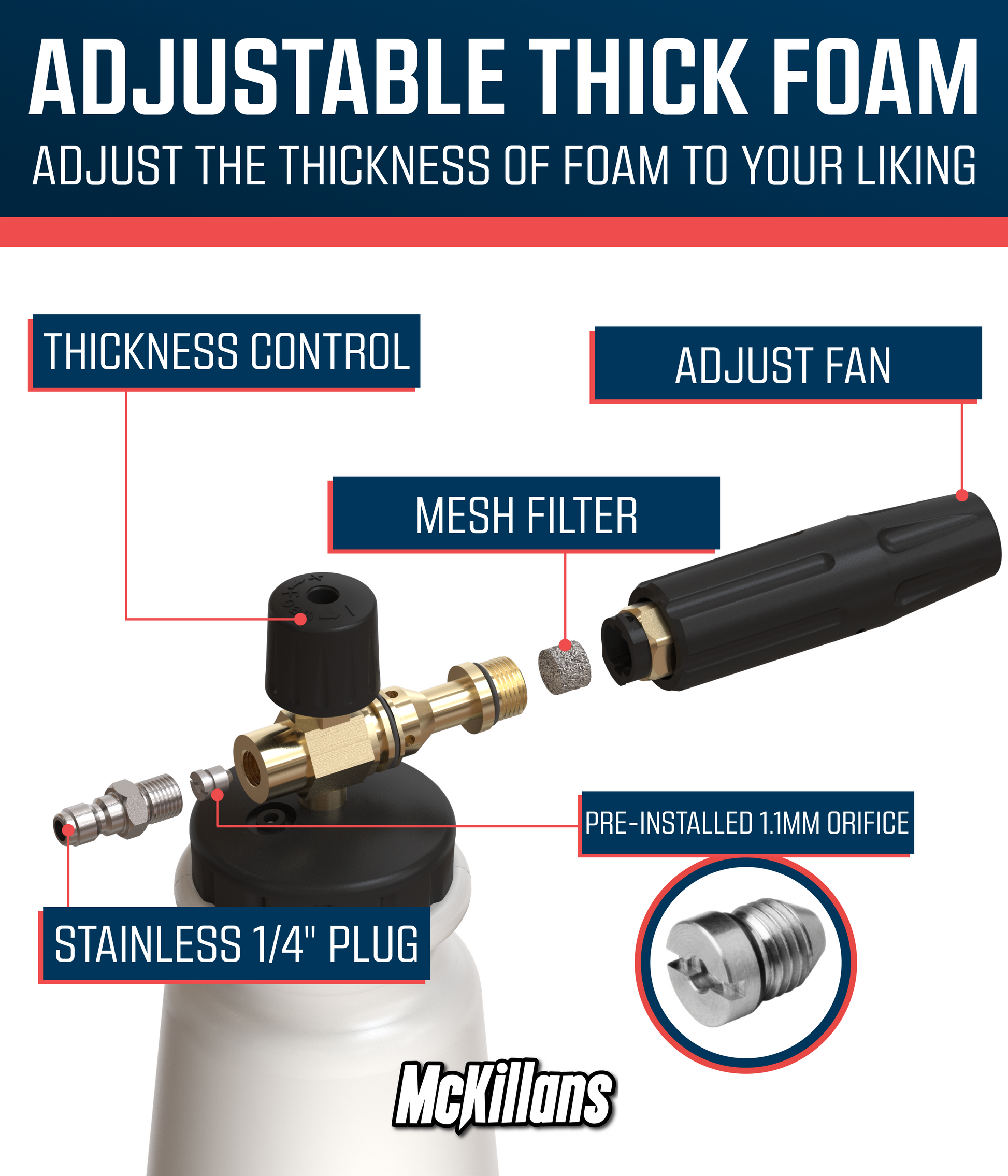
Nozzles control foam thickness and spray pattern. Adjustable nozzles let you change foam density easily. Some cannons offer different spray angles for wide or narrow coverage. A good adjustment system helps create the thick foam you want without wasting soap. Choose a foam cannon with simple and reliable controls.
Selecting The Best Soap For Thick Foam
Selecting the best soap is key to creating thick foam with your foam cannon. The right soap makes foam dense and long-lasting. Soap quality affects how well foam sticks to surfaces. Choose soaps designed specifically for foam cannons or car washing. Avoid harsh detergents that dry out surfaces or break foam quickly.
Soap Concentration And Ingredients
Soap concentration affects foam thickness directly. Higher concentration usually means richer foam. Check the label for recommended dilution rates. Ingredients like surfactants help trap air to form bubbles. Some soaps include conditioners to protect paint. Avoid soaps with strong degreasers; they reduce foam quality.
Ph Levels And Foam Stability
Soap pH impacts foam stability and surface safety. Neutral or slightly alkaline soaps create better foam. Acidic soaps may damage car paint and break foam faster. Choose pH-balanced soaps to protect your vehicle. Stable foam lasts longer, making cleaning easier and more effective.
Top Soap Brands For Foam Cannons
Many brands offer soaps made for foam cannons. Look for trusted names with good reviews. Brands like Chemical Guys, Meguiar’s, and Griot’s Garage are popular. They provide formulas that create thick, stable foam. Test a few to find the one that suits your foam cannon best.
Optimizing Water Pressure And Temperature
Getting thick foam from your foam cannon depends a lot on water pressure and temperature. These two factors help create dense, long-lasting foam that cleans well. Adjusting them correctly improves foam quality and washing results.
Ideal Water Pressure Settings
Water pressure needs to be strong but not too high. Around 1000 to 2000 PSI works best. Too low pressure makes weak foam. Too high pressure can break foam bubbles. Check your pressure washer manual for the right range.
Impact Of Water Temperature On Foam
Water temperature affects how well foam forms and sticks. Lukewarm water, about 90°F to 100°F, helps soap mix better. Cold water can reduce foam thickness. Very hot water may damage foam molecules. Use warm water for the best foam texture.
Adjusting Pressure Washer Settings
Most pressure washers let you change pressure and flow. Lower the pressure if foam breaks quickly. Increase pressure slightly for thicker foam. Use the foam cannon’s nozzle to control soap mix. Experiment with settings for the best foam.
Mixing Soap And Water Correctly
Getting thick foam from a foam cannon starts with mixing soap and water correctly. The right mix creates dense, lasting foam that cleans better. Too much soap or water can ruin the foam quality. Learn how to balance the mix for the best results.
Recommended Soap-to-water Ratios
Use a soap-to-water ratio between 1:10 and 1:20 for thick foam. This means one part soap to ten or twenty parts water. Start with 1:15 as a safe middle ground. Adjust the ratio slightly based on your soap type and water hardness. Thicker soap solutions usually produce better foam.
Pre-mixing Techniques
Mix soap and water in a separate container before adding to the foam cannon. Stir gently to avoid bubbles forming too early. Use lukewarm water to help the soap dissolve better. Let the mix sit for a few minutes. This helps the soap fully activate, improving foam thickness.
Avoiding Common Mixing Mistakes
Do not pour soap directly into the foam cannon. Avoid using hot water, which can break down soap molecules. Do not over-dilute the soap, or foam will be thin. Do not shake the mixture hard; it can create weak foam. Follow the recommended ratios and mix slowly for the best foam quality.
Adjusting Foam Cannon Settings
Adjusting the foam cannon settings is key to creating thick, rich foam. Small changes can change foam texture and density. Experimenting with these settings lets you find the perfect mix for your cleaning needs.
Tuning The Soap Intake
Start by adjusting the soap intake valve. Open it slowly to add more soap to the mix. More soap means thicker foam but too much can cause runny suds. Close the valve slightly if foam seems thin. Find the balance where foam feels creamy and thick.
Changing Nozzle Spray Patterns
The nozzle controls how foam sprays out. Switch between wide and narrow spray patterns. A narrow spray helps concentrate foam and makes it denser. A wide spray covers more surface but may produce lighter foam. Adjust the nozzle until foam looks full and heavy on surfaces.
Balancing Air And Soap Flow
Foam forms from air and soap mixing well. If there is too much air, foam becomes dry and weak. Too much soap creates heavy, wet foam that falls quickly. Adjust air and soap flow valves slowly. Aim for smooth, thick foam that holds shape on the surface.
Techniques For Applying Foam
Getting thick foam from a foam cannon does not happen by chance. The way you apply the foam matters a lot. Using the right techniques can create dense, rich foam that sticks well. This foam cleans better and looks impressive.
Below are key methods to apply foam properly. These help increase foam thickness and improve cleaning power.
Optimal Spray Distance
Hold the foam cannon about 18 to 24 inches away from the surface. Too close, and the foam sprays thin and splashes. Too far, and the foam spreads too thin and fades quickly. This distance lets foam build up well. It creates a thick, even layer that stays on the surface longer.
Layering Foam For Thickness
Apply foam in layers rather than all at once. Spray a thin layer first and wait a few seconds. Then add another layer on top. Repeat a few times for thick foam buildup. Layering helps foam stick better. It also prevents it from running off too fast.
Using Multiple Passes
Make several passes over the same area with the foam cannon. Each pass adds more foam, making it thicker. Move the cannon slowly to cover the surface evenly. Multiple passes help cover spots missed by the first spray. This method ensures full, dense foam coverage.
Maintenance Tips For Consistent Foam
Keeping your foam cannon in good shape is key to getting thick, consistent foam every time. Regular care helps avoid issues that reduce foam quality. Small maintenance steps save time and money later.
Follow these tips to maintain your foam cannon. They help keep the foam dense and smooth for every wash.
Cleaning The Foam Cannon Regularly
After each use, rinse the foam cannon with clean water. This removes soap residue inside and outside. Use a soft brush to clean the nozzle gently. Soap buildup blocks foam flow and reduces thickness.
Run clean water through the cannon to flush out soap. Let the parts dry fully before storing. Clean equipment lasts longer and works better.
Checking For Clogs And Leaks
Inspect the foam cannon often for clogs. Clogs stop foam from flowing evenly. Use a thin wire or needle to clear blockages in the nozzle. Check hoses and connectors for leaks. Leaks reduce pressure and foam quality.
Tighten loose parts and replace damaged seals. Fixing leaks keeps foam thick and consistent.
Storing The Equipment Properly
Store the foam cannon in a dry, cool place. Avoid direct sunlight and extreme heat. Moisture and heat can damage plastic parts and seals.
Keep the cannon upright to prevent water from pooling inside. Cover it with a cloth or place it in a box. Proper storage prevents damage and keeps the foam quality high.

Credit: www.youtube.com
Credit: www.mckillans.com
Frequently Asked Questions
How Can I Make Foam Thicker With A Foam Cannon?
Use a high-quality soap designed for foam cannons. Adjust the foam cannon’s dilution ratio for a richer mixture. Increase the water pressure from your pressure washer. Ensure the nozzle is clean and properly set to create dense foam.
What Is The Best Soap For Thicker Foam?
Choose a pH-balanced, high-foaming car wash soap. Avoid harsh detergents that break down foam quickly. Look for soaps labeled as “foam cannon compatible” for optimal results. Using quality soap improves foam thickness and stickiness on surfaces.
How Does Water Pressure Affect Foam Thickness?
Higher water pressure creates more foam by better mixing soap and water. Low pressure produces thin, weak foam that slides off surfaces. Adjust pressure washer settings for maximum foam output without splashing or wasting soap.
Can Nozzle Size Impact Foam Density?
Yes, smaller nozzle sizes increase foam density by creating finer bubbles. Larger nozzles produce coarser foam that is less thick. Use the correct nozzle size specified for your foam cannon model for best results.
Conclusion
Thicker foam makes washing your car easier and more fun. Use the right soap and water mix for best results. Adjust your foam cannon’s nozzle to control foam density. Always clean your equipment after use to keep it working well.
With simple steps, you can enjoy thick, rich foam every time. Try these tips during your next car wash and see the difference. Foam that sticks better means a cleaner car with less effort. Keep practicing and enjoy the smooth, foamy wash experience.

