

Have you noticed your car acting up lately? Maybe it’s struggling to start or feels less powerful than before.
These could be signs that your fuel filter is bad. Your fuel filter plays a key role in keeping your engine clean and running smoothly. But how do you know when it’s time to replace it? You’ll discover simple ways to spot the warning signs of a failing fuel filter.
By paying attention to these clues, you can avoid costly repairs and keep your vehicle performing at its best. Keep reading to learn exactly what to watch for and what steps you should take next.
Common Fuel Filter Issues
Fuel filters keep dirt and rust from entering the engine. They protect the fuel system and help the engine run smoothly. Over time, fuel filters can get clogged or damaged. This leads to common problems that affect your car’s performance.
Clogged Fuel Filter
A clogged fuel filter blocks fuel flow to the engine. This causes poor engine performance and rough idling. The engine may hesitate or stall during acceleration. Fuel efficiency drops as the engine gets less fuel.
Hard Starting Engine
Dirty or blocked fuel filters make the engine hard to start. You may hear the engine crank longer before it starts. Sometimes the engine won’t start at all. This happens because fuel cannot reach the engine quickly.
Engine Misfires
Fuel filters that are not working well cause engine misfires. The engine runs unevenly or shakes. Misfires happen because of irregular fuel supply. This can damage other engine parts over time.
Fuel Pump Damage
A bad fuel filter puts extra strain on the fuel pump. The pump works harder to push fuel through a clogged filter. This can cause the fuel pump to fail prematurely. Replacing the fuel filter helps protect the fuel pump.
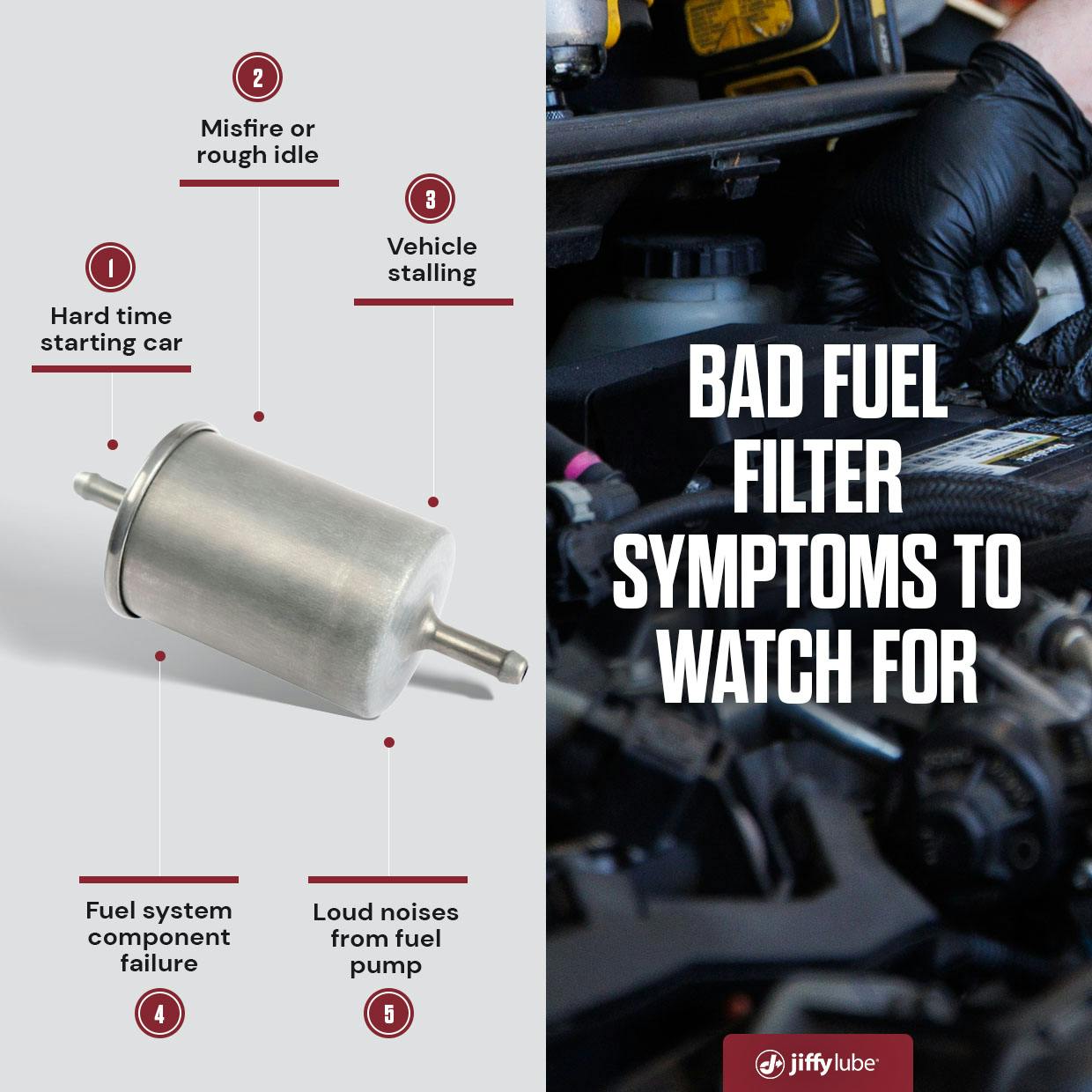
Credit: www.jiffylube.com
Symptoms Of A Failing Fuel Filter
A fuel filter keeps dirt and debris out of the engine’s fuel system. Over time, it can get clogged or damaged. This causes several noticeable issues with your vehicle’s performance. Recognizing these symptoms early can save you from bigger repairs. Here are common signs that your fuel filter might be failing.
Engine Misfires And Stalls
A bad fuel filter can block fuel flow. This causes the engine to misfire or stall. You may feel the car jerk or hesitate while driving. The engine may stop running suddenly without warning.
Reduced Engine Power
The engine needs a steady fuel supply to work well. A clogged fuel filter limits fuel flow. This leads to less engine power. You might notice your car struggles on hills or during heavy loads.
Poor Acceleration
Your car may respond slowly when you press the gas pedal. The engine lacks enough fuel to increase speed quickly. This slow acceleration is a common sign of a dirty fuel filter.
Difficulty Starting The Engine
A bad fuel filter can make starting your car hard. The engine needs enough fuel at startup. If the filter blocks fuel, the engine may crank longer or fail to start.
Frequent Engine Hesitation
Hesitation happens when the engine pauses before speeding up. This is often due to fuel flow problems. A failing fuel filter can cause this hesitation during acceleration.
Unusual Engine Noises
Listen for strange sounds from the engine. A clogged fuel filter can cause sputtering or knocking noises. These sounds often mean the engine is struggling to get fuel.
Causes Of Fuel Filter Problems
Fuel filters play a key role in keeping your engine clean. They stop dirt and particles from reaching the fuel system. Problems with fuel filters happen for a few main reasons. Understanding these causes helps you spot issues early. It also helps you keep your vehicle running smoothly.
Contaminants In Fuel
Fuel often contains tiny dirt particles and water. These contaminants clog the fuel filter over time. Dirty fuel can come from bad gas stations or old fuel tanks. When the filter clogs, fuel flow slows down. The engine may run rough or lose power.
Lack Of Regular Maintenance
Fuel filters need to be changed regularly. Skipping maintenance causes the filter to become blocked. Old, dirty filters do not clean fuel well. This leads to poor engine performance and higher fuel use. Checking the filter on schedule keeps problems away.
Age And Wear
Fuel filters wear out naturally with time. Even clean fuel can’t stop this. Over months or years, the filter material breaks down. The filter then loses its ability to trap dirt. Replacing the filter at the right time avoids damage to the engine.
Fuel Filter Inspection Methods
Checking the fuel filter is key to keep your engine running smoothly. A bad fuel filter can block fuel flow and cause engine problems. There are simple ways to inspect the fuel filter at home or in a garage. These methods help find problems early. They save time and money on repairs.
Visual Inspection
Start by looking at the fuel filter closely. Check for cracks, rust, or dirt buildup. A dirty or damaged filter needs replacement. Look for fuel leaks around the filter. Leaks show the filter is not sealed properly. Inspect the filter housing and clamps too. Loose clamps can cause leaks or filter damage.
Fuel Pressure Testing
Fuel pressure testing shows if fuel flows correctly through the filter. Use a fuel pressure gauge attached to the fuel line. Turn on the engine and watch the pressure reading. Low pressure means the filter may be clogged. High pressure can also indicate filter problems. Compare the reading with your vehicle’s recommended pressure.
Checking Fuel Flow
Fuel flow testing checks how much fuel passes through the filter. Disconnect the fuel line after the filter. Place a container to catch fuel. Turn the ignition on but do not start the engine. Fuel should flow steadily and quickly. Slow or no flow means the filter is blocked. Replace the filter if flow is poor.
Consequences Of Ignoring A Bad Fuel Filter
Ignoring a bad fuel filter can cause serious problems for your vehicle. The fuel filter cleans dirt and rust from the fuel before it reaches the engine. When the filter gets clogged, the engine may not get enough clean fuel. This can lead to many issues that affect your car’s performance and safety.
Engine Performance Drops
A dirty fuel filter reduces fuel flow to the engine. The engine struggles to get the fuel it needs. This causes poor acceleration and rough idling. You might feel the car hesitate or stall during driving. Fuel delivery problems make the engine work harder than usual.
Fuel Efficiency Decreases
A clogged fuel filter forces the engine to burn more fuel. This lowers your car’s gas mileage. You will spend more money on fuel over time. The vehicle uses energy less efficiently, wasting fuel with each drive.
Engine Damage Risk
Dirty fuel can damage engine parts like injectors and pumps. The bad filter allows contaminants to pass through. This causes wear and tear inside the engine. Repairing these parts can be expensive and time-consuming.
Car May Fail To Start
A severely clogged filter can stop fuel flow completely. The engine will not get any fuel to start. You may find your car won’t start or stalls right after starting. This leaves you stranded and needing immediate repair.
Increased Emissions
Fuel problems cause incomplete combustion in the engine. This increases harmful exhaust emissions from your vehicle. Pollution levels rise, harming the environment. Your car may also fail emission tests required by law.

Credit: oilchangers.com
Fuel Filter Replacement Tips
Replacing a fuel filter keeps your engine running smoothly. It stops dirt and rust from entering the fuel system. Knowing when and how to replace it saves time and money. Proper replacement helps avoid engine problems and fuel system damage.
Recommended Replacement Intervals
Check your vehicle’s manual for replacement time. Most fuel filters last 20,000 to 40,000 miles. Driving in dusty areas may need more frequent changes. Regular replacement keeps fuel flow steady and protects the engine.
Choosing The Right Fuel Filter
Select a fuel filter that matches your car model. Using the wrong filter can cause leaks or blockages. Look for filters with good reviews and quality materials. Buying the correct filter ensures proper fit and function.
Diy Vs Professional Replacement
Replacing a fuel filter yourself can save money. You need basic tools and safety knowledge. Make sure the engine is cool before starting. Professional service may be safer for complex systems. Experts handle fuel safely and guarantee the job.

Credit: www.autonationmobileservice.com
Frequently Asked Questions
How Do I Know If My Fuel Filter Is Clogged?
A clogged fuel filter causes engine hesitation, poor acceleration, and rough idling. It may also trigger the check engine light. If your car struggles to start or stalls frequently, the fuel filter likely needs replacement to restore proper fuel flow and engine performance.
What Are The Signs Of A Bad Fuel Filter?
Common signs include engine misfires, reduced power, stalling, and difficulty starting. You may also notice decreased fuel efficiency. These symptoms indicate restricted fuel flow due to a dirty or failing fuel filter, which requires timely replacement to avoid further engine damage.
How Often Should A Fuel Filter Be Replaced?
Fuel filters typically need replacement every 20,000 to 40,000 miles, depending on your vehicle and driving conditions. Consult your owner’s manual for specific intervals. Regular replacement ensures clean fuel supply, preventing engine issues and maintaining optimal vehicle performance.
Can A Bad Fuel Filter Cause Engine Stalling?
Yes, a bad fuel filter can restrict fuel flow, causing the engine to stall. Insufficient fuel supply disrupts combustion, leading to sudden power loss or stalling, especially under load or acceleration. Replacing the fuel filter usually resolves this issue.
Conclusion
A bad fuel filter can cause engine problems and poor performance. Watch for signs like rough idling, slow acceleration, or trouble starting. Regular checks help catch issues early. Replace the filter as needed to keep your engine running smoothly. Clean fuel means better fuel efficiency and fewer repairs.
Taking care of the fuel filter saves time and money. Stay alert to changes in your car’s behavior. It’s a small part with a big impact on your vehicle’s health.


