
Is your vehicle acting up, but you’re not sure why? One common culprit might be your fuel filter.
If your car feels sluggish, struggles to start, or stalls unexpectedly, your fuel filter could be to blame. Knowing how to tell if the fuel filter is bad can save you time, money, and headaches on the road. You’ll discover simple signs to watch for and easy steps to check your fuel filter’s health.
Keep reading to protect your engine and keep your ride running smoothly.
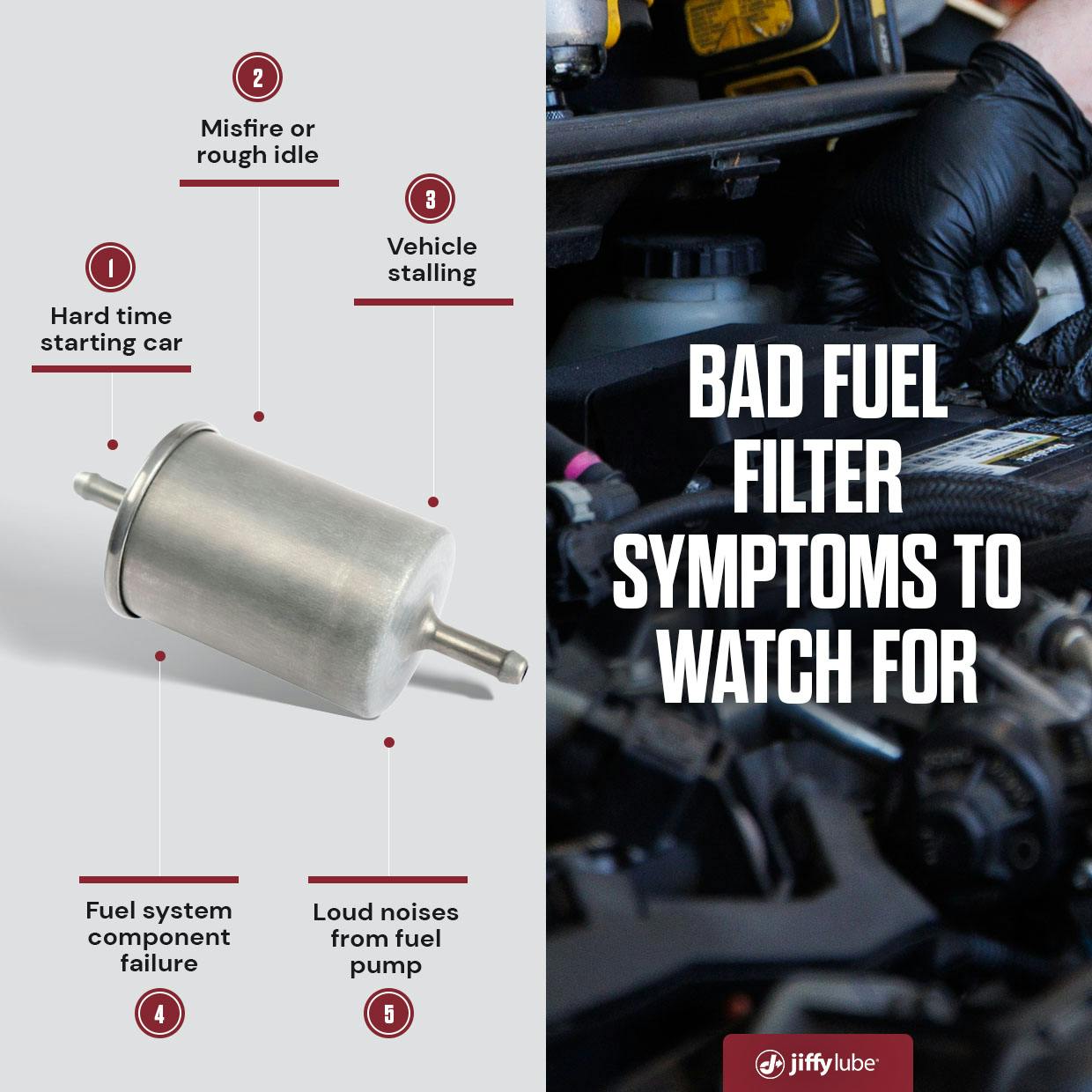
Credit: www.jiffylube.com
Role Of The Fuel Filter
The fuel filter plays a key role in your vehicle’s engine system. It cleans the fuel before it reaches the engine. This helps keep the engine running smoothly and efficiently.
Fuel contains tiny particles and dirt that can harm the engine. The fuel filter traps these impurities. By doing this, it protects the fuel injectors and engine parts from damage.
A clean fuel filter ensures good fuel flow. This means the engine gets the right amount of fuel to burn. Proper fuel flow helps the engine run well and saves fuel.
How The Fuel Filter Protects The Engine
The fuel filter stops dirt and debris from entering the engine. These particles can cause clogs and wear in engine parts. The filter keeps the fuel clean and safe.
Impact On Engine Performance
A dirty fuel filter can reduce fuel flow. This makes the engine weak and slow. The car may jerk or hesitate during driving. A good filter keeps the engine strong and smooth.
Fuel Efficiency And The Fuel Filter
When the fuel filter works well, fuel burns better. This saves fuel and lowers emissions. A clogged filter makes the engine work harder and waste fuel.
Common Fuel Filter Problems
The fuel filter plays an important role in your vehicle’s engine health. It keeps dirt and debris from entering the fuel system. Over time, the filter can get clogged or damaged. This causes problems that affect your car’s performance.
Recognizing common fuel filter problems helps you avoid bigger issues. It also saves you money on repairs. Below are some typical signs that show the fuel filter may be bad.
Clogged Fuel Filter
A clogged fuel filter restricts fuel flow to the engine. This causes the engine to run poorly or stall. You may notice the car hesitates when you press the gas pedal. The engine might also lose power during acceleration. These are clear signs the filter needs cleaning or replacement.
Engine Misfires
When the fuel filter is blocked, the engine may misfire. This happens because the engine does not get enough fuel. Misfires cause rough idling and shaking. It can also lead to poor fuel economy. A bad fuel filter is often the cause of these symptoms.
Starting Issues
A dirty fuel filter can make it hard to start your car. The engine struggles to get enough fuel to ignite. You might hear a clicking sound or notice the engine cranks longer than usual. These problems often point to a fuel filter that needs attention.
Fuel Pump Failure
A clogged fuel filter puts extra strain on the fuel pump. The pump has to work harder to push fuel through the filter. This can cause the fuel pump to overheat and fail early. Replacing the fuel filter on time helps protect the fuel pump.
Engine Performance Issues
Engine performance issues often signal a problem with the fuel filter. The fuel filter cleans dirt and debris from the fuel before it reaches the engine. A clogged or dirty filter stops fuel from flowing freely. This leads to poor engine performance and can cause several noticeable problems.
Below are common engine performance problems caused by a bad fuel filter. These signs help identify when the fuel filter needs attention or replacement.
Reduced Power And Acceleration
A bad fuel filter limits fuel flow to the engine. This restriction lowers engine power. Your car may feel slow when accelerating or climbing hills. It takes longer to reach higher speeds. The engine struggles to perform at its best.
You might notice the car hesitates or lags when pressing the gas pedal. This happens because the engine is not getting enough fuel. Reduced power and slow acceleration are clear signs of a clogged fuel filter.
Engine Misfires And Stalling
Dirty fuel filters can cause engine misfires. This means the engine runs unevenly or skips while driving. Misfires create rough sounds and vibrations. Stalling can happen too, especially when the car idles or stops.
Fuel flow interruptions cause the engine to lose power suddenly. The car may stall in traffic or at stoplights. These problems often point to a bad fuel filter blocking fuel delivery.
Fuel System Symptoms
Fuel system symptoms can help you spot a bad fuel filter early. The fuel filter cleans dirt and rust from the fuel before it reaches the engine. A clogged filter causes problems that affect how the car runs. Watch for signs that show the filter may be bad.
These symptoms often affect engine starting and the fuel pump’s sound. Noticing these signs can save you from bigger repairs later.
Difficulty Starting The Engine
One clear sign of a bad fuel filter is trouble starting the engine. The engine needs a steady flow of fuel to start easily. A clogged filter blocks fuel flow, making the engine struggle to start. You might hear the engine turn over many times before it fires up. Sometimes, it may not start at all. This problem often gets worse over time as the filter clogs more.
Unusual Noises From The Fuel Pump
The fuel pump pushes fuel through the filter to the engine. A blocked filter makes the pump work harder. This strain causes strange noises from the pump. You may hear whining or buzzing sounds near the fuel tank. These noises tell you the pump is stressed and may fail soon. Ignoring these sounds risks damaging the fuel pump and other parts.
Visual And Physical Signs
Visual and physical signs help identify a bad fuel filter. These signs show the filter’s condition without special tools. Noticing these can save time and costly repairs. Check the fuel filter regularly to keep your engine running well.
Dirty Or Clogged Fuel Filter
A dirty fuel filter looks dark and grimy. Dirt and debris block fuel flow. This clogging reduces engine power and causes rough idling. You might see rust or particles on the filter surface. A clean filter appears clear or light-colored. Physical inspection can reveal these issues fast.
Fuel Odor Inside The Vehicle
A strong fuel smell inside the car suggests a fuel filter problem. The filter may leak or not seal properly. Fuel vapor can enter the cabin through vents or cracks. This odor means fuel isn’t flowing as it should. It also signals a safety risk that needs attention.

Credit: www.youtube.com
Testing The Fuel Filter
Testing the fuel filter helps find out if it is working well or clogged. A bad fuel filter can block fuel flow, causing engine problems. Simple tests can check the filter’s condition. These tests need basic tools and take little time.
Using A Fuel Pressure Gauge
A fuel pressure gauge measures how much fuel pressure the filter allows. Attach the gauge to the fuel line before the filter. Turn on the engine and watch the gauge reading. Low pressure means the filter may be clogged. Normal pressure shows the filter works fine. This test is quick and accurate for checking fuel flow.
Inspecting The Filter Manually
Remove the fuel filter carefully from the fuel line. Look inside the filter for dirt, rust, or debris. Shake the filter gently to feel if particles are loose inside. A dirty filter needs replacement. A clean filter usually looks clear or lightly tinted. This method is simple and helps spot visible blockages.
Preventive Maintenance Tips
Preventive maintenance helps keep your vehicle running smoothly. It stops small problems from becoming big issues. Checking and changing the fuel filter is a key part of this care. Clean fuel filters protect the engine and improve fuel efficiency. Here are some tips to maintain your fuel filter properly.
Recommended Replacement Intervals
Fuel filters wear out over time. Most car makers suggest changing them every 20,000 to 40,000 miles. Check your vehicle’s manual for exact numbers. Regular replacement prevents clogging and poor engine performance. Don’t wait for problems to start before changing the filter.
Choosing The Right Fuel Filter
Using the correct fuel filter is important. Choose one that fits your vehicle’s make and model. Quality matters for filtering out dirt and debris. Low-quality filters may fail early and harm your engine. Buy filters from trusted brands or official dealers for best results.

Credit: www.youtube.com
Frequently Asked Questions
How Do I Know If My Fuel Filter Is Clogged?
A clogged fuel filter causes engine hesitation and poor acceleration. You may notice difficulty starting or frequent stalling. Check for reduced fuel efficiency and unusual engine noises. These symptoms often indicate the fuel filter needs replacement to maintain optimal engine performance.
What Are Common Signs Of A Bad Fuel Filter?
Signs include engine misfires, rough idling, and decreased power. You might also experience sputtering at high speeds or difficulty starting the engine. These issues often point to restricted fuel flow due to a dirty or failing fuel filter.
How Often Should I Replace The Fuel Filter?
Replace the fuel filter every 20,000 to 40,000 miles, depending on vehicle type. Consult your owner’s manual for exact intervals. Regular replacement prevents clogs and engine damage, ensuring smooth fuel flow and better performance.
Can A Bad Fuel Filter Cause Engine Stalling?
Yes, a bad fuel filter can restrict fuel supply, causing the engine to stall. Stalling often occurs during acceleration or idling. Replacing the fuel filter usually resolves this issue and restores reliable engine operation.
Conclusion
A bad fuel filter can cause many car problems. Watch for signs like engine trouble or slow acceleration. Regular checks help keep your car running smooth. Replace the filter as needed to avoid bigger issues. Taking care of your fuel filter saves time and money.
Don’t ignore warning signs; act early for best results. Keeping your fuel system clean protects your engine’s health. Simple steps can make a big difference in car performance. Stay alert and maintain your vehicle well for safe drives.


