Is your car jerking every time you press the gas pedal? That sudden, shaky movement can be frustrating and even dangerous.
You want a smooth ride, not a bumpy one that makes you nervous behind the wheel. Understanding why your car jerks when accelerating is the first step to fixing the problem quickly. You’ll discover simple reasons for this issue and easy ways to get your car running smoothly again.
Keep reading to take control of your driving experience and avoid costly repairs down the road.
Common Causes Of Car Jerking
Car jerking during acceleration is a common problem that many drivers face. It can make driving unsafe and uncomfortable. Understanding the causes helps fix the issue quickly. Many parts of a car can cause jerking. Checking these parts can save time and money.
Fuel System Issues
Fuel system problems often cause car jerking. Dirty fuel injectors can block fuel flow. A clogged fuel filter reduces fuel pressure. Low-quality fuel can also cause poor engine performance. These issues make the engine run unevenly. Fuel pump failure can stop fuel delivery. Regular fuel system checks keep the car smooth.
Ignition System Problems
The ignition system starts the engine’s combustion. Faulty spark plugs cause misfires and jerking. Damaged ignition coils fail to send strong sparks. Worn wires can interrupt the spark flow. These issues cause rough acceleration and stalling. Replacing worn parts restores smooth engine power.
Transmission Troubles
The transmission moves power from the engine to wheels. Low transmission fluid causes slipping and jerking. A failing torque converter disrupts power flow. Worn clutch plates in manual cars cause jerks. Transmission control module errors affect shifting. Fixing transmission problems improves acceleration.
Sensor Malfunctions
Sensors send vital data to the car’s computer. A bad throttle position sensor confuses acceleration signals. Faulty mass airflow sensor affects fuel mixture. Malfunctioning oxygen sensors cause wrong air-fuel ratios. These errors cause jerking and poor engine response. Replacing sensors helps the car run smoothly.
Diagnosing The Problem
Car jerking during acceleration can feel dangerous and frustrating. Diagnosing the problem helps find the exact cause. It saves time and money by fixing the right issue first. Understanding key parts to check makes this easier.
Checking Engine Codes
Modern cars store error codes when something goes wrong. Use an OBD-II scanner to read these codes. The codes point to specific problems in the engine or systems. This step helps narrow down the cause quickly.
Inspecting Fuel Filters And Injectors
Fuel filters block dirt and debris from reaching the engine. A clogged filter reduces fuel flow, causing jerking. Fuel injectors spray fuel into the engine. Dirty or faulty injectors disrupt fuel delivery. Cleaning or replacing these parts can fix jerking.
Testing Spark Plugs And Wires
Spark plugs ignite the fuel-air mix in the engine. Worn or damaged plugs cause misfires and jerking. Check the plugs for wear, cracks, or carbon buildup. Test spark plug wires for breaks or weak connections.
Evaluating Transmission Fluid
Transmission fluid lubricates moving parts and helps smooth gear shifts. Low or dirty fluid causes rough shifting and jerking. Check the fluid level and color using the dipstick. Change the fluid if it looks dark or smells burnt.
Quick Fixes For Fuel System
Fuel system problems often cause a car to jerk during acceleration. Quick fixes in this area can improve your car’s performance fast. These fixes focus on cleaning and replacing parts that handle fuel delivery. Doing so helps fuel flow smoothly to the engine. This reduces jerking and makes driving safer and smoother.
Replacing Fuel Filter
The fuel filter stops dirt and debris from reaching the engine. A clogged filter can block fuel flow and cause jerking. Replace the fuel filter every 20,000 to 30,000 miles. This simple step keeps the fuel system clean. New filters help your engine get the right amount of fuel easily.
Cleaning Fuel Injectors
Fuel injectors spray fuel into the engine for combustion. Dirt can block these injectors and disrupt fuel flow. Cleaning them restores proper fuel spray patterns. Use a fuel injector cleaner or have a mechanic clean them. Clean injectors improve engine power and reduce jerking during acceleration.
Using Fuel Additives
Fuel additives help remove deposits inside the fuel system. These chemicals clean injectors, valves, and combustion chambers. Additives improve fuel efficiency and smooth out engine performance. Pour the recommended amount into your gas tank. Regular use keeps the fuel system cleaner and helps stop jerking.

Credit: www.youtube.com
Ignition System Repairs
The ignition system plays a key role in your car’s performance. It sends sparks to the engine to burn fuel. Problems here can cause your car to jerk while accelerating. Fixing ignition system parts often stops this jerking.
Start by checking the most common ignition parts. These parts wear out over time. Simple repairs can make your car run smooth again.
Changing Spark Plugs
Spark plugs ignite the fuel in the engine. Old or dirty spark plugs cause weak sparks. This leads to jerking and rough acceleration. Remove and check each spark plug. Replace any that look worn or dirty. New spark plugs improve engine firing and smooth out acceleration.
Replacing Ignition Coils
Ignition coils send power to spark plugs. Broken coils cause misfires and jerks. Check for cracks or damage on coils. Test coils with a multimeter for proper function. Replace any coil that fails the test. New coils provide strong sparks and steady engine power.
Checking Wiring Connections
Loose or damaged wires can cut power flow. Inspect wiring connected to spark plugs and coils. Look for broken, frayed, or loose wires. Secure or replace damaged wires immediately. Good wiring ensures stable electrical flow to ignition parts.
Transmission Adjustments
Transmission problems often cause a car to jerk during acceleration. Adjusting the transmission can fix this issue. These adjustments help the car shift gears smoothly. Proper care keeps your car running well and prevents jerking. Here are some key transmission adjustments to consider.
Flushing Transmission Fluid
Old or dirty transmission fluid can cause jerking. Flushing the fluid removes dirt and debris. Fresh fluid helps the transmission shift smoothly. This process improves the car’s overall performance. Regular fluid changes prevent future jerking problems.
Resetting Transmission Control Module
The Transmission Control Module (TCM) controls gear shifts. Sometimes, it needs a reset to work correctly. Resetting clears errors and resets settings. This fix often stops jerking during acceleration. A simple reset can restore smooth driving.
Addressing Clutch Issues
In manual cars, the clutch affects acceleration smoothness. A worn or damaged clutch causes jerking. Checking clutch wear helps identify problems early. Replacing or repairing the clutch can fix jerking. Proper clutch function ensures better control and smooth rides.

Credit: hpautomotive.com.au
Sensor And Computer Fixes
Car jerking during acceleration often links to sensor or computer problems. Modern cars rely on sensors to send data to the engine control unit (ECU). The ECU uses this data to manage fuel, air, and ignition. Faulty sensors or outdated software can cause jerking and poor performance.
Fixing these issues usually involves replacing bad sensors or updating the engine control software. Both steps improve the car’s response and smooth out acceleration.
Replacing Faulty Sensors
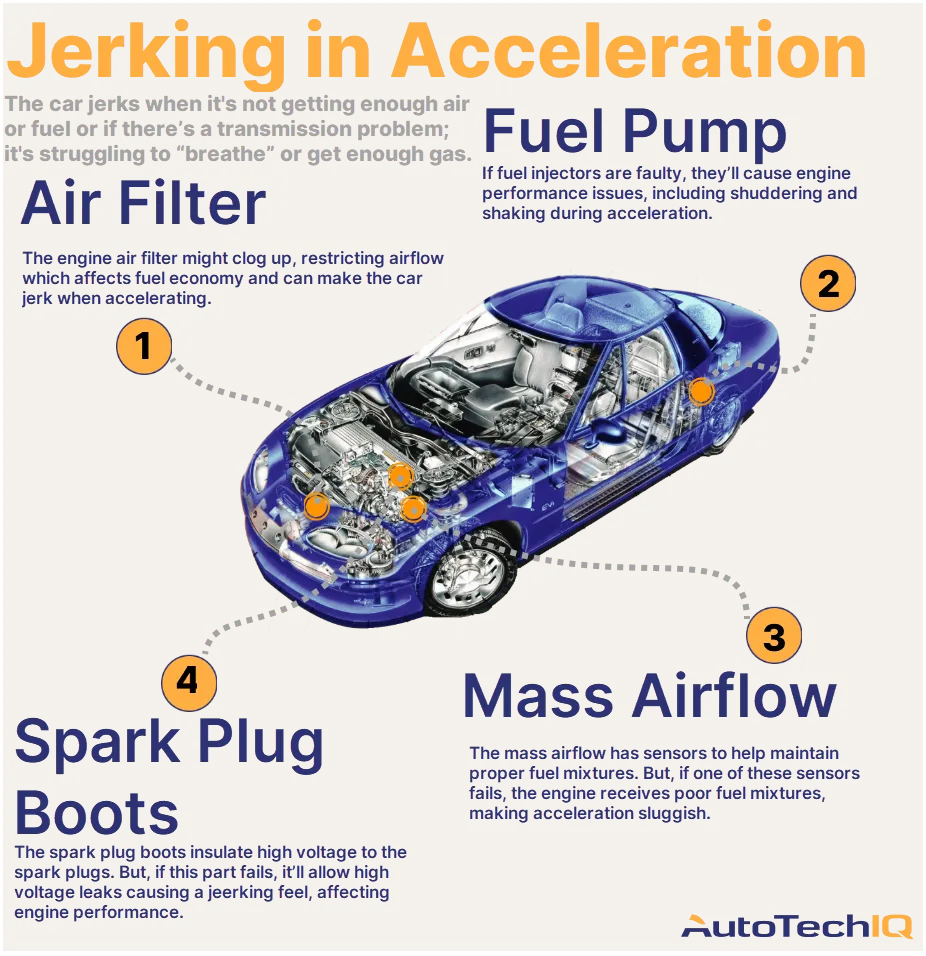
Faulty sensors send wrong signals to the ECU. Common culprits include the throttle position sensor and mass airflow sensor. These sensors control fuel and air mix in the engine.
Replacing a broken sensor restores proper data flow. This fix stops the jerking and improves fuel efficiency. Always use sensors that match your car’s make and model.
Updating Engine Control Software
Car manufacturers release software updates for the ECU. These updates fix bugs and improve engine performance. An outdated ECU can cause jerking and hesitation.
Updating the software can solve acceleration issues. Mechanics connect a diagnostic tool to the car to install updates. This process helps the engine run smoothly and efficiently.
Preventive Maintenance Tips
Preventive maintenance helps avoid car jerking during acceleration. It keeps your engine and parts running smoothly. Regular care reduces the chances of sudden problems. It saves money and time in the long run.
Regular Tune-ups
Schedule tune-ups every 10,000 to 15,000 miles. Mechanics check spark plugs, filters, and ignition systems. Replacing worn parts improves engine performance. It prevents misfires that cause jerking.
Using Quality Fuel
Choose fuel with the right octane for your car. Low-quality fuel can cause knocking and hesitation. Clean fuel burns better and protects the engine. Avoid cheap gas stations with poor fuel standards.
Monitoring Fluid Levels
Check engine oil, transmission fluid, and coolant regularly. Low or dirty fluids harm engine parts and cause jerking. Change fluids as recommended in your car manual. Keep fluids at proper levels for smooth driving.
Credit: www.autotechiq.com
Frequently Asked Questions
Why Does My Car Jerk When Accelerating?
Car jerking during acceleration usually indicates issues with fuel delivery, spark plugs, or sensors. It may also be caused by dirty air filters or clogged injectors. Diagnosing the root cause early helps prevent further engine damage and ensures smooth driving performance.
How Can I Fix Car Jerking While Accelerating?
Start by checking and replacing spark plugs and air filters. Clean fuel injectors and inspect the mass airflow sensor. If problems persist, have a professional diagnose the transmission or throttle position sensor. Regular maintenance helps avoid jerking issues and improves acceleration smoothness.
Can Bad Fuel Cause Car Jerking?
Yes, poor quality or contaminated fuel can cause engine misfires and jerking. It affects combustion efficiency and engine power delivery. Using high-quality fuel and adding fuel system cleaner can help resolve jerking caused by bad fuel and improve engine performance.
Is A Faulty Transmission Causing Acceleration Jerks?
A malfunctioning transmission can cause jerks during acceleration due to improper gear shifts or torque delivery. Signs include delayed response or slipping gears. Getting a transmission fluid change or professional repair often resolves these jerking issues.
Conclusion
Fixing car jerking while accelerating improves your driving experience. Check the fuel system, spark plugs, and air filter first. Clean or replace parts if needed. Regular maintenance helps prevent this issue. Drive smoothly and stay safe on the road. Taking care of your car keeps it running well.
Don’t ignore small problems; they can get worse. Simple steps can save you money and time. Keep your vehicle in good shape and enjoy every trip.