Thinking about giving your car a fresh new look with a vinyl wrap? One of the biggest questions you probably have is: how much car vinyl wrap do I need?
Getting the right amount is crucial—you don’t want to run out halfway through or waste money on extra material. You’ll discover simple ways to calculate exactly how much vinyl wrap your vehicle requires. Keep reading, and by the end, you’ll feel confident about your purchase and ready to transform your car like a pro.
Credit: metrorestyling.com
Calculating Car Surface Area
Calculating the surface area of your car is the first step to know how much vinyl wrap you need. This process helps avoid buying too little or too much material. Accurate measurement saves money and ensures a smooth wrap job. Breaking down the car into simple shapes makes measuring easier.
Focus on the main parts: the hood, roof, doors, and trunk. Each part has a length and width that you can measure. Adding these areas gives a good estimate of the total surface to cover. Pay attention to curves and edges for a better result.
Measuring Length And Width
Start by measuring the length of each car section. Use a tape measure to get the distance from one edge to the other. Then, measure the width of the same section. Write down all numbers to keep track.
Measure each side separately, including doors and panels. Be precise but allow a little extra for safety. These basic measurements form the base for your total area.
Accounting For Curves And Contours
Cars have curved surfaces that make measuring tricky. Curves add more surface area than flat parts. To adjust, add 10 to 20 percent extra material to your measurements.
This extra helps cover bends and shapes without running short. Think of curves as small hills that need more wrap to cover fully. This step ensures no surprises during installation.
Estimating Total Square Footage
Add the length and width measurements of all parts. Multiply length by width to get square footage for each section. Then, add all sections to find the total area.
Include the extra percentage for curves in your final total. This gives a realistic estimate of how much vinyl wrap to buy. Round up the number to avoid last-minute shortages.
Credit: raxtify.com
Types Of Vinyl Wrap Materials
Choosing the right vinyl wrap material is key to a great car wrap job. Different types offer various looks, durability, and ease of use. Knowing these types helps you decide how much vinyl wrap you need.
Each material has its strengths. Some are budget-friendly, while others last longer or provide unique finishes. Understanding these options makes your project smoother and more successful.
Standard Vs Premium Vinyl
Standard vinyl wraps are affordable and good for short-term use. They usually last about 3 to 5 years.
Premium vinyl wraps cost more but offer better durability. They often last 7 to 10 years and resist fading better.
Premium options also have easier installation and removal. Choose based on your budget and how long you want the wrap to last.
Matte, Glossy, And Satin Finishes
Matte vinyl has a flat, non-shiny look. It hides minor scratches well and looks modern.
Glossy vinyl shines brightly and looks like a fresh paint job. It makes colors pop and is easy to clean.
Satin finish sits between matte and glossy. It has a soft shine and feels smooth to touch.
Each finish changes your car’s style. Pick one that fits your taste and the car’s design.
Specialty Wraps And Textures
Specialty wraps include carbon fiber, brushed metal, and chrome. They create unique, eye-catching effects.
Textured wraps add depth and feel to the surface. Some feel rough, others smooth or patterned.
These wraps cost more and may need extra vinyl for complex shapes. They are perfect for standout designs.
Factors Affecting Vinyl Quantity
Estimating the right amount of vinyl wrap is not simple. Several factors influence how much material you need for a car wrap. Knowing these factors helps avoid running out of vinyl or wasting too much.
Vehicle Size And Shape
Large vehicles need more vinyl than small ones. SUVs and trucks require more material than compact cars. Curved surfaces, like bumpers and mirrors, also use more vinyl. The shape affects how much vinyl wraps around corners and edges. Always measure your vehicle carefully before buying vinyl.
Overlap And Waste Allowance
Vinyl wraps need some overlap on edges to stick properly. This overlap adds extra vinyl to the total amount needed. Cuttings and mistakes cause waste too. Adding 10-15% extra vinyl covers these losses. This margin ensures you have enough material to complete the wrap without gaps.
Complex Designs And Custom Graphics
Simple wraps use less vinyl than detailed designs. Custom graphics require precise cuts and alignment. This process often wastes more material. Large logos or patterns might need extra vinyl to fit well. Plan for extra vinyl if your wrap has many colors or shapes.
Calculating Extra Vinyl For Errors
Calculating extra vinyl for errors is a smart step in wrapping your car. Mistakes can happen, especially if you are new to vinyl wrapping. Having extra material helps fix small slips without stopping your project. It also saves money and time by avoiding extra trips to the store.
Common Wrapping Mistakes
Stretching the vinyl too much can cause tears or bubbles. Cutting errors often happen when shapes are complex. Dirt or dust under the vinyl makes bumps. Overlapping edges can cause wrinkles or uneven surfaces. These mistakes use up more vinyl than planned.
Recommended Waste Percentage
Experts suggest adding 10% to 20% extra vinyl for errors. Simple jobs may need just 10%. Complex designs or large vehicles require closer to 20%. This extra amount covers mistakes and small trims. It ensures you have enough vinyl to finish the wrap smoothly.
Tips For Minimizing Waste
Work slowly and carefully to avoid careless mistakes. Use a sharp blade to make clean cuts. Clean the car surface well before applying vinyl. Plan your cuts to use vinyl efficiently. Practice on small parts to build confidence. These steps help reduce waste and save vinyl.
Tools For Measuring And Cutting
Measuring and cutting vinyl wrap correctly is crucial for a smooth installation. The right tools help you measure accurately and cut clean edges. This reduces waste and saves time. Using proper tools makes the process easier and more precise. Below are the key tools and tips for measuring and cutting vinyl wrap.
Essential Measuring Tools
A flexible tape measure helps you measure curves and flat surfaces. A ruler or straight edge assists in marking straight lines. A marking pencil or chalk makes temporary marks on the wrap. These tools ensure precise measurements for a perfect fit.
Cutting Techniques For Precision
Use a sharp utility knife or vinyl cutter for clean cuts. Cut slowly along the marked lines to avoid mistakes. Keep the blade at a low angle to prevent scratches on the car. Trim excess vinyl after applying for a neat finish.
Safety Tips During Installation
Wear gloves to protect your hands from cuts. Work on a clean, flat surface to avoid slips. Keep blades away from your body while cutting. Dispose of used blades properly to prevent accidents.
Estimating Cost Based On Vinyl Needed
Estimating the cost of a car vinyl wrap depends mainly on the amount of vinyl needed. The size of the vehicle and the design complexity affect the total square footage of vinyl required. Knowing this helps set a clear budget before starting the project.
Price Per Square Foot
Vinyl wrap prices usually range from $2 to $7 per square foot. The price depends on the vinyl quality and brand. Higher-quality vinyl costs more but lasts longer and looks better. Basic vinyl offers a cheaper option but may wear out faster. Calculating the total square footage needed helps estimate the material cost accurately.
Additional Supplies And Equipment
Besides vinyl, extra supplies are necessary. Tools like squeegees, heat guns, and cutting knives add to the cost. You might also need cleaning solutions to prepare the car surface. These supplies are usually one-time purchases but can increase the overall budget. Plan for these to avoid surprises during installation.
Budgeting For Professional Installation
Professional installation costs vary widely. Labor fees depend on the car size and complexity of the wrap. Experts charge between $500 to $3000 or more. Hiring a pro ensures the vinyl fits perfectly and lasts longer. Factor in installation fees if you do not plan to wrap the car yourself.
Diy Vs Professional Wrapping
Choosing between DIY and professional car vinyl wrapping depends on your goals and resources. Both methods need different amounts of material and effort. Understanding each option helps you decide how much vinyl wrap you really need.
Skill Level Required
DIY wrapping needs basic skills and patience. You must learn to cut and place vinyl without bubbles. Mistakes can waste material and money. Professionals have training and tools. They apply vinyl smoothly and fix errors easily. Skill affects the amount of vinyl used and the final look.
Time Investment
DIY wrapping takes many hours or days. You must clean, measure, cut, and apply slowly. Rushing can cause damage and waste vinyl. Professionals work faster. They finish in a few hours. Less time means less chance of mistakes and vinyl waste.
Quality And Longevity Considerations
Professional wraps last longer and look better. They use high-quality vinyl and precise techniques. DIY wraps may peel or fade faster. Poor application shortens vinyl life. Good quality and care reduce the need for extra vinyl and repairs.
Maintaining Your Vinyl Wrap
Maintaining your vinyl wrap keeps it looking fresh and extends its life. Simple care steps protect your investment and prevent early wear. Regular attention helps your car stand out longer and stay in top shape.
Cleaning And Care Tips
Use a soft cloth or sponge for cleaning. Choose mild soap and water only. Avoid harsh chemicals or abrasive brushes that can scratch. Wash your car gently and rinse well. Dry with a microfiber towel to stop water marks. Clean your wrap often to stop dirt build-up.
Avoiding Damage
Keep your car away from sharp objects and rough surfaces. Park in shaded areas to prevent sun fading. Avoid pressure washers or high heat on the wrap. Be careful with fuel spills and bird droppings; clean them fast. Drive carefully to avoid scratches and dents on the wrap.
When To Replace Or Repair
Look for peeling edges or bubbles under the wrap. Fading colors or cracks mean it may need repair. Small tears can be fixed by professionals to save costs. Replace the wrap if damage covers large areas. Early repair helps keep the wrap strong and good-looking.
Credit: metrorestyling.com
Frequently Asked Questions
How Much Vinyl Wrap Is Needed For A Full Car?
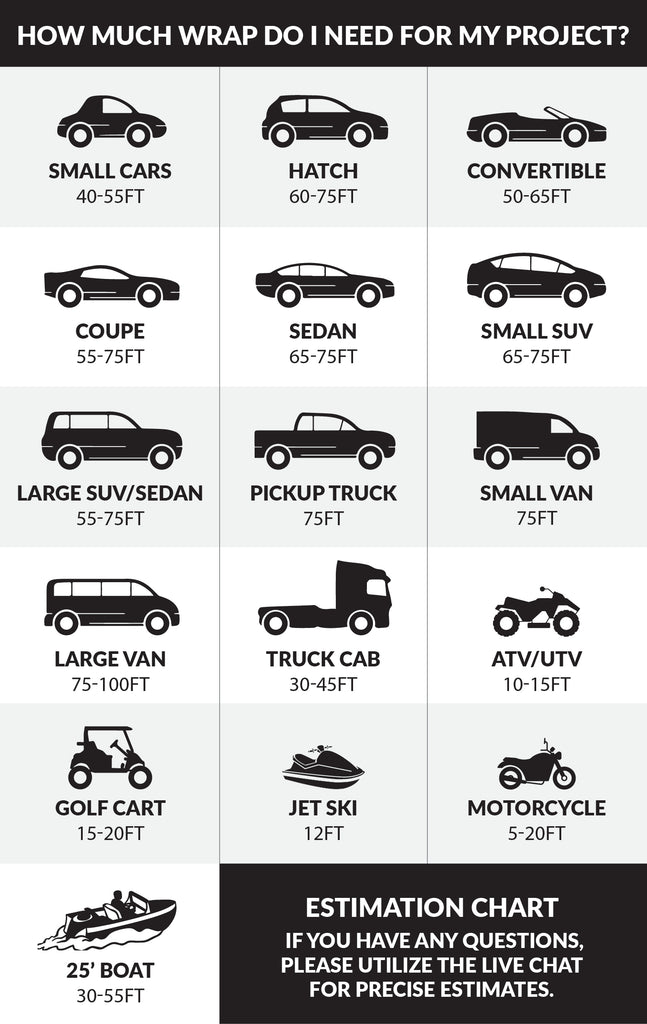
A full car wrap typically requires 50 to 75 square feet of vinyl. This range covers most sedans and small SUVs. Larger vehicles need more vinyl. Always measure your car carefully to ensure you buy enough material.
Can I Wrap Only Part Of My Car?
Yes, partial wraps are common and require less vinyl. For example, wrapping just the hood or roof needs 15 to 25 square feet. Partial wraps save money and allow customization without covering the entire vehicle.
How Do I Measure My Car For Vinyl Wrap?
Measure your car’s length, width, and height accurately. Include doors, mirrors, bumpers, and roof for full coverage. Multiply these dimensions to estimate the total square footage of vinyl needed.
Does Vinyl Wrap Amount Vary By Car Type?
Yes, vehicle size and shape affect vinyl needed. Compact cars require less vinyl than trucks or vans. More complex shapes might need extra vinyl for proper coverage and trimming.
Conclusion
Calculating the right amount of vinyl wrap saves time and money. Measure your car carefully before buying the wrap. Remember to add extra material for mistakes and edges. Different car shapes need different amounts of wrap. Always check the wrap size with your car’s surface area.
This way, you avoid running out or wasting vinyl. Taking these steps helps you finish your project smoothly. Now, you can wrap your car with confidence and ease.