

If your 2003 Chevy Cavalier isn’t running as smoothly as it used to, the fuel filter might be the problem. Changing your fuel filter is a simple fix that can save you from costly repairs down the road.
In this guide, you’ll learn exactly how to change the fuel filter step-by-step, even if you’ve never done it before. By the end, you’ll feel confident handling this task on your own and keeping your Cavalier in top shape. Ready to get started?
Let’s dive in.
Tools And Materials Needed
Before starting to change the fuel filter on your 2003 Chevy Cavalier, gather the right tools and materials. Having everything ready makes the job smoother and safer. A few basic tools and parts are all you need.
Using proper tools helps avoid damage and speeds up the process. The fuel filter is located near the fuel tank or along the fuel line. Knowing the tools needed prepares you for easy access and replacement.
Basic Hand Tools
You will need a set of wrenches or socket set. These help loosen and tighten the fuel line fittings. A screwdriver may be necessary to remove clamps or protective covers. Keep pliers handy for holding or pulling small parts.
Replacement Fuel Filter
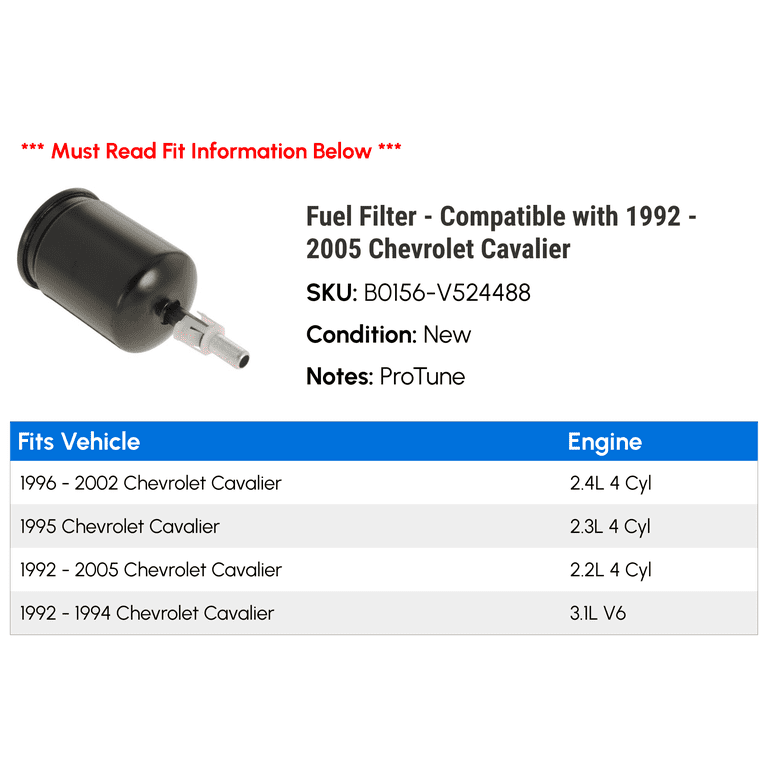
Buy a fuel filter made for the 2003 Chevy Cavalier. Using the correct part ensures proper fit and function. Check the filter’s specifications to match your car’s model and engine type.
Safety Equipment
Wear safety gloves to protect your hands from fuel. Eye protection is important to avoid splashes. Have a small container ready to catch any fuel that spills during the change.
Additional Materials
Bring some rags or paper towels for cleaning spills. A jack and jack stands might be needed to lift the car safely. Also, keep a fire extinguisher nearby for safety during the task.

Credit: www.walmart.com
Locate The Fuel Filter
The fuel filter on a 2003 Chevy Cavalier is located under the hood near the engine. It looks like a small metal or plastic cylinder with fuel lines attached. Finding it is the first step before replacing the filter.
Understanding The Fuel Filter Location
The fuel filter cleans dirt from the gasoline before it reaches the engine. Finding its exact location is the first step in changing it. On a 2003 Chevy Cavalier, the fuel filter is not hidden deep inside. It sits where you can access it with some basic tools.
Knowing where the fuel filter is saves time and avoids confusion. It also makes the replacement process safer and easier. This part is important to keep the engine running smoothly.
Check Under The Vehicle
Start by looking under the car, near the fuel tank area. The fuel filter is usually along the fuel line between the tank and engine. On the 2003 Chevy Cavalier, it is often found on the driver’s side frame rail. It looks like a small metal cylinder with fuel lines connected.
Open The Hood And Inspect
Sometimes, the fuel filter is near the engine bay. Open the hood and look along the firewall or near the fuel injection system. Though rare for this model, it is good to double-check. The filter should have fuel lines entering and leaving it.
Use The Owner’s Manual
Refer to the owner’s manual for exact details. It shows diagrams and precise locations. The manual may also list safety tips for handling the fuel system. Keep it handy during the replacement process.
Prepare For Safety
Before working on the fuel filter, make sure the car is off and cool. Relieve fuel system pressure to avoid leaks or sprays. Wear gloves and eye protection. Safety comes first when dealing with fuel parts.
Prepare The Vehicle
Preparing your 2003 Chevy Cavalier before changing the fuel filter is important. It makes the process safer and easier. Taking time to prepare helps avoid problems and keeps you safe. Follow these steps carefully to get ready for the job.
Start by making sure the fuel system is not under pressure. This reduces the risk of fuel spraying out. Next, take safety measures to protect yourself and your vehicle. These steps create a safe working environment.
Relieve Fuel System Pressure
Begin by opening the hood and locating the fuel pump fuse. Remove the fuse to stop the fuel pump. Then, start the engine and let it run until it stops. This uses up the fuel left in the lines. Turn off the ignition and close the hood. The fuel system pressure is now released, reducing fuel spray risk.
Ensure Safety Precautions
Wear safety goggles and gloves to protect your eyes and skin. Work in a well-ventilated area to avoid inhaling fuel fumes. Keep a fire extinguisher nearby for emergencies. Avoid open flames or sparks near the vehicle. Use jack stands if you need to lift the car. Always disconnect the battery to prevent electrical sparks. Safety is key to a smooth fuel filter change.
Credit: www.walmart.com
Remove The Old Fuel Filter
Removing the old fuel filter on a 2003 Chevy Cavalier is a key step in replacing it. This process requires care and attention. The fuel system holds pressure, so proceed safely. Follow these steps to disconnect the fuel lines and take out the filter properly.
Disconnect Fuel Lines
First, relieve the fuel system pressure to avoid fuel spray. Locate the fuel lines connected to the filter. Use a wrench or quick-disconnect tool to loosen the fittings. Gently pull the fuel lines off the filter. Keep rags nearby to catch any spilled fuel. Handle the lines carefully to avoid damage.
Take Out The Filter
With the fuel lines disconnected, find the mounting bracket holding the filter. Use a wrench or screwdriver to remove the bracket bolts. Carefully pull the old fuel filter out of its place. Check for any leftover fuel in the filter and dispose of it safely. Keep the new filter ready for installation.
Install The New Fuel Filter
Installing the new fuel filter in your 2003 Chevy Cavalier is a key step. It ensures clean fuel flows to the engine. Proper installation helps your car run smoothly. Take your time and follow each step carefully.
Position The Filter Correctly
Check the new filter for an arrow or marking. This shows the fuel flow direction. Place the filter so the arrow points toward the engine. Make sure it fits snugly in the bracket. A wrong position can cause fuel leaks or poor engine performance.
Reconnect Fuel Lines
Attach the fuel lines to each end of the filter. Push them firmly until they click or fit tight. Check for any loose connections. Secure the lines with clips or clamps if needed. Tight connections prevent leaks and keep fuel flowing properly.

Credit: www.youtube.com
Check For Leaks And Test
After replacing the fuel filter on your 2003 Chevy Cavalier, checking for leaks and testing the system is crucial. This step ensures the fuel flows properly without any risk of spills or damage. A secure and leak-free connection keeps your vehicle safe and running smoothly.
Leaks can cause fuel loss or engine problems. Testing the system confirms that the new filter works as it should. It also helps avoid future breakdowns and saves you money on repairs.
Inspect All Fuel Connections
Look closely at the fuel lines and filter connections. Check for wet spots or strong fuel smells. Tighten any loose clamps or fittings carefully. Use a clean cloth to wipe away any fuel. Keep the engine off during this check to avoid sparks.
Start The Engine And Monitor
Turn on the engine and let it run for a few minutes. Watch the fuel filter and lines for any signs of leaks. Listen for unusual noises or sputtering. A steady engine sound means the fuel flows well. Shut off the engine if you detect leaks or odd sounds.
Perform A Road Test
Drive the Cavalier slowly at first. Notice any hesitation or power loss. Check again under the vehicle for leaks after the test drive. A smooth drive means the fuel filter installation is successful. Fix any problems before regular use.
Tips For Maintenance
Proper maintenance keeps your 2003 Chevy Cavalier running smoothly. The fuel filter plays a key role in protecting the engine. Clean fuel means better performance and longer engine life. Follow these tips to maintain your fuel filter well.
Check The Fuel Filter Regularly
Inspect the fuel filter every 12,000 miles or once a year. Look for dirt or damage on the filter. A clogged filter can cause poor engine performance and lower fuel efficiency. Replace the filter if it looks dirty or old.
Use Quality Fuel
Choose high-quality fuel to reduce dirt and debris. Low-quality fuel can clog the fuel filter faster. Clean fuel helps the filter last longer and protects the engine parts.
Replace Fuel Filter On Time
Follow the manufacturer’s schedule for fuel filter replacement. For the 2003 Chevy Cavalier, replace the filter every 30,000 miles. Timely replacement prevents fuel flow problems and engine damage.
Keep Fuel Tank Clean
Make sure the fuel tank is free from rust or dirt. Contaminants in the tank can clog the fuel filter quickly. Clean the tank if you notice rust or debris inside.
Listen For Engine Changes
Notice if the engine hesitates, stalls, or loses power. These signs may mean the fuel filter is blocked. Do not ignore these symptoms. Check and replace the fuel filter as needed.
Frequently Asked Questions
How Often Should I Change The Fuel Filter On 2003 Chevy Cavalier?
The fuel filter on a 2003 Chevy Cavalier should be changed every 30,000 miles. Regular replacement ensures clean fuel flow and engine efficiency. Ignoring this can cause poor performance and fuel system damage.
What Tools Are Needed To Change The Fuel Filter?
You need a wrench, screwdrivers, and safety gloves. A fuel line disconnect tool may be required. Always work in a well-ventilated area and relieve fuel pressure before starting.
How Long Does It Take To Replace The Fuel Filter?
Replacing the fuel filter on a 2003 Chevy Cavalier usually takes 30 to 45 minutes. Experience and proper tools can reduce this time. Follow safety steps carefully to avoid fuel leaks.
Can I Change The Fuel Filter Myself Safely?
Yes, with the right tools and safety precautions, you can. Make sure to relieve fuel pressure and avoid sparks. If unsure, consult a professional mechanic to prevent accidents.
Conclusion
Changing the fuel filter on your 2003 Chevy Cavalier keeps the engine running well. Clean fuel helps the car perform better and last longer. This task saves money by preventing bigger repairs later. Follow the steps carefully for a safe and easy change.
Regular maintenance like this protects your vehicle and ensures smooth driving. Try it yourself and enjoy a healthier engine. Simple care makes a big difference in your car’s life.


