

You rely on your vehicle every day, and keeping it running smoothly is important to you. One part that often gets overlooked is the fuel filter.
But how often should a fuel filter be changed? If you don’t replace it on time, your engine might suffer, costing you more in repairs down the road. You’ll discover the signs to watch for and the best schedule to keep your fuel filter—and your car—in top shape.
Keep reading to protect your ride and save money.

Credit: kbmotorsports.biz
Role Of A Fuel Filter
The fuel filter plays a key role in your vehicle’s fuel system. It cleans the fuel before it reaches the engine. Dirt, rust, and other particles get trapped in the filter. This helps keep the fuel clean and the engine safe.
Fuel filters protect the engine from damage. They also help the engine run smoothly. Without a good fuel filter, the engine can get clogged and lose power. Regular fuel filter changes keep your car in good shape.
Protecting The Engine
The fuel filter stops dirt and debris from entering the engine. These particles can cause wear and tear on engine parts. A clean fuel filter means cleaner fuel. This leads to better engine performance and longer life.
Dirty fuel can clog fuel injectors and reduce fuel efficiency. It can also cause the engine to misfire or stall. The fuel filter prevents these problems by catching impurities early. This reduces costly repairs and keeps the engine running well.
Types Of Fuel Filters
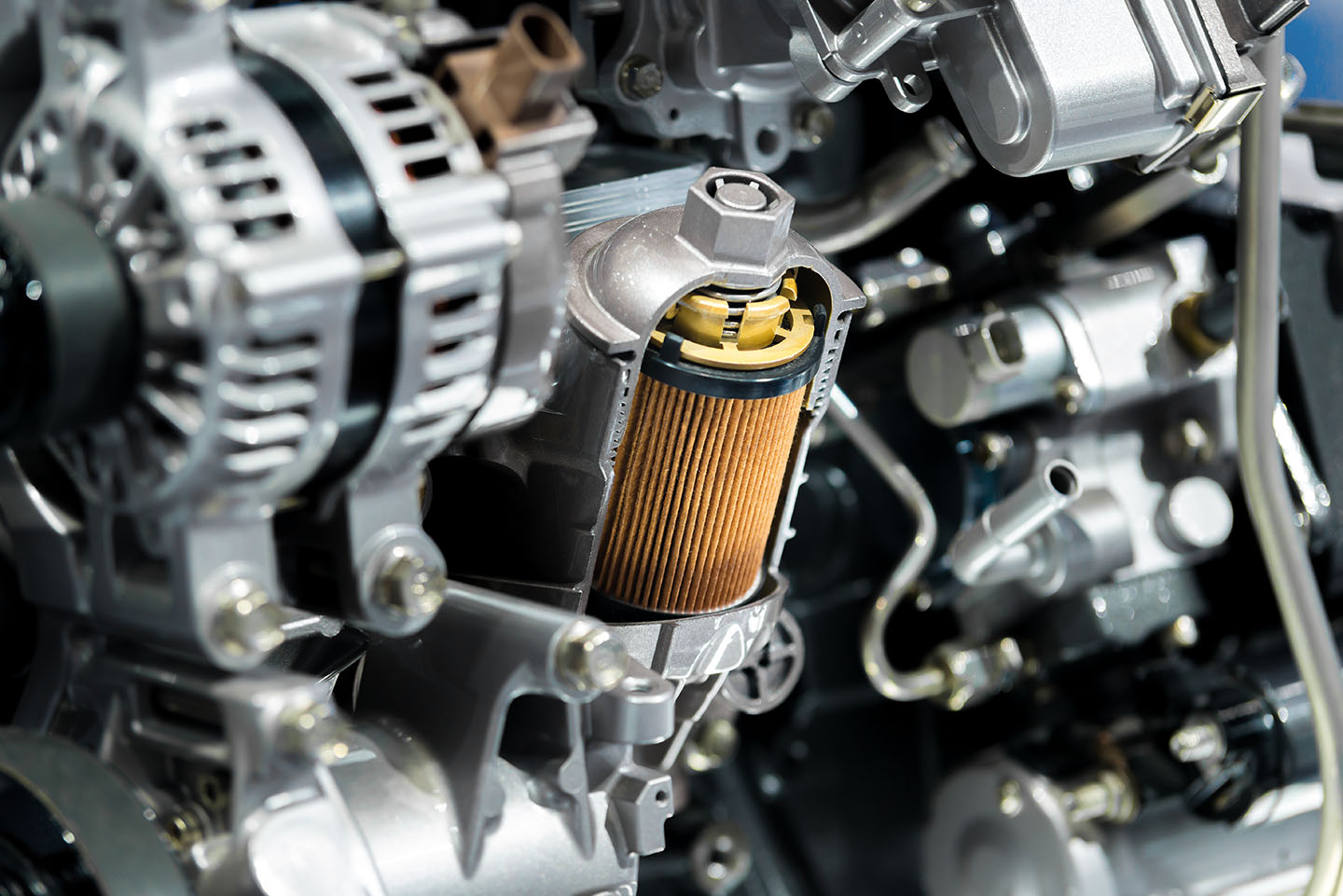
Fuel filters come in different types and styles. The two main types are cartridge and inline filters. Cartridge filters are inside the fuel system and need special tools to replace. Inline filters are easier to access and change.
Some vehicles use paper filters, others use mesh or metal filters. Each type works to trap dirt but may last different lengths of time. Knowing your car’s fuel filter type helps you choose the right replacement. Proper filter type improves fuel flow and engine health.
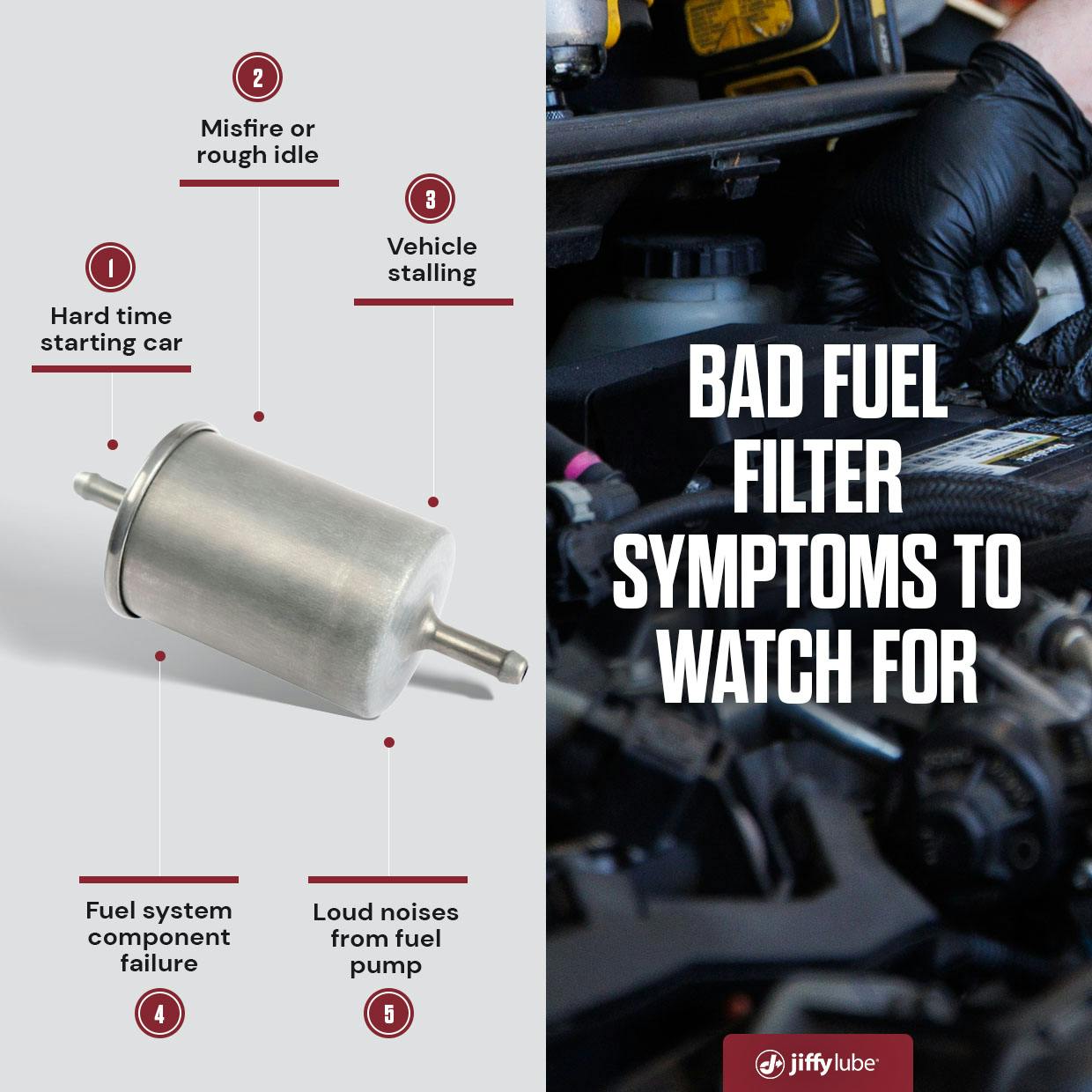
Credit: www.jiffylube.com
Signs Of A Clogged Fuel Filter
A clogged fuel filter affects your vehicle’s performance. It blocks the flow of fuel to the engine. This causes several noticeable problems. Knowing the signs helps you spot trouble early. It can save you from costly repairs and breakdowns.
Engine Performance Issues
A clogged fuel filter makes your engine run poorly. It may hesitate or stall during driving. The engine may misfire or run roughly. You might feel a loss of power. This happens because the engine does not get enough fuel.
Fuel Efficiency Drops
Your car uses more fuel with a clogged filter. The engine works harder to run. This wastes fuel and lowers miles per gallon. You may notice you fill the tank more often. A clean fuel filter helps keep fuel use normal.
Starting Problems
Difficulty starting your car can mean a blocked filter. The engine may crank but fail to start. It might take longer to start than usual. A clogged filter stops fuel from reaching the engine fast. This makes starting slow or impossible.
Recommended Replacement Intervals
The recommended replacement intervals for fuel filters vary. They depend on several key factors that influence the filter’s lifespan. Understanding these helps keep your engine running smoothly. Regular changes prevent dirt and debris from clogging the fuel system. This section breaks down the main influences on how often to change your fuel filter.
Manufacturer Guidelines
Vehicle makers provide specific advice on fuel filter changes. They suggest intervals based on engine design and fuel system needs. Most recommend changing the fuel filter every 20,000 to 40,000 miles. Always check the owner’s manual for exact numbers. Following these guidelines helps maintain engine efficiency and prevents damage.
Driving Conditions Impact
Driving habits affect how quickly a fuel filter clogs. Rough roads, dusty areas, and stop-and-go traffic cause faster wear. Frequent short trips can also reduce filter life. In harsh conditions, changing the filter every 15,000 miles may be necessary. Clean fuel and smooth driving extend the filter’s service time.
Vehicle Type Variations
Different vehicles need different fuel filter intervals. Diesel engines usually require more frequent changes than gasoline engines. Older cars may need filter checks more often than newer models. High-performance vehicles might have special fuel system needs. Always consider your vehicle type when planning filter changes.
Credit: bostechauto.com
Diy Vs Professional Replacement
Changing a fuel filter is important for your vehicle’s health. You can do it yourself or hire a professional. Each choice has its benefits and challenges. Understanding these can help you decide what suits you best.
DIY replacement saves money and gives you control over the process. It requires some tools and a bit of skill. Professional replacement costs more but offers expert handling and safety.
Tools Required
For a DIY fuel filter change, you need basic tools. These include a wrench, screwdrivers, and a container to catch fuel drips. Safety gloves and goggles are important too. Professionals bring specialized tools and equipment.
Step-by-step Replacement
First, relieve fuel system pressure to avoid spills. Then, disconnect the battery for safety. Locate the fuel filter and remove its clamps. Replace the old filter with the new one. Reattach clamps and reconnect the battery. Start the car to check for leaks.
When To Seek Help
Choose professional help if you lack tools or confidence. Complex fuel systems need expert knowledge. Problems like stuck filters or fuel leaks require skill. Safety risks increase without experience. Better to trust a professional in these cases.
Consequences Of Neglecting Fuel Filter Change
Neglecting to change the fuel filter can cause serious problems for your vehicle. The fuel filter stops dirt and debris from reaching the engine. Over time, it gets clogged and stops working well. This affects how your engine runs and can lead to costly repairs.
Engine Damage Risks
A dirty fuel filter can make the engine work harder. Fuel flow becomes weak, causing the engine to sputter or stall. Tiny particles can pass through and damage engine parts. This damage lowers engine performance and lifespan. Replacing the fuel filter on time helps avoid these risks.
Increased Repair Costs
Ignoring the fuel filter can raise repair bills. A clogged filter can cause fuel pump failure. Repairing or replacing the pump costs much more than a filter. Engine damage from poor fuel flow also needs expensive fixes. Routine fuel filter changes save money in the long run.
Tips To Extend Fuel Filter Life
Extending the life of your fuel filter helps keep your engine clean and running smoothly. Simple habits can reduce dirt and debris buildup. These tips help your fuel filter last longer and improve overall vehicle performance.
Using Quality Fuel
Choose fuel from trusted stations only. Low-quality fuel contains more dirt and contaminants. Clean fuel reduces strain on the fuel filter. Avoid cheap or unknown brands that may harm your engine. Using good fuel keeps the filter cleaner for longer periods.
Regular Vehicle Maintenance
Follow your car’s service schedule closely. Regular oil changes and air filter checks help the fuel system. Inspect fuel lines and filter connections for leaks or damage. Clean parts work better and protect the fuel filter. Timely maintenance avoids early filter clogging and keeps your engine healthy.
Frequently Asked Questions
How Often Should A Fuel Filter Be Replaced?
Most experts recommend changing your fuel filter every 20,000 to 40,000 miles. This varies by vehicle model and driving conditions. Check your owner’s manual for specific guidance to maintain optimal engine performance and prevent clogging.
What Are Signs Of A Clogged Fuel Filter?
Common signs include engine misfires, poor acceleration, and difficulty starting. A clogged fuel filter restricts fuel flow, causing these issues. If you notice any symptoms, have the fuel filter inspected and replaced if necessary.
Can A Dirty Fuel Filter Damage The Engine?
Yes, a dirty fuel filter can cause engine damage. It restricts fuel flow, leading to poor combustion and engine strain. Regular replacement helps prevent costly repairs and ensures smooth vehicle operation.
Does Changing The Fuel Filter Improve Fuel Efficiency?
Replacing a dirty fuel filter can improve fuel efficiency. A clean filter ensures proper fuel flow and combustion. This helps your engine run smoothly and reduces fuel consumption over time.
Conclusion
Changing your fuel filter regularly keeps your engine running smoothly. Most cars need a new filter every 20,000 to 40,000 miles. Check your owner’s manual for exact advice. Dirty filters can cause poor fuel flow and engine problems. Clean fuel means better performance and longer engine life.
Don’t wait until you notice issues. Stay ahead with timely fuel filter changes. Your car will thank you with better efficiency and fewer repairs. Simple care can save you money and stress down the road.


