

Are you excited to bring a Wax Bulb Amaryllis into your home but unsure how to keep it thriving? This stunning plant, with its vibrant blooms, can brighten any space—but it needs the right care to truly shine.
You might wonder how often to water it, where to place it, or how to encourage those beautiful flowers to bloom again. Don’t worry—this guide will walk you through simple, effective steps to help your Wax Bulb Amaryllis stay healthy and gorgeous.
Keep reading to discover easy tips that will make caring for your plant a breeze and turn you into a confident plant parent.

Credit: www.jacksonandperkins.com
Choosing The Right Bulb
Choosing the right bulb is the first step to grow a beautiful wax bulb amaryllis. The bulb’s health affects the plant’s growth and flowers. Picking a strong bulb gives your amaryllis the best chance to bloom fully. Understanding what to look for helps you make a good choice for your indoor garden.
Selecting Healthy Bulbs
Look for bulbs that feel firm and heavy. Avoid bulbs with soft spots or mold. Healthy bulbs have dry, brown outer skin. They should not look shriveled or damaged. A fresh bulb stores energy to grow strong roots and flowers. The firmer and cleaner the bulb, the better it will perform.
Ideal Bulb Sizes
Choose bulbs that are at least 5 inches wide. Larger bulbs often produce bigger flowers and more blooms. Small bulbs may still grow but take longer to flower. Medium to large bulbs give faster and fuller results. Size affects the plant’s strength and the number of flower stalks.
Varieties To Consider
Many wax bulb amaryllis varieties exist. Popular types include classic red, white, and pink flowers. Some have striped or speckled petals for a unique look. Pick a variety that suits your style and space. Each variety has its own charm and bloom time.
Planting Your Wax Bulb
Planting your wax bulb amaryllis correctly sets the stage for healthy growth and beautiful blooms. Choosing the right soil, pot, and planting depth helps the plant thrive indoors. These steps are simple but important for your wax bulb’s success.
Best Soil Mix
Use a well-draining soil mix for your wax bulb amaryllis. A blend of potting soil, sand, and peat moss works well. This mix keeps water from sitting around the bulb, preventing rot. Avoid heavy garden soil that holds too much moisture.
Pot Selection Tips
Pick a pot with drainage holes to stop water buildup. The pot should be just a bit larger than the bulb. Too big a pot means the soil stays wet longer. Clay pots help air reach the roots but plastic pots also work fine.
Planting Depth And Position
Plant the bulb so its top is just above the soil surface. Position the bulb with the pointed end facing up. Cover the roots fully, but leave part of the bulb exposed. Place the pot where it gets bright, indirect light for best growth.
Watering Guidelines
Proper watering is key to keeping your wax bulb amaryllis healthy and thriving. This plant needs just the right amount of water to grow strong and bloom beautifully. Understanding how often and how much to water helps avoid common problems like root rot or dryness.
Frequency And Amount
Water your wax bulb amaryllis once the top inch of soil feels dry. Usually, this means watering about once a week. Pour enough water to moisten the soil, but do not soak it. Let excess water drain out to keep roots healthy.
Avoiding Overwatering
Too much water can cause the bulb to rot. Avoid leaving the plant in standing water. Always use pots with drainage holes. If leaves start yellowing or wilting, check the soil moisture. Dry out the soil slightly before watering again.
Signs Of Underwatering
Underwatered plants have dry, brittle leaves. The bulb may shrink or wrinkle. Growth slows and flowers may not open fully. If the soil feels very dry below the surface, give the plant a good soak. Consistent watering helps your amaryllis stay vibrant.
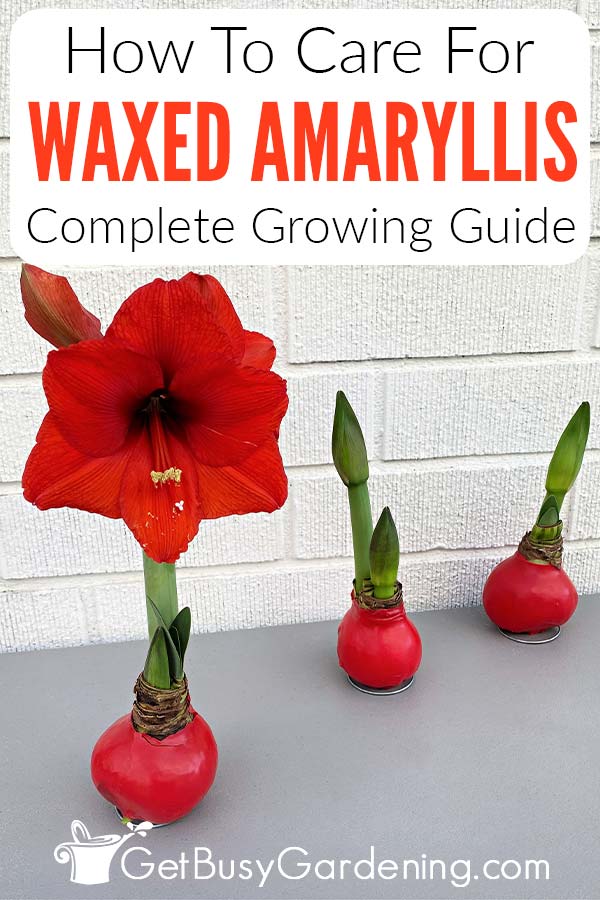
Credit: getbusygardening.com
Lighting Requirements
Lighting is very important for the health and bloom of a wax bulb amaryllis. The right light helps the plant grow strong leaves and bright flowers. Too much or too little light can harm its growth. Understanding where and how to place your amaryllis ensures it thrives indoors or outdoors.
Indoor Light Preferences
Wax bulb amaryllis grows well in bright, indirect light indoors. Place it near a window that gets filtered sunlight. Avoid harsh, direct sun that can burn leaves. A south or east-facing window is often best. Turn the pot occasionally for even growth.
Outdoor Placement
Outside, choose a spot with partial shade. Morning sun and afternoon shade protect the plant from strong heat. Avoid full sun, which may dry out the soil quickly. A sheltered area with good airflow helps prevent disease.
Adjusting Light For Growth Stages
During the growing stage, wax bulb amaryllis needs more light. Bright indirect light supports leaf and flower development. Once blooming starts, reduce light slightly to extend flower life. After flowering, less light encourages the plant to rest before the next cycle.
Temperature And Humidity
Temperature and humidity play a big role in growing a healthy wax bulb amaryllis. These plants need a steady environment to bloom and stay strong. Too much heat or cold can hurt their growth. Proper humidity keeps their leaves fresh and stops them from drying out.
Understanding the right balance helps your amaryllis thrive indoors. It also stops common problems like leaf browning and weak stems. Let’s explore how to keep temperature and humidity just right for your wax bulb amaryllis.
Optimal Temperature Range
Wax bulb amaryllis grows best between 60°F and 75°F (15°C to 24°C). Temperatures below 50°F (10°C) slow growth and can damage bulbs. Above 80°F (27°C) the plant may become stressed and stop flowering. Keep your plant away from cold drafts or hot vents. A stable room temperature helps the bulb bloom fully and keeps leaves healthy.
Humidity Control Tips
Wax bulb amaryllis prefers moderate humidity around 40% to 60%. Dry air causes leaf tips to turn brown and curl. Use a small humidifier or place a water tray near your plant. Grouping plants together also raises humidity naturally. Avoid misting leaves often, as this can cause fungal issues. Check humidity levels regularly for the best care.
Protecting From Temperature Stress
Sudden temperature changes shock the amaryllis and weaken it. Avoid placing it near open windows or doors in winter. Keep the plant away from air conditioners and heaters. Use curtains or blinds to shield from direct sun that can overheat leaves. Move the bulb to a more stable spot if temperatures change quickly. This keeps your wax bulb amaryllis healthy and strong.
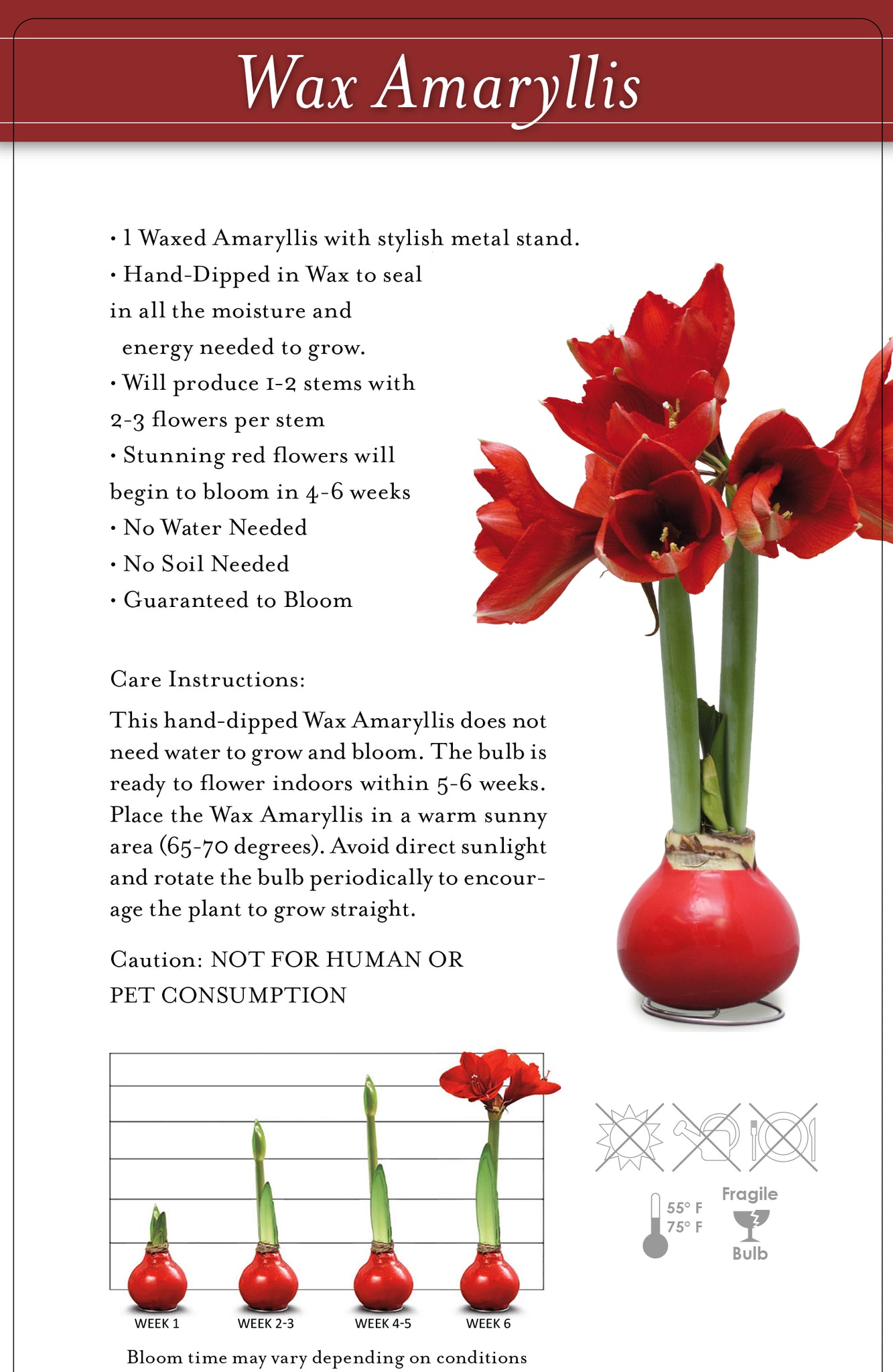
Credit: hollandbeauty.com
Fertilizing Your Amaryllis
Fertilizing your wax bulb amaryllis helps it grow strong and bloom beautifully. Proper nutrients support healthy leaves and vibrant flowers. Without enough food, the plant may become weak or stop blooming. Feeding your amaryllis the right way makes a big difference in its health and appearance.
Choosing The Right Fertilizer
Select a balanced fertilizer with equal parts nitrogen, phosphorus, and potassium. A 10-10-10 or 20-20-20 formula works well. Look for water-soluble types to feed the plant easily. Avoid fertilizers with too much nitrogen; they can promote leaf growth but reduce flowering. Organic options like compost or fish emulsion also nourish the soil gently.
Feeding Schedule
Feed your amaryllis every two to four weeks during the growing season. Use half the recommended strength to avoid overfeeding. Stop fertilizing when the plant goes dormant, usually after flowering. Resume feeding when new growth appears. Regular feeding ensures steady growth and healthy blooms.
Signs Of Nutrient Deficiency
Yellowing leaves often mean a lack of nitrogen. Pale or weak stems can show phosphorus deficiency. Brown leaf tips may indicate potassium shortage. Slow growth and fewer flowers also signal poor nutrition. Watch your plant closely to catch these signs early. Proper feeding helps your amaryllis stay vibrant and strong.
Encouraging Blooming
Encouraging your Wax Bulb Amaryllis to bloom takes care and attention. The right steps help the plant rest, grow, and show its beautiful flowers. Understanding the plant’s needs during different stages is key to enjoy its full bloom.
Dormancy Period Care
The dormancy period is when the plant rests after blooming. Reduce watering to keep the soil barely moist. Keep the bulb in a cool, dark place. This rest helps the bulb gather energy for the next bloom. Avoid fertilizing during dormancy. Wait about 8 to 10 weeks before starting to water again.
Stimulating Flower Growth
Once dormancy ends, move the bulb to a bright spot. Water it more regularly, but do not overwater. Use a balanced liquid fertilizer every two weeks. Keep the temperature warm, around 65 to 70°F (18 to 21°C). Rotate the pot to help even growth. The bulb will start sending up flower stalks soon.
Dealing With Blooming Issues
No flowers? Check if the bulb rested enough. Too much water or light can stop blooming. Also, weak bulbs may need more nutrients. Use a fertilizer high in phosphorus to promote flowers. Keep the plant away from drafts and sudden temperature changes. Patience is important; some bulbs bloom slower than others.
Pest And Disease Management
Pest and disease management is key to keeping your wax bulb amaryllis healthy. Pests can damage leaves and bulbs, stopping growth. Diseases can spread quickly and harm the plant’s beauty. Early care helps your plant stay strong and bloom well.
Watch your amaryllis often. Catch problems fast to avoid big damage. Clean plants and proper care reduce risks. Know what pests and diseases to check for.
Common Pests To Watch For
Aphids are small and green. They suck sap and leave sticky residue. Spider mites cause tiny spots and webbing on leaves. Mealybugs look like white cotton and gather in leaf joints. These pests weaken the plant and slow growth.
Preventive Measures
Keep your amaryllis clean and dry. Remove dead leaves and bulbs. Use fresh soil when repotting. Place the plant in bright, indirect light. Avoid overwatering to stop fungal diseases. Check plants weekly for early signs of pests.
Treatment Options
Use insecticidal soap to spray pests gently. Wipe off aphids and mealybugs with a damp cloth. For spider mites, increase humidity or use neem oil. Remove badly infected leaves to stop spread. Repeat treatments every few days until pests vanish.
Post-bloom Care
After your Wax Bulb Amaryllis finishes blooming, proper post-bloom care helps it grow healthy again. This stage is important to keep the bulb strong for the next flowering season. Follow these steps to care for your plant after the flowers fade.
Deadheading Techniques
Remove spent flowers carefully to stop seed formation. Cut the flower stalk near the base but leave the leaves intact. This action saves the plant’s energy for the bulb. Use clean, sharp scissors to avoid damage.
Preparing Bulbs For Next Season
Keep watering the plant regularly to nourish the bulb. Let the leaves grow and turn yellow naturally. This process allows the bulb to store energy. Stop watering once the leaves die back completely.
Storage Tips
After leaves dry, dig up the bulb gently. Clean off soil and let it dry in a cool, dark place. Store the bulb in a paper bag or box with dry peat moss. Check the bulb occasionally for soft spots or mold. Store bulbs in a dry, cool area for best results.
Frequently Asked Questions
How Often Should I Water A Wax Bulb Amaryllis?
Water your wax bulb amaryllis sparingly, only when the top inch of soil feels dry. Overwatering causes root rot and damages the bulb.
What Is The Best Light For Wax Bulb Amaryllis?
Place your wax bulb amaryllis in bright, indirect sunlight. Avoid harsh direct sun, which can scorch the leaves and flowers.
When Does A Wax Bulb Amaryllis Bloom?
A wax bulb amaryllis typically blooms in late winter or early spring after 6 to 8 weeks of proper care and dormancy.
How Do I Encourage Wax Bulb Amaryllis To Bloom Again?
After blooming, reduce watering and let leaves die back naturally. Store bulbs in a cool, dark place for 8-12 weeks before replanting.
Conclusion
Caring for a wax bulb amaryllis is simple and rewarding. Keep the soil moist but not wet. Place it where it gets bright, indirect light. Watch for blooms to appear and enjoy their beauty. Regular care helps your plant grow strong and healthy.
With a little attention, your amaryllis will brighten any room. Easy steps make growing this flower a joy. Try these tips and see your amaryllis thrive.


