

Have you noticed your car acting up lately? Maybe it’s struggling to start, or the engine feels weak when you press the gas.
These could be signs that your fuel filter is bad. But how can you be sure? Knowing the warning signs can save you time, money, and a lot of frustration. You’ll discover simple ways to tell if your fuel filter needs attention—so you can keep your vehicle running smoothly and avoid unexpected breakdowns.
Keep reading to find out what to look for and what steps to take next.
Fuel Filter Basics
The fuel filter plays an important role in your vehicle’s engine health. It cleans the fuel before it reaches the engine. By trapping dirt and debris, it keeps the fuel system safe and running smoothly.
Understanding the basics of the fuel filter helps you notice problems early. This section covers what a fuel filter does and the common types you may find in vehicles.
Role Of The Fuel Filter
The fuel filter’s job is to remove impurities from the fuel. Dirt, rust, and other particles can harm the engine. The filter stops these from entering the fuel injectors or carburetor.
Clean fuel improves engine performance and fuel efficiency. It also prevents engine damage and costly repairs. A clogged filter reduces fuel flow and can cause poor engine starting and stalling.
Common Fuel Filter Types
Fuel filters come in different shapes and sizes. The most common types are inline filters and cartridge filters.
Inline filters are placed in the fuel line. They are easy to replace and often made of metal or plastic. Cartridge filters sit inside a housing, usually near the engine. They require special tools for replacement.
Some modern cars use fuel filters integrated with the fuel pump inside the tank. These filters last longer but can be harder to access.
Credit: www.jiffylube.com
Signs Of A Bad Fuel Filter
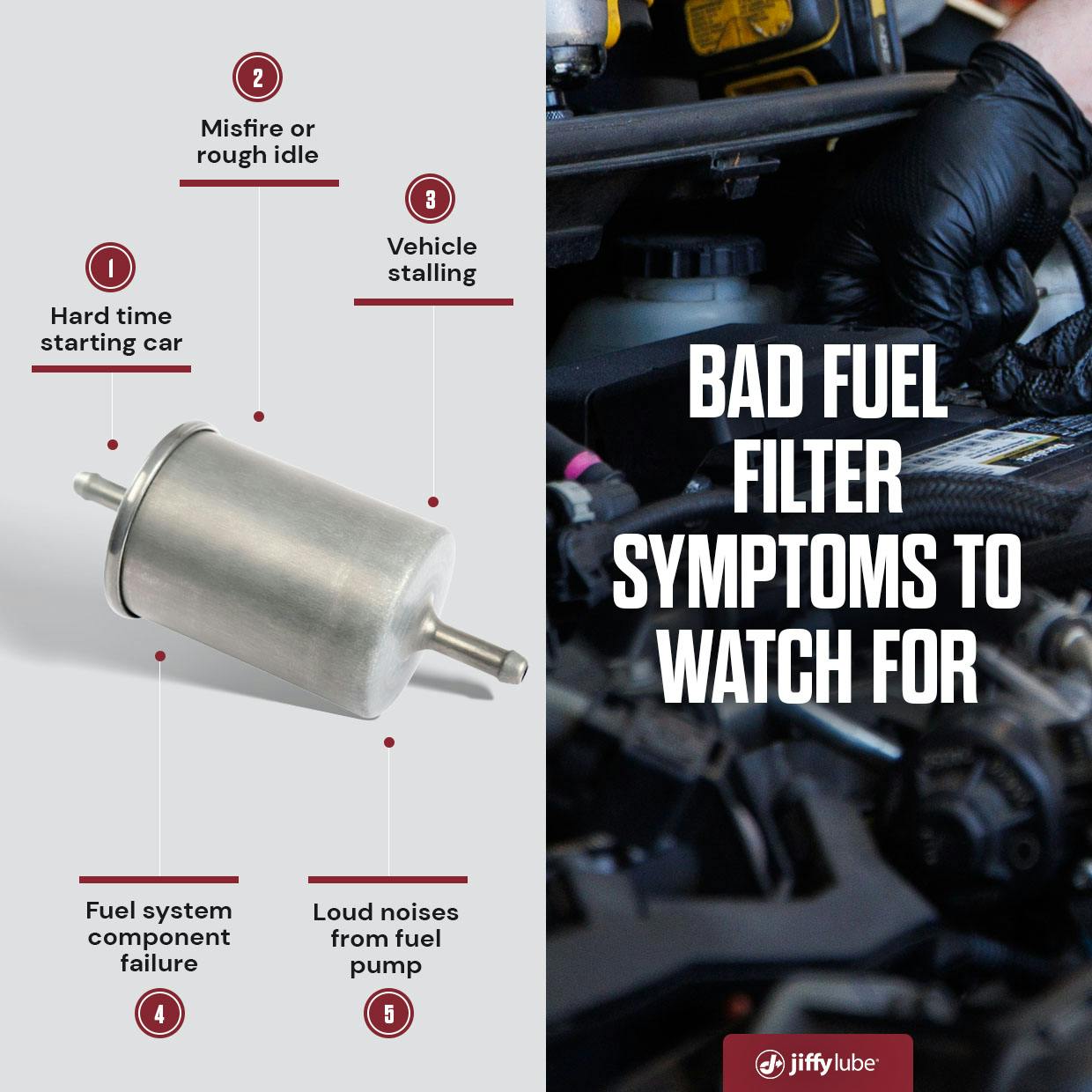
A bad fuel filter can cause many problems in your vehicle. It stops fuel flow and affects engine health. Recognizing the signs early can save you from costly repairs. Watch for these common symptoms to know if your fuel filter needs attention.
Engine Performance Issues
The engine may run rough or lose power suddenly. You might notice stalling or hesitation while driving. The car struggles to accelerate smoothly. These problems happen because the fuel filter blocks fuel flow. It restricts the amount of fuel reaching the engine.
Starting Problems
Your vehicle may take longer to start or fail to start at all. The engine cranks but does not catch easily. This happens when the fuel filter is clogged. It stops enough fuel from reaching the engine to ignite. Starting problems often signal a dirty or damaged fuel filter.
Unusual Engine Noises
Listen for strange sounds coming from the engine. A sputtering or coughing noise may appear during acceleration. These noises can result from fuel starvation. The engine struggles to get enough fuel to run smoothly. A bad fuel filter often causes this issue.
Fuel Odor Detection
Notice any strong fuel smell inside or near your vehicle? A leaking or damaged fuel filter can cause fuel odors. The smell might be sharp and unusual. This signals a potential fuel leak or poor fuel flow. Always check your fuel filter if you detect strange fuel smells.
Visual Inspection Tips
Visual inspection is a simple way to check your fuel filter’s condition. It helps spot problems early. You do not need special tools, just good lighting and a careful eye. This step saves money and avoids bigger car troubles.
Checking For Clogs And Dirt
Start by examining the outside of the fuel filter. Look for any dirt or debris stuck on the surface. A clogged filter often looks dirty or dusty. If your filter has a clear casing, check inside. Dark or black particles mean dirt buildup. This reduces fuel flow and can harm engine performance. Clean filters should appear mostly clear or slightly tinted.
Inspecting For Damage Or Leaks
Next, check the filter body for cracks or dents. Damage weakens the filter and may cause fuel leaks. Look closely at the connections and seals. Fuel leaks can appear as wet spots or stains. Even small leaks can cause engine issues and smell of gasoline. Replace the filter immediately if you find any damage or leaks.
Fuel Filter Replacement Indicators
Knowing when to replace your fuel filter is key to keeping your car running well. A bad fuel filter can block fuel flow, causing engine problems. Watch for clear signs that it needs changing. Use these indicators to avoid costly repairs and keep your vehicle smooth.
Mileage And Time Guidelines
Most cars need a fuel filter change every 20,000 to 40,000 miles. Check your owner’s manual for exact numbers. Time also matters. Even if you drive little, replace the filter every 2 years. Dirt and rust build up inside over time, blocking fuel flow.
Ignoring mileage and time can hurt your engine. A clogged filter reduces fuel pressure. This makes the engine work harder and lowers fuel efficiency. Regular replacement keeps fuel clean and your engine healthy.
When To Replace Early
Some signs mean replace the fuel filter sooner. Engine stalling or rough idling can signal a clogged filter. Notice poor acceleration or difficulty starting? These issues may appear before the recommended mileage.
Driving in dusty or dirty areas wears out the filter faster. Also, old fuel can cause buildup. If you see these signs, don’t wait. Change the filter early to avoid bigger problems.
Diy Vs Professional Replacement
Deciding between doing a fuel filter replacement yourself or hiring a professional is important. Both options have benefits and challenges. Understanding these can help you choose the best way to fix your vehicle.
Tools Needed For Diy
To replace a fuel filter yourself, basic tools are necessary. You will need a wrench set to loosen bolts. A screwdriver helps remove clamps and covers. Gloves protect your hands from fuel spills. Safety glasses keep your eyes safe from debris. A container to catch fuel prevents spills. Knowing how to relieve fuel system pressure is also important. Having a repair manual for your car model guides the process. These tools and knowledge make DIY replacement possible.
Benefits Of Professional Service
Professionals have experience and know how to handle fuel systems safely. They use specialized tools that may not be available to you. A mechanic can spot other issues during the replacement. Professional service saves time and effort. It reduces the risk of damage or injury. Many shops offer warranties on their work. This gives peace of mind after the repair. Choosing a professional ensures proper installation and better vehicle performance.

Credit: oilchangers.com
Preventing Fuel Filter Issues
Preventing fuel filter issues helps keep your vehicle running smoothly. A clean fuel filter stops dirt and debris from reaching the engine. This avoids blockages and costly repairs. Simple steps can extend the life of your fuel filter. They also improve your car’s performance and fuel efficiency.
Using Quality Fuel
Choose fuel from trusted stations. Poor-quality fuel contains more dirt and water. These impurities clog the fuel filter faster. Clean fuel helps the filter work better and last longer. Avoid cheap or unknown fuel brands. Their lower standards can harm your car’s fuel system. Using quality fuel reduces the risk of filter problems.
Regular Maintenance Tips
Check your fuel filter regularly as part of maintenance. Follow your car manual for service intervals. Replace the filter before it gets too dirty. A dirty filter makes the engine work harder. This lowers fuel efficiency and power. Keep an eye on signs like engine sputtering or hard starts. These can mean the fuel filter needs attention. Regular checks save money and prevent breakdowns.

Credit: www.youtube.com
Frequently Asked Questions
How Do I Know If My Fuel Filter Is Clogged?
A clogged fuel filter causes engine sputtering, poor acceleration, and stalling. Check for reduced engine power and fuel efficiency as signs.
What Symptoms Indicate A Bad Fuel Filter?
Symptoms include engine misfires, hard starting, rough idling, and decreased fuel economy. These signs often point to fuel flow problems caused by a bad filter.
How Often Should I Replace My Fuel Filter?
Replace the fuel filter every 20,000 to 40,000 miles, or as recommended in your vehicle’s manual. Regular changes prevent clogs and engine issues.
Can A Bad Fuel Filter Damage My Engine?
Yes, a bad fuel filter can cause fuel starvation, leading to engine misfires and damage. Timely replacement helps maintain engine health.
Conclusion
A bad fuel filter can cause many car problems. Signs like engine trouble or poor fuel flow matter. Checking it regularly keeps your car running smooth. Don’t wait for serious issues to appear. Clean or replace the filter as needed.
This simple step saves time and money later. Stay alert to keep your vehicle healthy and safe. Remember, good fuel flow means better engine performance. Take care of your fuel filter and drive worry-free.


